Every successful online store starts with a single great product. But the search for that winning idea can feel overwhelming, stuck between endless possibilities and the fear of choosing wrong.
The difference between a thriving brand and a garage full of unsold inventory often comes down to the process you use to find, vet, and launch your product.
That’s why this guide is different. Instead of just a list of ideas, we’ve created a complete 3-part playbook to show you how to find products to sell on Shopify that are genuinely profitable. You’ll learn a repeatable framework that takes you from initial idea to final validation.
We’ll cover:
- Part 1: Ideation: Proven methods for discovering high-potential product ideas.
- Part 2: Financial Vetting: A simple system to ensure your idea can actually make money.
- Part 3: Low-Risk Validation: How to test your product’s demand before you invest a dollar.
If you prefer a visual walkthrough of this playbook, you can watch the explainer video we’ve prepared.
Finding a product is the first step on an exciting journey. As you follow this playbook, you can start a free Shopify trial to explore the platform and bring your ideas to life, no commitment required.
First, Choose Your Business Model: The 3 Core Sourcing Methods
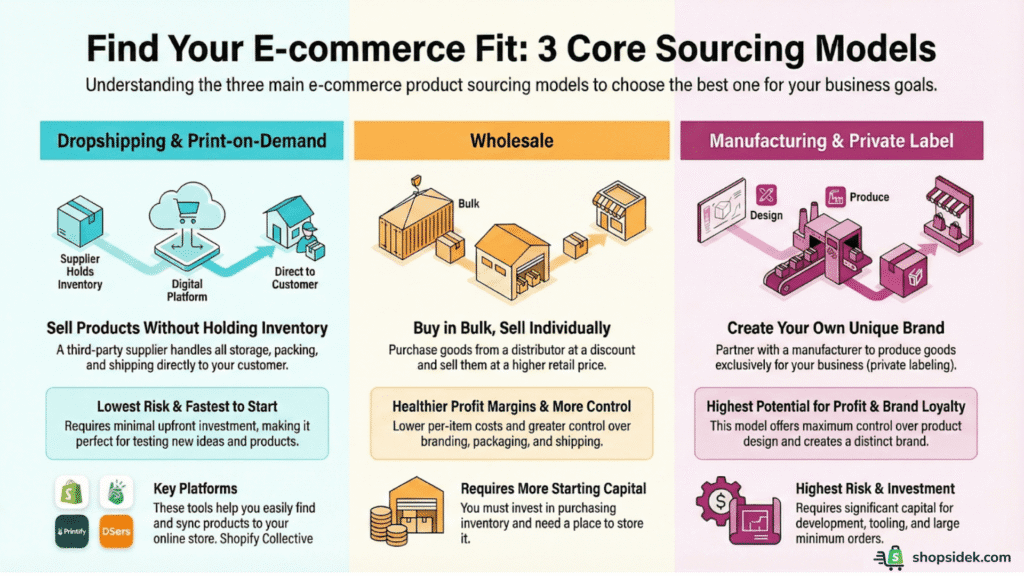
Before you can decide what to sell, you need to decide how you’ll get it to your customers. Your sourcing method is the foundation of your business—it determines your startup costs, profit margins, and day-to-day operations. From my experience, choosing the right model from the start will make your product search much more focused and effective.
Let’s break down the three most common approaches.
Dropshipping & Print-on-Demand (POD): Low Risk, Fast to Start
Dropshipping is a popular model for new entrepreneurs because it requires the lowest upfront investment. In this model, you list products in your store, but a third-party supplier handles all the inventory, packing, and shipping for you.
When a customer places an order, you simply forward it to your partner, who ships the product directly to the customer.
This model lets you start selling without holding any inventory. Our complete guide shows you exactly how to dropship on Shopify and get your store running quickly.
Print-on-demand (POD) is a variation of dropshipping where you sell custom-designed products like t-shirts, mugs, or posters. The item is only created after an order is placed.
This model is perfect for testing ideas quickly without buying inventory. Shopify apps like DSers, Printify, and the curated Shopify Collective marketplace make it easy to find and sync products to your store.
Print-on-demand is ideal for selling custom-designed products with no upfront stock. Our detailed guide explains how to print on demand and partner with the right suppliers for your store.
Wholesale: Buying in Bulk for Better Margins
Wholesaling involves buying products in bulk from a manufacturer or distributor at a discounted price and then selling them individually at a higher retail price.
Because you’re buying a larger quantity, your per-item cost is lower, which generally leads to healthier profit margins than dropshipping.
This model requires more starting capital to purchase inventory and a place to store it. However, it gives you much greater control over branding, packaging, and shipping times.
B2B marketplaces like Faire are excellent for finding unique wholesale goods from independent brands, while platforms like Alibaba connect you with suppliers for a vast range of products.
Manufacturing & Private Label: Maximum Control, Highest Reward
If you have a unique product idea or want to improve an existing one, manufacturing is the path to creating a truly distinct brand. This involves partnering with a manufacturer to produce goods exclusively for you, often with your own branding and packaging—a process known as private labeling.
This model offers the highest potential for profit margins and brand loyalty, but it also carries the most risk and requires the largest investment in product development, tooling, and minimum order quantities.
For example, Ann McFerran, founder of Glamnetic, didn’t invent magnetic lashes, but she innovated by creating a version with a better magnetic liner and more lash styles, turning a good idea into a powerhouse brand.
Part 1: How to Find Your Next Bestseller — 7 Proven Ideation Methods
Now that you understand the core business models, it’s time for the exciting part of learning how to find products to sell on Shopify: the ideation process.
The way I see it, the best products aren’t found by chance; they’re discovered through a deliberate process of research and observation. Here are seven proven methods used by successful Shopify entrepreneurs.

Method 1: Solve a Customer Pain Point
The most successful products solve a nagging problem. Think about the daily frustrations and annoyances you or people you know experience. Is there a product that could make a specific task easier, more efficient, or more enjoyable? Businesses built on solutions have a built-in customer base.
A perfect example is Thousand, the stylish helmet brand. Founder Gloria Hwang was a cyclist who hated wearing a helmet because it was bulky, unattractive, and a pain to carry around.
So, she designed a sleek, minimalist helmet with a clever magnetic lock that lets you securely attach it to your bike. By solving a real pain point for urban commuters, she created a product people genuinely want to use.
Method 2: Spot Emerging Trends with Data
I recommend using free data tools to see what customers are actively searching for instead of guessing what might be popular. Catching a trend on its way up can give you a powerful first-mover advantage.
Start with Google Trends. If you have a category in mind, like “skin care,” you can see what related terms are gaining traction.
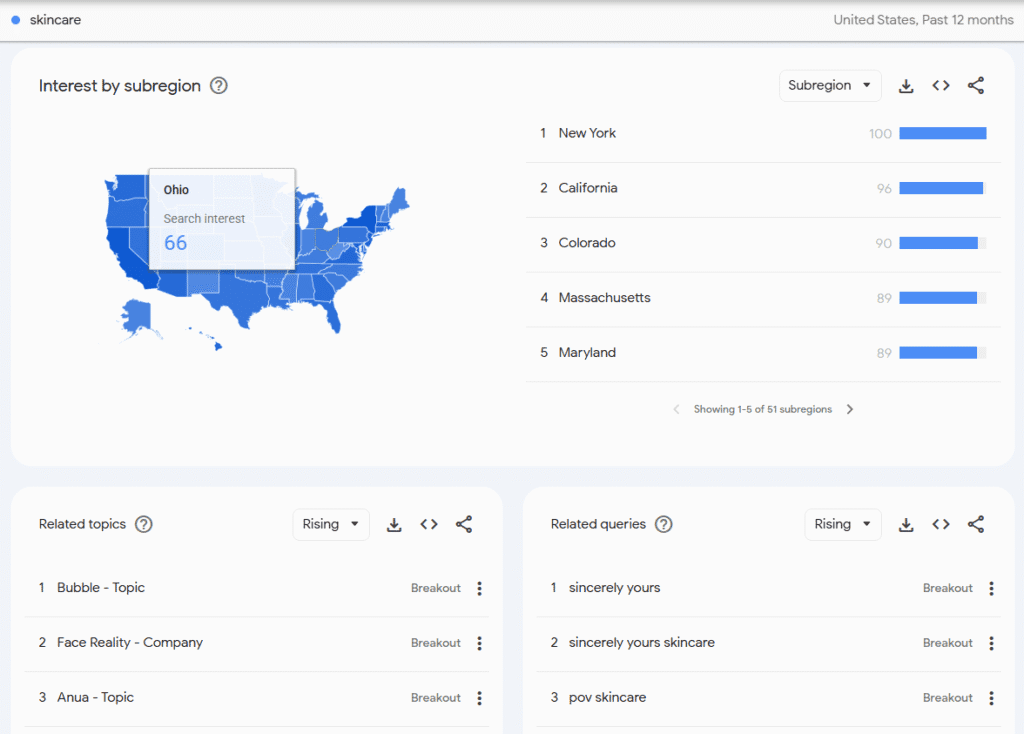
For example, Shopify’s data shows searches for “beef tallow moisturizer” recently jumped by over 400%, signaling a rapidly growing niche interest.
Next, check Amazon’s Best Sellers and Movers & Shakers lists. The Best Sellers list shows what’s consistently popular, while the Movers & Shakers list reveals products with the biggest sales rank gains in the last 24 hours.
For a broader view of cultural shifts, browse publications like Trend Hunter, which analyzes consumer behavior to predict what’s next.
Method 3: Find Opportunities in Niche Communities
Passionate communities are a goldmine for product ideas. People in these groups are vocal about their needs, the products they love, and what they wish existed.
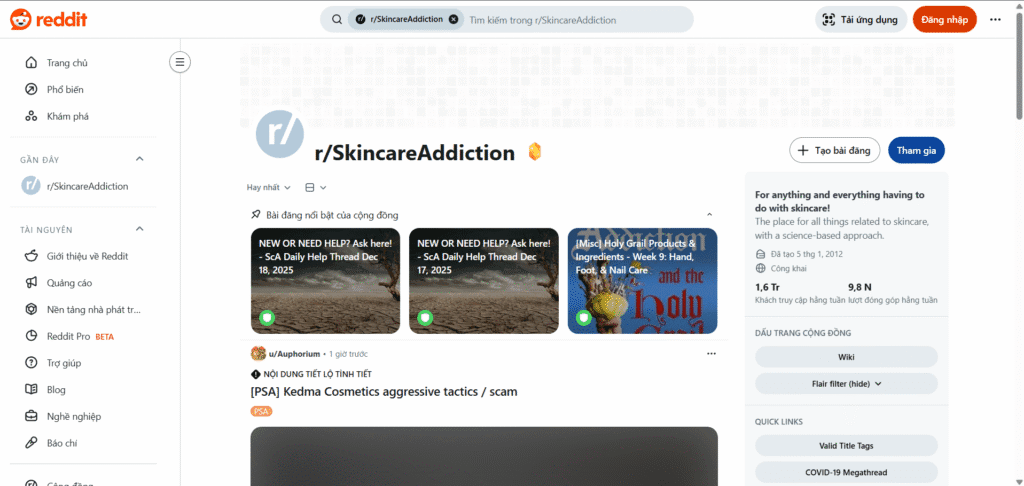
Spend time listening in places where your potential customers gather. Dive into specific subreddits on Reddit, like r/skincare-addiction or r/BuyItForLife, where users discuss product quality in detail. Browse forums like the Shopify Community or answer sites like Quora to see what questions people are asking.
The jerky brand Chomps did this masterfully. Founders Pete Maldonado and Rashid Ali saw the rising popularity of Paleo and Whole30 diets and targeted those communities directly.
They created a high-quality, compliant snack that served the specific needs of a dedicated audience, and it became a massive success.
Method 4: Use Keyword Research to Uncover Demand
Keyword research isn’t just for SEO; it’s a powerful tool for market research. It gives you raw data on exactly what people are searching for, revealing gaps between customer demand and what’s currently available.
Tools like Keywords Everywhere can show you search volume directly in your Google results, while more advanced tools like Ahrefs can help you dig deeper. In practice, you’re looking for keywords with significant search volume but low competition—a clear sign of unmet demand.
This is exactly how Zero Waste Store was born. The founder discovered that the term “zero waste store” was being searched 15,000 times a month, yet the domain name was available.
That data was the ultimate validation that a market existed before a single product was sourced.
Method 5: Analyze Social Media and Marketplaces
Online marketplaces and social media feeds are living catalogs of consumer behavior. By analyzing what’s already selling, you can identify popular styles, features, and price points to inspire your own unique product.
Start by browsing the best-seller sections on Etsy and AliExpress. Look for patterns in the products that appear—are there specific colors, materials, or functionalities that are trending? On Amazon, pay close attention to the “Customers Also Bought” section on product pages to find related items.
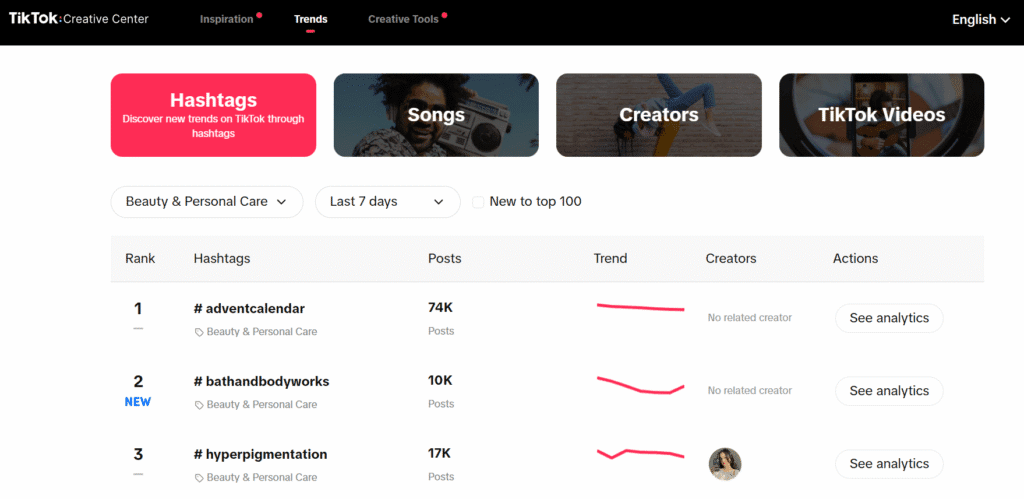
On social media, the TikTok Creative Center is an incredible resource for seeing which products are featured in trending ads. The hashtag #TikTokMadeMeBuyIt is a direct reflection of viral consumer demand, offering endless inspiration for products that capture attention.
Method 6: Address an Underserved Market
Instead of competing in a crowded market, look for an audience that is overlooked by mainstream brands. Creating a product for a specific, underserved group allows you to build a loyal community with less competition.
A powerful example is Human Beauty, a cosmetics brand founded by Millie Flemington-Clare. She identified a major gap in the market: people with disabilities often struggled with conventional makeup packaging.
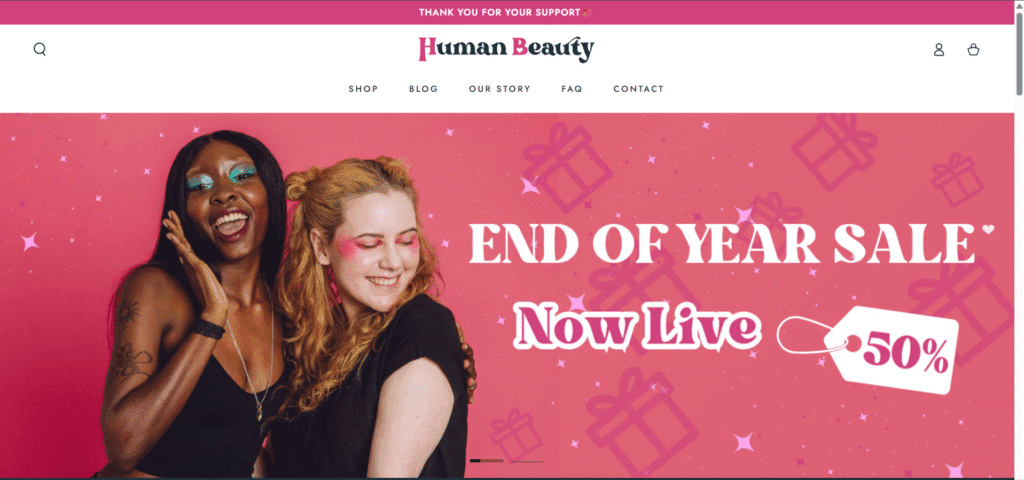
She created a line of products with accessible features like easy-to-open applicators and grips. By designing for a community whose needs were ignored, she built a brand with a powerful mission and a dedicated customer base.
Method 7: Follow a Personal Passion or Professional Expertise
Building a business is a marathon, and it’s much easier to stay motivated when you’re passionate about what you sell. Your personal interests or professional background can be a powerful source of product ideas that feel authentic and meaningful.
Sana Javeri Kadri founded Diaspora Co. out of a passion for high-quality spices and a desire to decolonize an unfair spice trade. Frustrated with the stale, commodity-driven spices in most stores, she used her expertise to build a new, equitable supply chain that sources fresh, single-origin spices directly from partner farms in India.
Her passion became her brand’s story and its core competitive advantage, attracting customers who care about quality and ethics.
These proven methods will help you discover your own winning product. For more data-driven inspiration, you can also explore our curated list of the best products to sell on Shopify.
Part 2: The Financial Viability Check — From Idea to Profitable Product
A brilliant product idea is only half the battle. To build a sustainable business, your product needs to be profitable. Many aspiring entrepreneurs skip this crucial step, only to discover later that shipping costs, fees, and supplier prices make it impossible to turn a profit.
This section is your financial pre-flight check. It’s a simple, four-step process to vet your idea and ensure the numbers work before you invest significant time and money.

Step 1: Define Your Ideal Product Criteria
Before you even start looking for suppliers, it helps to have a clear set of criteria. This acts as a filter, allowing you to quickly discard ideas that are likely to be unprofitable or difficult to manage. A great starting framework focuses on three key areas:
Target Price Point: Aim for a retail price between $15 and $50. This range is the sweet spot for online sales. It’s high enough to cover costs and leave room for profit, yet low enough for most customers to make a purchase without days of deliberation.
Size and Weight: Your ideal product should be small and lightweight. Shipping and warehousing costs can quickly erode your profits, especially with large or heavy items. A smaller product is cheaper to ship to your warehouse and cheaper to send to your customers.
Seasonality: Look for products with low seasonality. While a hot Christmas-themed product can be a huge success, relying on it means your sales will plummet in January. Products that sell consistently year-round provide more stable cash flow and are easier to manage.
Step 2: Calculate Your Total Landed Cost (TLC)
This is the single most important calculation for determining profitability. The Total Landed Cost (TLC) is the true cost of getting one unit of your product into your possession, ready to be shipped to a customer. It’s far more than just the price on a supplier’s website.
Many beginners make the mistake of only looking at the per-item cost, but the reality includes many other fees. The basic formula is:
TLC = Product Cost + Shipping + Duties/Taxes + Brokerage Fees + Insurance
Here’s what each component means:
- Product Cost: The price you pay the supplier for one unit of the product.
- Shipping: The cost to transport the goods from the supplier to your location or a third-party warehouse. This can be a significant expense, especially for overseas freight.
- Duties & Taxes: These are fees charged by the government for importing goods into your country. They vary widely based on the product type and value.
- Brokerage Fees: The amount you pay a customs broker to handle the paperwork and logistics of clearing your shipment through customs.
- Insurance: The cost to protect your goods against loss or damage during transit.
Getting an accurate TLC is critical for setting a price that actually makes you money.
🎁To make this easy, we’ve created a downloadable [Total Landed Cost (TLC) Calculation Template] you can use to run your own numbers.
Step 3: Set a Healthy Profit Margin
Once you know your true cost (TLC), you can set a retail price that ensures your business is healthy. Your profit margin is the percentage of the final sale price that is profit. For a new eCommerce business, a strong target for your gross profit margin is between 65% and 75%. This gives you enough room to cover marketing costs, Shopify fees, and other overhead while still earning a profit.
To calculate the retail price needed to hit your target margin, use this formula:
Retail Price = TLC / (1 – Desired Profit Margin)
For example, if your TLC is $10 per unit and you want a 70% profit margin (0.70), the calculation would be:
$10 / (1 – 0.70) = $10 / 0.30 = $33.33
Your target retail price should be at least $33.33 to achieve a 70% margin.
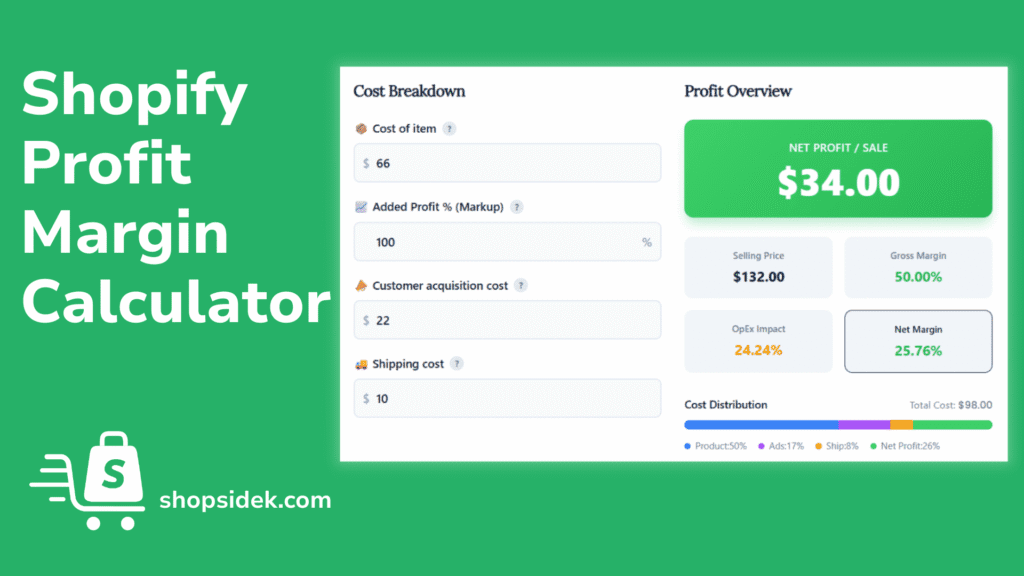
Running these numbers is crucial for ensuring your product is financially viable. To make it easier, use our free Shopify profit margin calculator to quickly determine your pricing.
Step 4: Analyze Your Competitors’ Pricing
The final step is a reality check. Take the target retail price you just calculated and search for similar products online. How does your price compare to what’s already on the market?
This isn’t about being the cheapest. Ask yourself: Is your price in the same general range as your competitors? If your calculated price is significantly higher, you need a clear reason why customers would choose your product.
This could be superior quality, better features, or a stronger brand story. If your price is much lower, you might have found a great market opportunity, or you may need to double-check your cost calculations.
Part 3: The Low-Risk Validation Playbook — Test Your Idea Before You Invest
You’ve found a promising idea and the numbers look good on paper. Now it’s time to answer the most important question: will people actually buy it?
Instead of placing a massive inventory order and hoping for the best, you can use low-risk validation techniques to test your product in the real world. This playbook will show you how to gather data and confirm demand before you commit.
Step 1: Order Samples to Verify Quality
This is a non-negotiable step. The product photos on a supplier’s website can be misleading, and you should never sell a product you haven’t personally seen, touched, and tested. Ordering samples from your top 2-3 potential suppliers is the only way to truly assess the quality.
When your samples arrive, evaluate everything:
- Material and Build Quality: Does it feel sturdy and well-made?
- Colors and Dimensions: Does it match the online description exactly?
- Functionality: Does it work as intended?
- Packaging: How is it protected during shipping?
Poor quality is the fastest way to ruin a new brand’s reputation. This small upfront investment in samples can save you from a major financial headache later.
Step 2: Create a “Coming Soon” Landing Page on Shopify
The most effective way to measure real market interest is to see whether people are willing to share their email in return for updates about your product. A simple “coming soon” landing page is ideal for testing this.
This page doesn’t need to be complicated. It should include:
- High-quality photos of the product (which you can take yourself using your samples).
- A compelling headline and description that focuses on the product’s benefits and solves the customer’s pain point.
- A clear call-to-action with a simple email sign-up form (e.g., “Be the first to know when we launch” or “Get an exclusive launch day discount”).
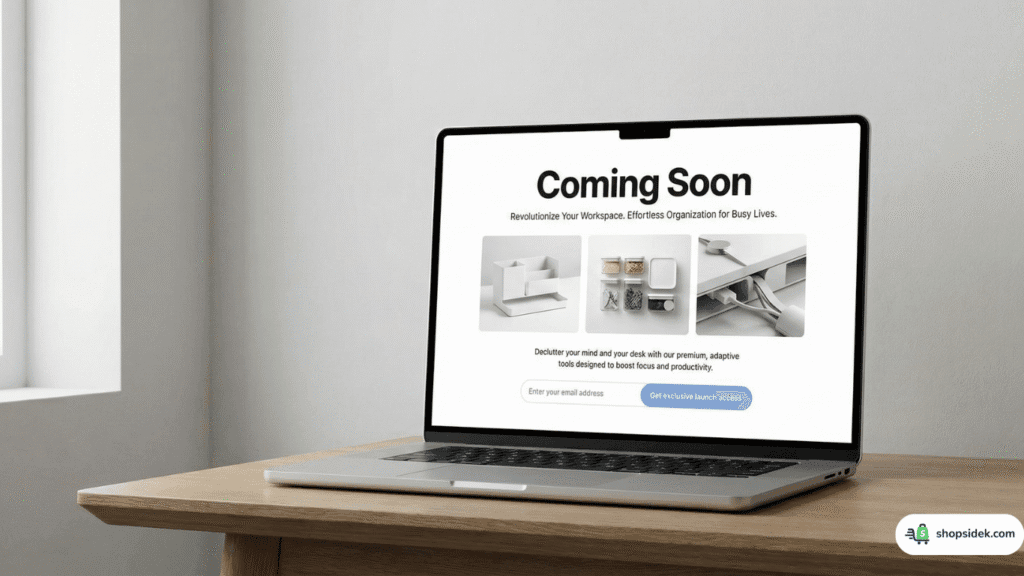
This process validates your idea by measuring how many people are genuinely interested enough to sign up. Building a professional-looking page is simple with Shopify’s user-friendly store editor, which includes drag-and-drop sections and beautiful, mobile-ready themes.
The best way to gauge real-world interest is to build a simple landing page to collect emails. Start your Shopify trial now and you can have a professional-looking test page live in under an hour.
Step 3: Run a Small Pre-Sale Ad Campaign
Once your landing page is live, you need to get it in front of your target audience. Running a small ad campaign on a platform like Instagram or Facebook is an effective way to drive targeted traffic and test your messaging.
I know it might not seem like much, but setting a small budget—even $50 or $100 is enough to gather meaningful data. The goal here isn’t to generate sales, but to measure interest.
Track your click-through rate to see if your ad creative is compelling, and most importantly, monitor your landing page’s conversion rate. The percentage of visitors who sign up with their email is a strong indicator of real market demand for your product.
While paid ads are great for validation, long-term success relies on organic traffic. Learning how to get your Shopify page on the front page of Google is key to building a sustainable customer base.
Step 4: Launch with Crowdfunding or a Minimum Viable Product (MVP)
If your landing page test shows strong interest, you can move forward with even greater confidence. For entrepreneurs ready for the next step, Shopify highlights two powerful validation strategies:
- Crowdfunding: Platforms like Kickstarter or Indiegogo allow you to pre-sell your product to an engaged audience. If you hit your funding goal, you receive the capital needed to place your first large inventory order, effectively eliminating all financial risk.
- Minimum Viable Product (MVP): This involves launching a basic version of your product to an initial group of customers. Their feedback provides invaluable insights that you can use to refine and improve your product before a wider, more expensive public launch.
You Have a Validated Idea—What’s Next?
You now have a complete playbook that shows you how to find products to sell on Shopify, moving from a simple idea to a validated product with real profit potential.
By following the Ideate, Vet, and Validate framework, you’ve replaced guesswork with a strategic process, dramatically increasing your chances of success. You’ve done the research and confirmed there’s a market waiting for what you have to offer.
The only thing left to do is take action. It’s time to build your brand, launch your store, and start selling.

FAQ About Finding Shopify Products
What makes a product good for selling online?
A great product has four key characteristics that successful brands look for. First, it solves a clear customer pain point or serves a passionate niche. Second, it has strong market demand you can verify with tools like Google Trends.
Third, it allows for healthy profit margins (aim for 65% or more as a starting point). Finally, it isn’t overly large or heavy, which helps keep your shipping costs manageable and protects your profitability.
How can I find trending products to sell?
The best sources for trends are data-driven. Start with Google Trends to see search interest over time for specific product ideas. Browse online marketplaces like Amazon’s Best Sellers and Etsy’s trending items section to see what’s currently popular with consumers.
You can also explore B2B marketplaces like AliExpress to see what’s popular globally and monitor trend publications like Trend Hunter for emerging consumer behavior.
Is dropshipping a good way to start?
Yes, dropshipping is an excellent option for beginners because it has a very low startup cost and eliminates the need to manage inventory. You can test product ideas without buying stock upfront.
The main downsides are lower profit margins compared to wholesale and less control over shipping times and product quality. Platforms like DSers and Printify integrate directly with Shopify to make getting started easy.
Where do I find reliable suppliers for my products?
Your supplier source depends on your business model. For wholesale, vetted marketplaces like Faire and Wholesale Central are popular choices. For dropshipping or manufacturing, many entrepreneurs start with AliExpress, DHgate, or Alibaba.
The most important step, regardless of the platform, is to vet your options by checking reviews and—most importantly—always ordering samples to test for quality before selling to customers.