Choosing where to sell your products online is one of the most critical decisions you’ll make as a business owner. It’s a founder’s crossroads that defines not just your starting point, but your entire path to growth. The Shopify vs Etsy debate often comes down to a simple analogy: are you looking to rent a stall in a bustling craft fair, or build your own flagship store from the ground up?
Etsy is the world’s largest craft fair. It gives you immediate access to millions of shoppers actively looking for unique goods, but you have to play by its rules and compete with thousands of other sellers in the same aisle. Shopify is the land you own. You build your store, design every detail, and cultivate direct relationships with your customers—but you’re also responsible for getting people in the door.
This guide will provide a definitive, data-backed answer to help you decide. We’ll break down the true costs, the branding opportunities, and the tools you need to scale, so you can make the right choice for your business’s future.
TL;DR: The Short Answer
- Choose Etsy if you’re a new seller, hobbyist, or creator of handmade/vintage items. It’s excellent for testing product ideas with a built-in audience and minimal upfront cost.
- Choose Shopify if you’re serious about building a long-term brand, want full control over your design and customer data, and plan to scale your business significantly.
- On Fees: Etsy’s pay-per-item fees are great for low-volume sellers, but Shopify becomes more cost-effective as your sales grow (we’ll show you the exact breakeven point).
- The Hybrid Strategy: Many successful brands start on Etsy to find their audience and then launch a Shopify store to build a brand, using both platforms together.
At a Glance: Key Differences Between Shopify and Etsy
Before we dive into the details, here is a high-level comparison of Shopify and Etsy. This table is designed to give you a quick, scannable overview of the fundamental differences between the two platforms.
| Feature | Shopify | Etsy |
|---|---|---|
| Platform Type | Standalone eCommerce Platform | Curated Online Marketplace |
| Pricing Model | Monthly Subscription | Pay-per-listing & Transaction |
| Transaction Fees | 0% with Shopify Payments | 6.5% + Payment Processing |
| Design Customization | Full control; 1000+ themes | Limited; standardized templates |
| Customer Data | Full Ownership and Access | Owned by Etsy; Limited Seller Access |
| Customer Support | 24/7 Live Chat, Phone, Email | Email-Based Ticket System |
| Marketing Tools | Advanced (SEO, email, ads) | Basic (Etsy Ads, social tools) |
| Seller Security | Proactive Tools (Fraud Analysis) | Reactive Policies (Purchase Protection) |
| Scalability | High (built for growth) | Limited for high-volume sellers |
| Best For | Brand builders & scaling businesses | Hobbyists, artists & new sellers or testing ideas |
The Financial Breakdown: Which Platform Is Truly Cheaper?
For most sellers, the decision in the Shopify vs Etsy comparison boils down to one crucial question: which platform will leave more money in your pocket? It’s worth remembering that the answer isn’t a simple number; it depends entirely on your sales volume. Etsy’s model is designed for low-risk entry, while Shopify’s is built for profitable growth.
Etsy’s Fee Structure: A Pay-Per-Item Model
Etsy operates on a “pay-as-you-go” model, where you’re charged for listing items and for every sale you make. This keeps upfront costs low, but the fees can quickly add up as your revenue grows. There are four main fees to be aware of:
- Listing Fee: A flat $0.20 for each item you list, which is active for four months. If the item doesn’t sell and you want to keep it listed, you pay again.
- Transaction Fee: Etsy takes 6.5% of the total order amount, which includes the product price, shipping, and any gift wrapping.
- Payment Processing Fee: This varies by country, but for US sellers, it’s typically 3% + $0.25 per transaction.
- Offsite Ads Fee: If you make over $10,000 in a year, Etsy automatically advertises your products across the web. If a sale comes from one of those ads, you pay a mandatory 12-15% fee on that sale, on top of all other fees.
Let’s say you sell a handmade mug for $30. On a single sale, your fees would be roughly $3.30, or about 11% of your revenue—and that’s before factoring in any potential Offsite Ad fees.
Shopify’s Subscription Model: Predictable Monthly Costs
Shopify uses a subscription model that provides predictable costs perfect for budgeting and scaling. You pay a flat monthly fee for your store, which gives you access to the platform, secure hosting, an SSL certificate, and no listing fees. While there are several plans like Grow, Advanced, and Plus, most sellers start with the Basic plan for $25/month. You can also achieve a lower effective rate by paying annually.
The most significant financial difference is that Shopify doesn’t charge a transaction fee if you use their integrated payment processor, Shopify Payments. You only pay a standard credit card processing fee, which for the Basic plan is 2.9% + 30¢ per online transaction.
>> Read more: Detail breakdown of Shopify Pricing plans
The Breakeven Point: A Real-World Cost Calculation
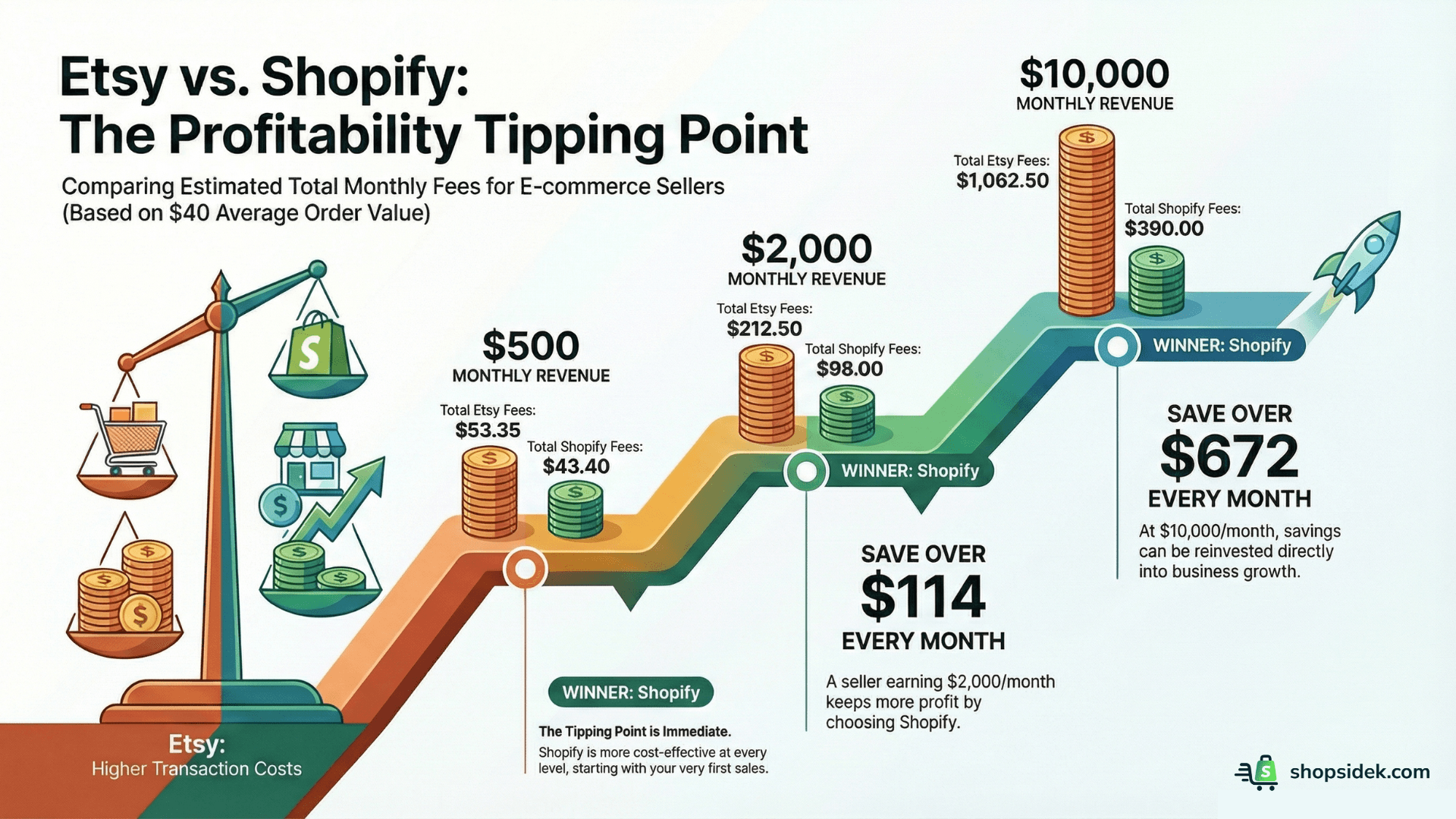
So, when does Shopify become cheaper than Etsy? The data shows the tipping point happens immediately, and the savings grow dramatically with your sales volume.
To make this clear, we calculated the total estimated monthly cost on Etsy versus the Shopify Basic plan at three different revenue tiers.
Assumptions:
- Shopify Plan: Using the Basic plan at the standard rate of $25/month.
- Payment Gateway: Using Shopify Payments (U.S. rate of 2.9% + 30¢ per transaction).
- Etsy Fees (U.S.): Using a combined rate of 6.5% transaction fee + 3% payment processing fee + 25¢ per transaction, plus a $0.20 listing/renewal fee per transaction.
- Business Model: Calculations are based on a store with a $40 Average Order Value (AOV).
| Monthly Revenue | Transactions (at $40 AOV) | Total Etsy Fees | Total Shopify Fees (Basic Plan) | Winner |
|---|---|---|---|---|
| $500 | 13 | $53.35 | $43.40 | Shopify |
| $2,000 | 50 | $212.50 | $98.00 | Shopify |
| $10,000 | 250 | $1,062.50 | $390.00 | Shopify |
The data proves that Shopify is the more cost-effective choice at every level. While Etsy may seem cheaper for a seller with very few sales, Shopify’s scalable model quickly becomes more profitable:
- At the $2,000/month level, a seller saves over $114 every month.
- At $10,000/month, the savings exceed $672—money that can be reinvested directly into marketing and growth.
Tired of unpredictable fees eating into your profits? See how Shopify’s clear pricing can help you scale. Get the full picture of your investment here: A Complete Budget Breakdown of Shopify Store Cost.
Seller Support: Your Business Lifeline in a Crisis
When something goes wrong with your online store—a payment glitch, a shipping issue, or a technical bug—you need help immediately. Every minute of downtime can mean lost sales and damaged customer trust. In these critical moments, the quality of your platform’s support system is not just a feature; it’s a form of business insurance.
Shopify’s Support System: Instant AI Assistance Backed by 24/7 Human Experts
Shopify has built a powerful, two-layer support system designed for immediate problem-solving, ensuring you’re never left without a path to a solution.
Layer 1: Shopify Sidekick (The AI Differentiator)
Your first line of defense is Sidekick, a revolutionary AI-powered business assistant available directly in your Shopify dashboard. Instead of searching through help articles, you can ask complex questions in plain language and get instant, actionable answers.
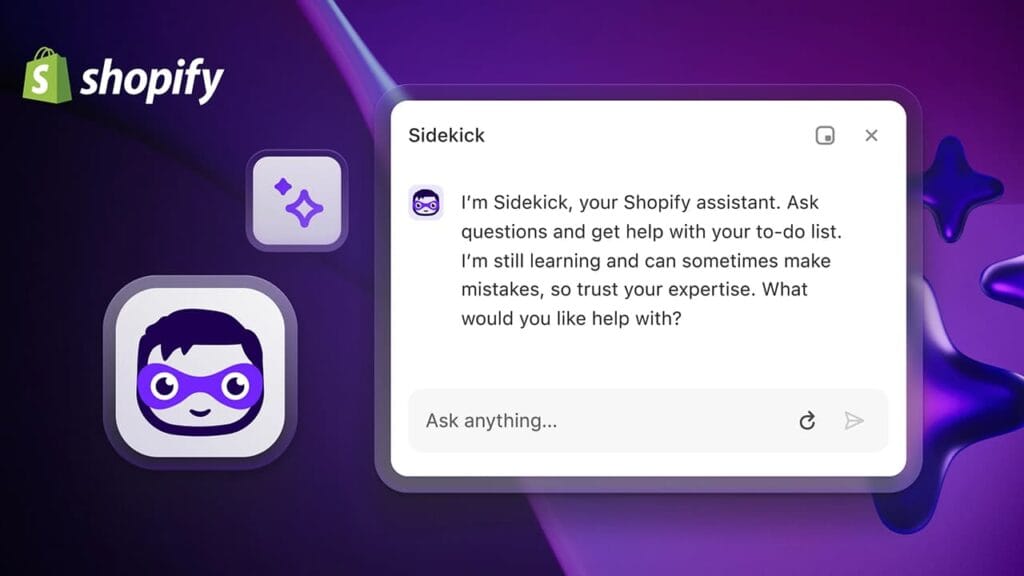
For example, you can ask, “Help me set up a 15% discount for my summer sale,” and Sidekick can create the discount for you. Or, ask “What were my best-selling products last month?” to get an immediate report. This tool handles most operational questions in seconds.

Layer 2: 24/7 Human Support
For more complex or critical issues that require a human touch, Shopify’s global team of support experts is available 24/7 via live chat, phone, and email. Whether it’s 3 a.m. or the middle of a busy holiday sale, you can connect with a real person who can access your store’s backend and help you troubleshoot effectively. This combination of instant AI and accessible human help provides a comprehensive safety net.
Etsy’s Email Ticket System: The Risk of Waiting for a Resolution
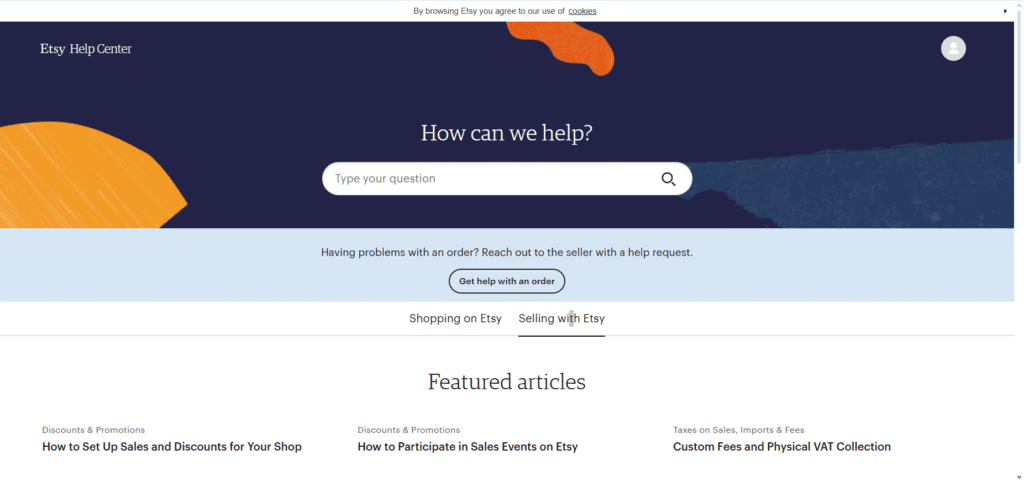
The support experience on Etsy is fundamentally different and often a source of frustration for sellers with urgent needs. The process typically involves navigating a vast help center to find a relevant topic and, if you can’t find your answer, submitting a support ticket through an online form.
This system lacks the immediacy required for critical business issues. After submitting a ticket, sellers often have to wait 24-48 hours just to receive an initial, and sometimes generic, response. While your business is on the line, you are left waiting for an email. In contrast, a Shopify seller has likely already solved the problem with Sidekick or is actively working through it with a live agent.
A Real-World Test: Resolving a Critical Payment Glitch
Let’s use a tangible, high-stakes scenario to illustrate the difference. A customer messages you saying their payment was declined, and they want to buy a high-value item. You need to know if the issue is with your payment gateway or their card.
The Shopify Response:
You immediately open your dashboard and ask Sidekick, “Why might a customer’s payment be failing?” Sidekick instantly provides a checklist of the most common reasons. You rule those out and open a live chat. Within minutes, a human agent is looking into your payment gateway settings in real-time. They identify a minor configuration issue, help you fix it, and you re-engage the customer. The problem is resolved in under an hour, and the sale is saved.
The Etsy Response:
You find the relevant section in the help center and submit a support ticket explaining the situation. You email the customer to say you’re looking into it. Hours, or even days later, you receive an email from Etsy with links to general help articles about payments. By this time, the customer has moved on, the sale is lost, and your confidence in the platform’s ability to support you is shaken.
Brand Identity & Customer Ownership: Building a Business That Lasts
Beyond the fees and features lies a more fundamental difference: the ability to build a lasting brand. On Etsy, you are a seller participating in their ecosystem. On Shopify, you are a brand builder creating your own. This distinction impacts everything from how your store looks to who owns your most valuable asset: your customer relationships.
Visual Identity: Etsy’s Template vs. Shopify’s Themes
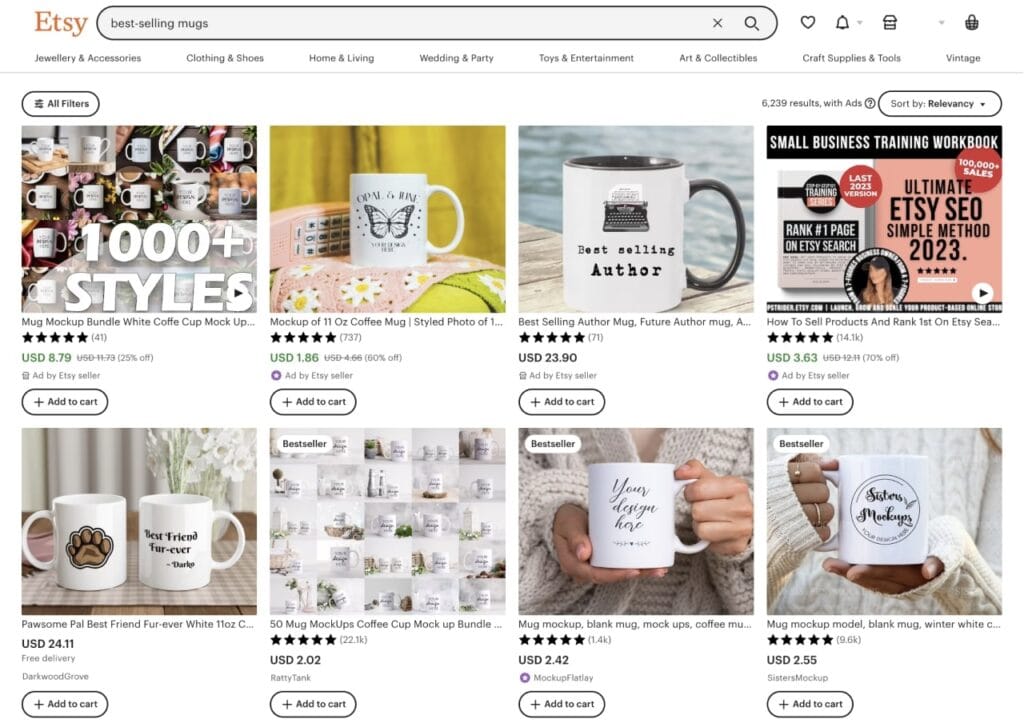
Your brand’s visual identity is your first impression. On Etsy, that impression is largely controlled by the marketplace. Every shop page follows the same standardized layout, with your logo in a designated spot and your products in a uniform grid. While this creates a consistent and easy-to-use experience for buyers, it makes it nearly impossible for your brand to stand out visually from the thousands of competitors right next to you.
Shopify, in contrast, is built for brand expression. You start with a foundational theme, and according to recent data, you have a library of over 24 free and 1000+ paid themes to choose from.
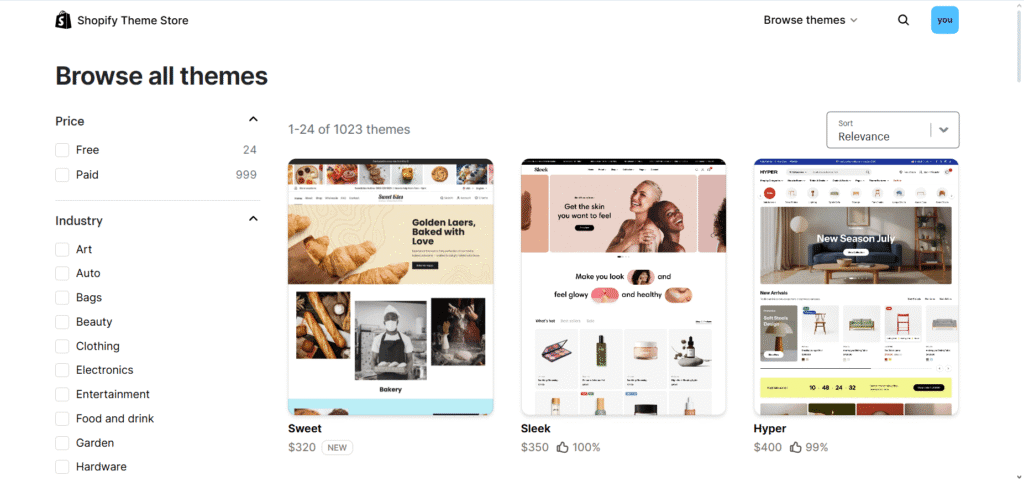
Each one is a fully customizable starting point. You can change everything from the layout and color scheme to the typography and navigation, creating a unique online store that reflects your brand’s personality. You can build dedicated pages for your story, feature high-quality lifestyle photography, and even add a blog to share your process.
This level of control means your brand can create a memorable experience that builds recognition and trust, turning first-time buyers into loyal fans.
Owning Your Audience: Customer Data and Marketing Control
This is arguably the most critical difference for any serious business. When you make a sale on Etsy, you are essentially acquiring a customer for Etsy. The platform owns the relationship and controls how you can communicate with that buyer. You can’t easily add them to an email list or run targeted marketing campaigns to encourage repeat purchases.
On Shopify, every customer is your customer. Every email collected and every sale made builds your own private customer list—a permanent business asset you control. This ownership unlocks the most powerful tools in eCommerce for driving growth and retention.
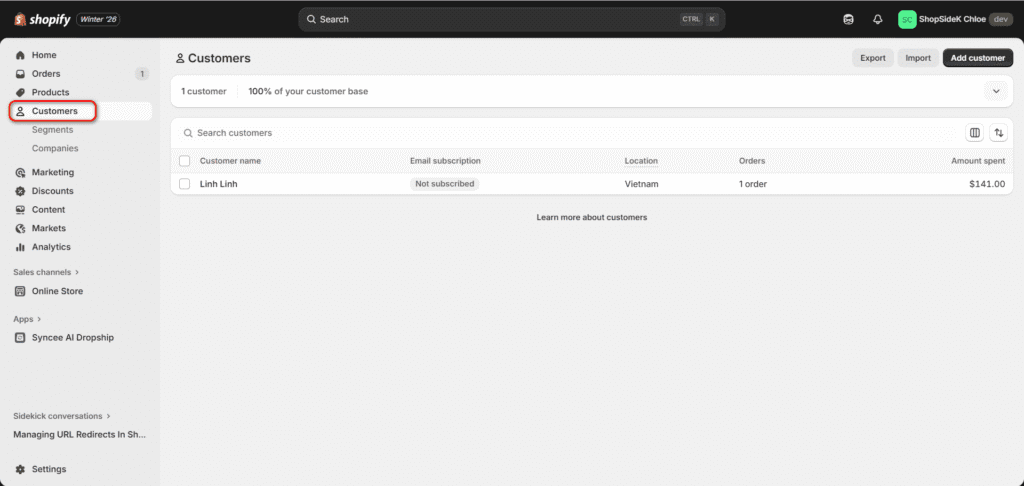
With direct access to your customer data, you can:
- Build an email list to announce new products, share your brand story, and run promotions.
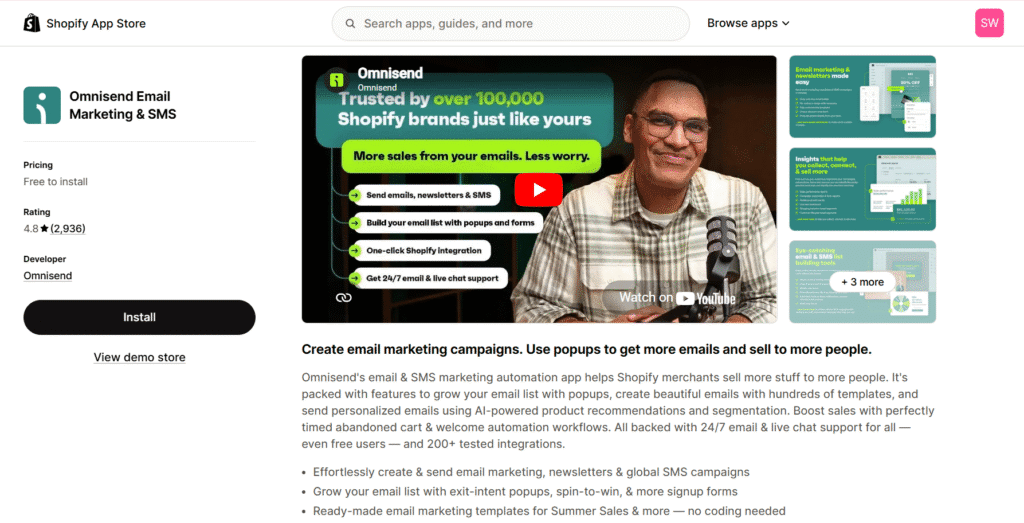
- Integrate powerful marketing tools like Omnisend Email Marketing & SMS to create automated campaigns, such as abandoned cart reminders or welcome series for new subscribers.
- Run retargeting ads on social media to bring previous visitors back to your site.
- Create loyalty programs that reward your best customers and encourage repeat business.
Owning your audience is the difference between renting space in someone else’s business and building an asset that grows in value over time.
Business Stability: The Critical Risk of Platform Dependency
Beyond branding and marketing, there is a critical risk factor every seller must consider: platform dependency. The fundamental difference here is simple. On Shopify, you own your business. On Etsy, you are renting space, and your landlord can evict you without warning. For thousands of Etsy sellers, this is not just a metaphor; it’s a devastating reality.
A significant risk on any marketplace is account suspension. On Etsy, these can be triggered suddenly and often by automated systems. Common issues reported by sellers include:
- Automated IP Flags: Logging in from a new location or Wi-Fi network can trigger a temporary or permanent suspension.
- Sudden Sales Spikes: A viral product or successful promotion can paradoxically lead to your account being flagged for unusual activity.
- Alleged Policy Violations: Automated bots can flag listings for potential infringements, leading to shop closure while you navigate a lengthy appeal process.
The impact is immediate and severe: your funds are frozen, your listings disappear, and the brand equity you’ve worked hard to build vanishes overnight. You lose all contact with your customers and have no control over the situation.
This is a risk you simply do not face in the same way with Shopify. As the owner of your store, you are not subject to the whims of a marketplace algorithm designed to police millions of sellers. While you must adhere to Shopify’s terms of service, your business is a stable, predictable asset. You control your domain, your data, and your destiny, building a resilient business that can’t be shut down by a competitor’s complaint or a sudden change in marketplace policy.
Worried about building your business on a platform you don’t control? Take ownership of your brand’s future today. Start Your Free Shopify Trial and Secure Your Storefront.
The Seller’s Toolkit: Features, Tools, and Scalability
As your business grows, your needs evolve. A platform that was perfect for your first ten sales might become a bottleneck at one hundred. This is where the difference in tooling and scalability between Etsy and Shopify becomes most apparent.
Day-to-Day Operations: Inventory, Analytics, and Payments
Understanding your business performance is key to making smart decisions. Etsy provides a basic “Stats” dashboard that shows visits, orders, and revenue. It’s useful for a quick snapshot but lacks the depth needed to build a real marketing strategy.
Shopify, on the other hand, offers a comprehensive analytics suite right out of the box. You can track everything from customer acquisition channels and conversion rates to average order value and repeat purchase rates. For even deeper insights, you can seamlessly integrate Google Analytics to understand exactly how customers find and navigate your site.
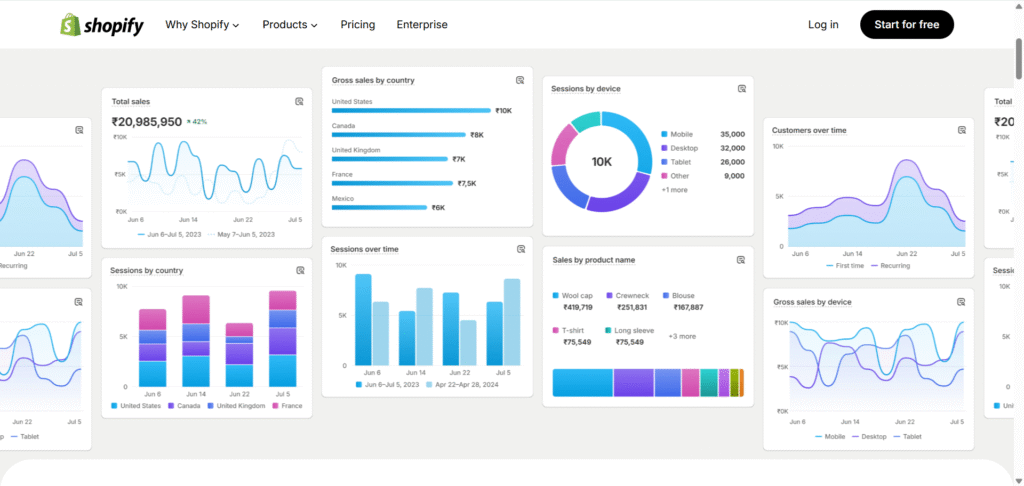
This difference extends to payments. Etsy generally locks sellers into its own payment system. Shopify offers far more flexibility. While Shopify Payments is the most popular choice due to its competitive rates and lack of transaction fees, you can also connect to over 100 third-party gateways, including popular options like PayPal and Stripe. This flexibility can help you increase conversions by offering customers their preferred way to pay.
Growing Pains: Can Etsy Scale With Your Ambition?
Etsy is a fantastic launchpad, but many successful sellers eventually hit a ceiling. The platform is designed for individual creators and small shops, not for high-volume, multi-channel brands. If your ambitions include wholesale, subscriptions, or complex product variations, you’ll quickly feel the limitations.
A clear example of this is wholesale. Etsy once launched “Etsy Wholesale” to cater to this need, but the program was discontinued in 2018. The platform simply isn’t structured to support B2B commerce effectively. Similarly, there’s no native way to offer product subscriptions or build a loyalty program.
Shopify is engineered for this exact journey. Its robust infrastructure and the ever-expanding App Store mean the platform grows with you. When your business is ready for the next level—handling massive traffic spikes during a Black Friday sale or expanding into enterprise-level commerce—there’s a clear upgrade path to Shopify Plus, a solution trusted by global brands. On Shopify, there is no ceiling to your growth.
💡If you are ready to graduate from a marketplace to a standalone website and want to evaluate all your options for scalability, check out our in-depth comparison of WooCommerce vs Shopify.
Your Shopify Starter Kit: 5 Essential Apps for Etsy Migrants
One of Shopify’s greatest strengths is its App Store, which can feel overwhelming at first. To help you hit the ground running, here is a curated list of five essential apps perfect for a seller migrating from Etsy.
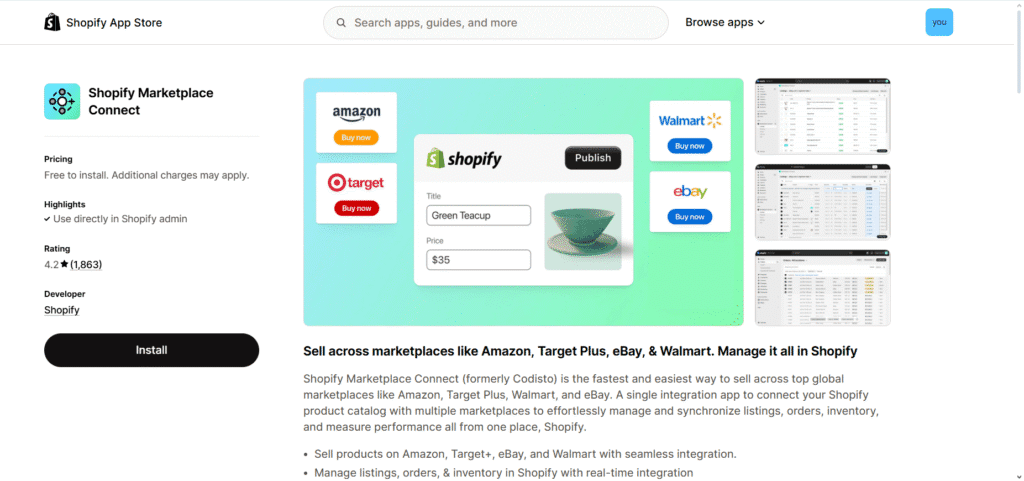
Shopify Marketplace Connect: If you plan to run your Etsy shop and Shopify store simultaneously, this app is non-negotiable. It allows you to list products on both platforms and automatically syncs inventory and orders, preventing overselling and saving you hours of manual work.
Omnisend Email Marketing & SMS: This is the tool that lets you capitalize on owning your customer data. It’s a powerful email marketing platform that allows you to create automated campaigns, from abandoned cart reminders to personalized thank you emails, turning one-time buyers into repeat customers.
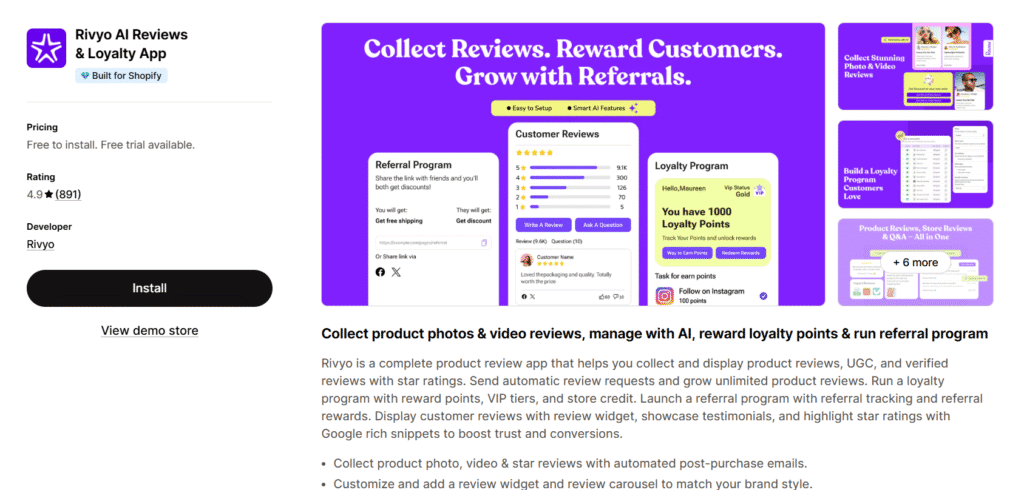
Rivyo AI Reviews & Loyalty App: On Etsy, reviews are built-in and crucial for trust. When you move to Shopify, you need to rebuild that social proof. Rivyo is an affordable and powerful app that lets you collect and display product reviews with photos and videos, right on your product pages.
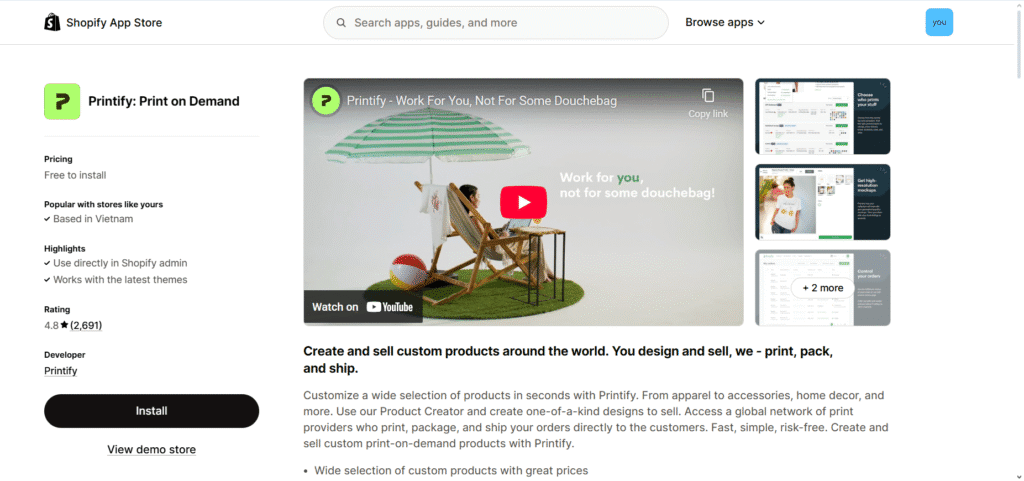
Printful or Printify: If your business is built on print-on-demand products, these apps are your engine. They integrate directly with your Shopify store, automating the entire process from order placement to printing and shipping, allowing you to focus on design and marketing.
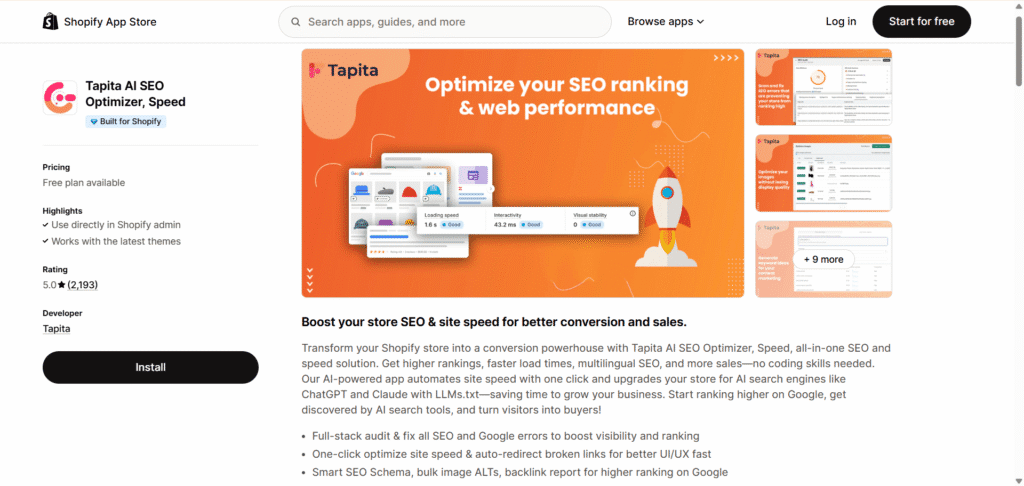
An SEO App (like Tapita AI SEO Optimizer, Speed): On Etsy, most of your traffic comes from within the marketplace. On Shopify, you need to attract visitors from search engines like Google. An SEO app helps you optimize your product pages, titles, and descriptions, laying the foundation for long-term, free organic traffic.
>> Read more: The 18 Best Free Shopify Apps for New Stores
Real Stories from the Trenches: What Sellers Actually Think
Data and feature lists are important, but the most valuable insights often come from those who have already walked the path. Hearing from real sellers who have faced the Etsy vs. Shopify decision provides a grounded perspective on the opportunities and challenges of each platform.
Case Study: Why Olivia Wang Moved Floral Neverland to Shopify
The journey of Olivia Wang, founder of the paper flower art and DIY kit store Floral Neverland, is a perfect example of the natural progression from Etsy to Shopify. As detailed in a Shopify case study, Olivia started her business on Etsy and found success, but she soon realized the platform’s limitations were holding back her vision.
Her primary motivation for moving was a desire to build a genuine brand and cultivate lasting relationships with her customers. On Etsy, she felt like just another listing in a crowded marketplace. It was difficult to encourage repeat business because she couldn’t create a unique brand experience or build an email list.
“On Etsy, it’s harder to build brand loyalty,” Wang explained. Moving to Shopify allowed her to secure a custom domain, design a beautiful storefront that reflected her brand’s aesthetic, and, most importantly, own her customer data. With Shopify, she could run targeted email campaigns, create a blog to share her story and tutorials, and build a community around her art. For Floral Neverland, Shopify provided the tools not just to sell products, but to build a destination for her audience.
>> Here’s a step-by-step guide to help you migrate your store from Etsy to Shopify
The Community Verdict: What Sellers on Reddit & Quora Say
Olivia’s story is not unique. Spend any time in online seller communities, and you’ll find the Shopify vs Etsy debate is a constant topic of discussion. On forums like Reddit’s r/EtsySellers and r/Shopify, a powerful consensus emerges from hundreds of independent voices.
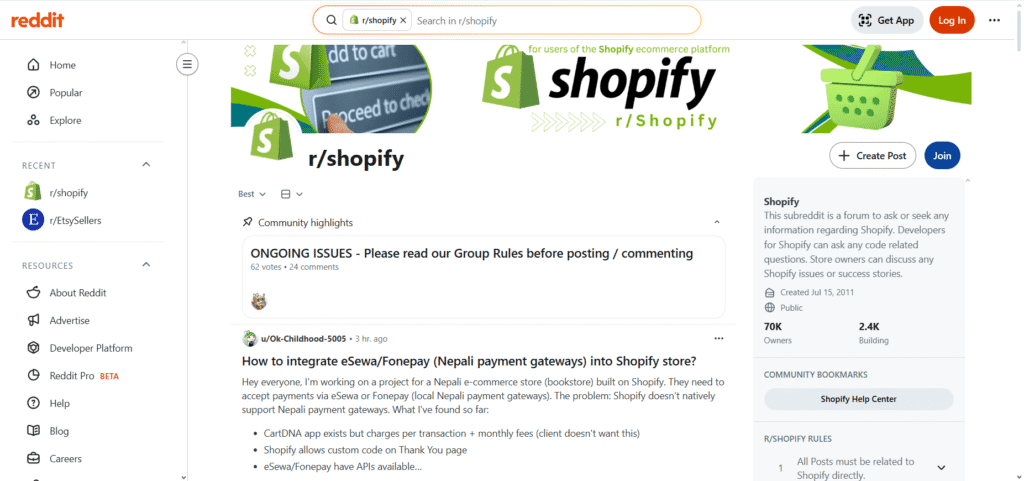
The overwhelming sentiment is that Etsy is the perfect incubator. It’s praised as a low-risk environment to validate a product, find your first customers, and learn the basics of online selling without needing a marketing budget. However, the conversation often shifts to the “growing pains” that trigger the move to Shopify: rising fees that penalize growth, the frustration of competing directly with hobbyists, and the lack of control over branding and customer communication.
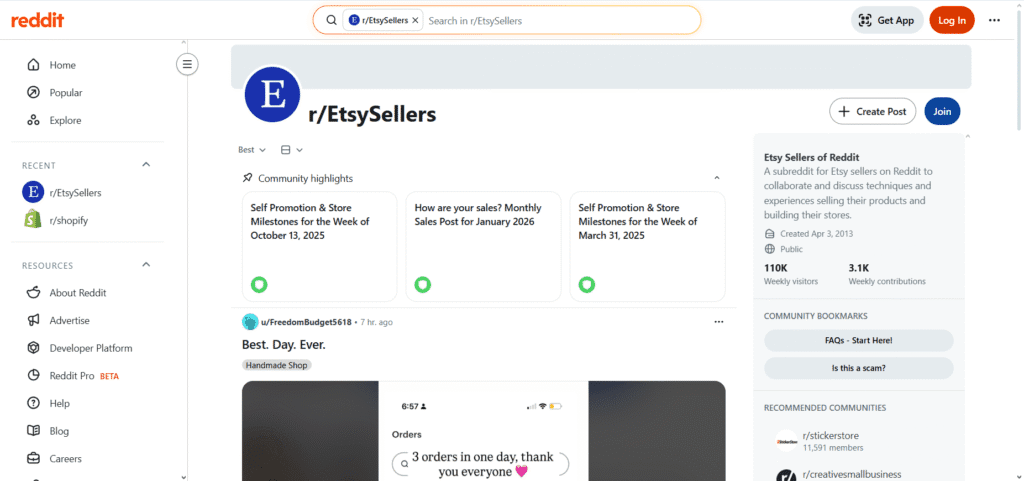
Sellers who make the switch to Shopify consistently celebrate the freedom and ownership it provides. They talk about the power of building an email list, the pride in a professionally designed site, and the long-term value of building a brand that can’t be copied. The biggest challenge they note is the need to generate their own traffic—a trade-off most agree is worth it for the unlimited potential for growth.
The Hybrid Strategy: Using Shopify and Etsy Together
Choosing between Shopify and Etsy doesn’t have to be an all-or-nothing decision. Some of the most successful online brands use a powerful hybrid strategy that leverages the unique strengths of both platforms, creating a seamless engine for acquisition and retention. This approach allows you to find new customers on Etsy while building your brand and profits on Shopify.
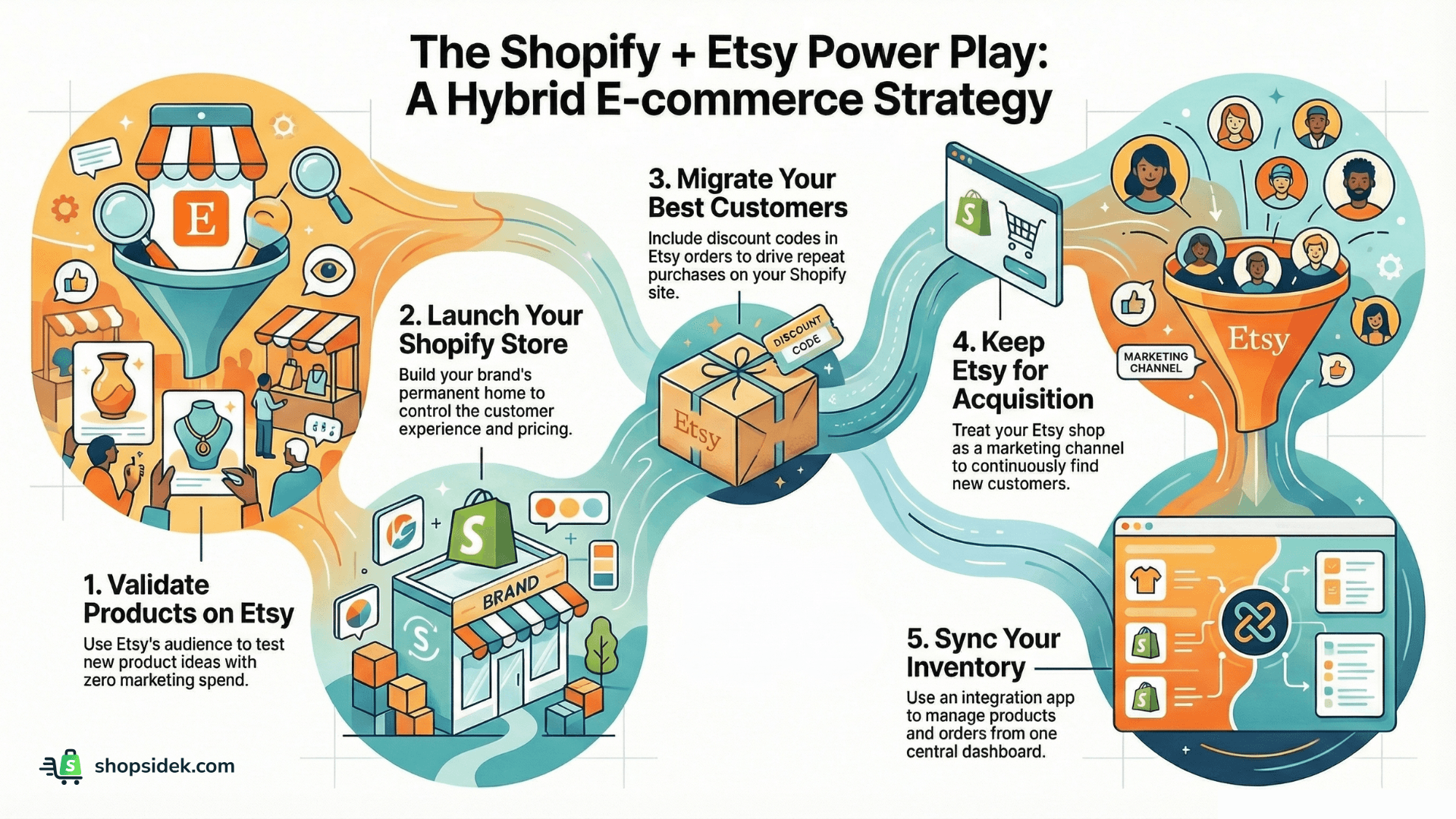
Here is a simple, five-step playbook to make it work:
1. Validate Your Products on Etsy. Use Etsy’s massive, built-in audience as your discovery platform. It’s the perfect, low-risk environment to test new product ideas, refine your designs, and understand what shoppers are searching for, all without spending a dime on marketing.
💡If you’re still looking for the perfect inventory, explore our list of winning ideas on what to sell on Shopify.
2. Launch Your Shopify Store. Once you have a proven seller and a clear understanding of your target customer, build your brand’s permanent home on Shopify. This is your flagship store where you control the branding, the customer experience, and the pricing.
3. Migrate Your Best Customers. My advice is to focus on this goal: turn one-time Etsy buyers into loyal customers of your brand. Include a thank-you card in every Etsy order with a special discount code for their next purchase on your new Shopify site. This incentivizes them to move to your primary sales channel.
4. Keep Etsy as an Acquisition Channel. Don’t shut down your Etsy shop. Instead, think of it as a powerful marketing channel, just like Instagram or Google. It will continue to bring in new customers, and you can repeat the process of migrating them over to your Shopify store for future purchases.
5. Sync Your Inventory. To avoid the logistical nightmare of overselling, use an integration app. Tools like Shopify Marketplace Connect allow you to manage your products, inventory, and orders from both platforms in one central dashboard, saving you time and preventing errors.
Final Verdict: Which Platform Is Right for Your Business?
The choice between Shopify and Etsy is a choice between two different business models. One is designed for discovery and simplicity, the other for ownership and scale. After breaking down the fees, features, and real-world stories, the right path for you should be clear.
Choose Etsy if you:
- Are a hobbyist, artist, or creator of one-of-a-kind handmade or vintage items.
- Are just starting out and want to test a product idea with minimal upfront cost.
- Have a limited marketing budget and want to tap into a large, built-in audience of active shoppers.
- Prioritize simplicity and speed to get your first products listed and sold.
Choose Shopify if you:
- Are serious about building a long-term, sustainable brand that you own. This is perhaps the most important factor to consider when deciding on selling on Shopify vs Etsy.
- Want complete control over your website’s design, branding, and customer experience.
- Plan to scale your business and need a platform that can grow with you without limitation.
- Understand that owning your customer data is the key to effective marketing and repeat business.
Ready to build your own brand and take control of your future? Thousands of sellers have made the switch.


Just a heads-up: As a Shopify Media Partner, I may earn a small commission if you sign up. It won’t cost you anything, and it helps me continue providing free resources.
Frequently Asked Questions
Can I move my Etsy shop to Shopify?
Absolutely. Migrating from Etsy to Shopify is a well-established path for growing sellers. You have several options to make the process smoother. You can manually export your product and customer data from Etsy as a CSV file and import it into Shopify.
For a more automated and comprehensive transfer, you can use dedicated migration apps and services like Litextension, which can help move your products, customer lists, and even order histories with minimal hassle.
Is it more expensive to sell on Shopify than Etsy?
It depends entirely on your sales volume, but for most growing businesses, Shopify is more cost-effective. Etsy’s pay-per-item fee structure seems cheaper initially, but the percentage-based fees add up quickly as your sales increase.
As we demonstrated in our real-world cost calculation table earlier, Shopify’s predictable subscription model becomes significantly cheaper once you reach even a modest sales volume of a few hundred dollars per month.
Is it harder to get sales on Shopify?
It requires a different strategy. On Etsy, you benefit from a built-in audience of millions of shoppers, which can make getting your first few sales easier. However, you are also in direct competition with thousands of other sellers on the same platform.
On Shopify, you are responsible for generating your own traffic through marketing efforts like social media, SEO, and email marketing. While this requires more upfront effort, it also means you are building a direct relationship with your customers and creating a brand that stands on its own, which, in my opinion, is far more valuable for sustainable, long-term growth.