⚡ ShopSideK Verdict
To dropship on Shopify, you need 5 things: a Shopify store ($29/month Basic plan), a supplier app like DSers or FFOrder, a profitable niche validated with Google Trends, a marketing budget of $250–$500 for initial ad testing, and roughly 2–3 hours to build and launch. No coding, no inventory, no warehouse. Realistic startup cost: $500–$1,000 total. Target 10%–30% profit margins using the 3x pricing rule (source at $10 → sell at $30+). This guide walks you through every step — from LLC setup to your first Facebook ad.
- 1 Business Foundation — Choose Sole Prop or LLC, open a business bank account, activate Shopify Payments + PayPal
- 2 Find Your Niche — Validate with Google Trends + Keyword Planner. Run the 5-point product vetting checklist: shipping speed, supplier rating (95%+), order volume (300+), photo quality, and 3x margin potential
- 3 Choose a Supplier — Pick from 5 types: Shopify Collective (US brands), DSers (low cost), FFOrder (QC inspections), Printify (custom POD), or AutoDS (automation). Always order samples first
- 4 Build Your Store — Sign up → add products → customize Dawn theme → create trust pages (About, Shipping, Returns) → install 3 essential apps (supplier, reviews, email)
- 5 Launch Marketing — Organic TikTok/Reels first, then one targeted Facebook ad ($10–$20/day), plus niche community engagement (Reddit & Facebook Groups). Scale with SEO blog content long-term
US brands · Fast shipping · Native integration
Widest selection · Lowest cost · Global
QC inspections · 1-on-1 manager · 7–9 day US/EU
Print-on-demand · Custom designs · No upfront cost
Full automation · Multi-supplier · Scale fast
Dropshipping is not a get-rich-quick scheme. You are the CEO, marketer, and support agent — all in one. Expect 10%–30% profit margins (not 90%), and plan for a serious time commitment in the first 3 months. If that sounds like a welcome challenge rather than a warning — this guide is for you.
3-day free trial · Then $1/month for 3 months · Cancel anytime
You’re here because you want to learn how to dropship on Shopify. You’re ready to build something of your own, and dropshipping offers a powerful path without a warehouse full of inventory.
With a platform like Shopify powering millions of stores worldwide, you’re looking at one of the most popular and effective ways to make it happen.
But let’s be clear: this isn’t a get-rich-quick scheme. Building a real, profitable dropshipping business requires a smart strategy and dedicated work. Many guides will show you which buttons to click, but they don’t show you how to build a sustainable business.
This is the guide that does. We’ll walk you through every essential step of how to dropship on Shopify—from the foundational business and legal setup to finding winning products and launching your first marketing campaign. We’ll even give you a playbook for troubleshooting the common problems every new founder faces.
Consider this your complete roadmap to building a real brand. Let’s get started!
Is Dropshipping on Shopify Right For You? A 5-Point Reality Check
Before you choose a single product or build your store, it’s important to ask: is this the right business model for you? Dropshipping is an incredible opportunity, but success depends on more than just the platform. Here’s a realistic look at what it takes.
✅ It Requires an Entrepreneurial Mindset.
You are the CEO, the marketer, the customer support agent, and the strategist—all in one.
Success comes from being a proactive problem-solver, not from waiting for sales to happen. If you’re ready to take full ownership of your business’s success and failures, you’re on the right track.
✅ Profit Margins are Realistic, Not Astronomical.
While you don’t have inventory costs, you still have expenses. A healthy dropshipping profit margin typically falls between 10% and 30%.
This means for every $100 in sales, you might keep $10 to $30 after paying for the product, shipping, and marketing. It’s a solid business, but not an overnight fortune.
✅ You Are a Marketer First.
Finding a great product is only half the battle. The way I see it, your primary job as a dropshipper is marketing.
You’ll need to learn how to run ads, create engaging social media content, and write compelling product descriptions to attract customers to your store. The product won’t sell itself.
✅ Customer Service is Your Responsibility.
When a customer has a question about shipping or a problem with a product, they will contact you, not your supplier.
Since you don’t control the logistics, providing outstanding, responsive customer service is one of the most critical ways to build trust and earn repeat business.
✅ It Demands a Real Time Commitment.
The idea of a passive income business is appealing, but dropshipping requires significant work, especially in the beginning.
Expect to invest serious time into research, building your store, creating marketing campaigns, and managing customer inquiries.
If these points sound less like warnings and more like a welcome challenge, then dropshipping is an excellent fit. You’re ready to build a real business with a solid foundation.
Feeling confident that dropshipping is your path? The best way to understand the platform is to explore it yourself. You can start a free Shopify trial and follow along with the steps in this guide without any commitment.
Step 1: The Foundational Blueprint (Business & Finance Setup)
I’ve found that many new entrepreneurs jump straight into picking products. But the most successful store owners start by building a solid foundation.
Treating your dropshipping venture like a real business from day one sets you up for long-term success and saves you from major headaches down the road.
(If you are completely new to the platform, you may also want to read our broader playbook on how to start a Shopify business before focusing exclusively on the dropshipping model.)
This section covers the crucial first steps for how to dropship on Shopify that others often skip.
Choosing Your Business Structure: Sole Proprietorship vs. LLC
How you legally structure your business impacts your personal liability and taxes. While you should always consult with a legal professional, here are the two most common starting points for dropshippers.
Sole Proprietorship: This is the default structure. If you start selling without formally registering as anything else, you are a sole proprietor. It’s the easiest to set up, and you report business income on your personal tax returns.
The major downside is that there is no legal separation between you and the business. Your personal assets could be at risk if the business runs into legal trouble.
Limited Liability Company (LLC): An LLC creates a separate legal entity for your business. This provides a crucial layer of protection for your personal assets, like your home and savings, from business debts or lawsuits.
It requires more paperwork and a registration fee, but it’s a wise step for any serious entrepreneur. For guidance, you can look to official resources like the IRS website.
My advice is for most beginners, starting as a sole proprietorship is acceptable. You can always transition to an LLC later as your business grows and generates consistent revenue.
Your Starter Budget: A Complete Financial Breakdown [Free Template]
One of the biggest myths about dropshipping is that you can start for free. While startup costs are low, they aren’t zero. Planning your dropshipping budget is essential.
Here’s a realistic breakdown of what you should expect to spend:
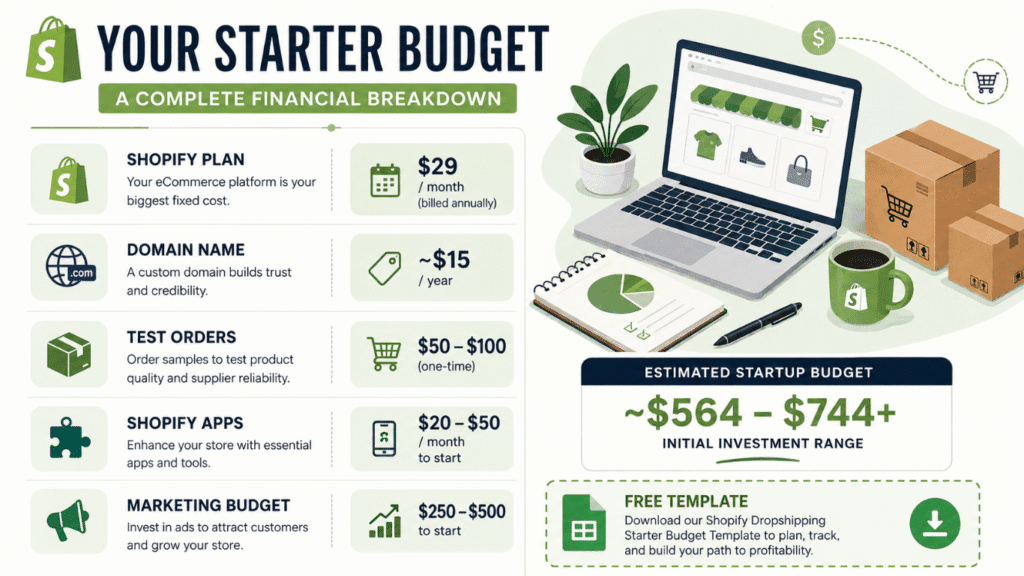
- Shopify Plan: Your ecommerce platform is your biggest fixed cost. The Basic Shopify plan provides everything you need to get started. ($29/month, billed annually).
- Domain Name: To me, a custom domain (e.g., yourbrand.com) is non-negotiable for building trust. (~$15/year).
- You can register your domain through Shopify or use an affordable registrar like Namecheap.
- Test Orders: Before you sell anything, you must order samples to test product quality and supplier reliability. (Budget 50–100).
- Shopify Apps: While many essential apps have free plans, you may want a paid app for specific functions like customer reviews or email marketing. (Budget 20-50/month to start).
- Marketing Budget: This is your most important and variable expense. You need to spend money to attract customers. A starting budget of 250–500 is a realistic amount for initial ad testing on platforms like Facebook or TikTok.
To help you map this out, we’ve created a free Shopify Dropshipping Starter Budget Template. Download it to track your expenses and plan your path to profitability.
Setting Up Your Finances: Business Bank Accounts and Payment Processors
Keeping your personal and business finances separate is a golden rule of business. It makes accounting clean, simplifies tax time, and reinforces the professionalism of your venture.
Start by opening a dedicated business checking account. Many online banks offer free business accounts with no minimum balance. Use this account for all business income and expenses.
When you set up your Shopify store, you’ll activate payment processors to accept customer payments. Shopify Payments, powered by Stripe, is the standard and easiest way to accept all major credit cards.
You can also easily connect other options like PayPal to give your customers more choice at checkout. All your revenue will be deposited directly into your designated business bank account.
Step 2: Finding Your Niche and Products That Actually Sell
This is where the creative work begins. Finding the right niche and products is a blend of following your interests and validating them with real-world data. A passionate founder who understands their customers is powerful, but a passionate founder backed by data is unstoppable.
The Data-Driven Approach to Niche Selection
The best business ideas often start with your own passions or hobbies, but you can’t assume your interest will translate into sales. You need to validate that there’s a hungry market for your idea.
Start by brainstorming a few niches you’re interested in—think “eco-friendly pet supplies,” “home coffee brewing gear,” or “minimalist travel accessories.” Then, turn to free tools to check their viability.
💡If you’re struggling for inspiration, browsing lists of what to sell on Shopify can help spark your initial ideas.
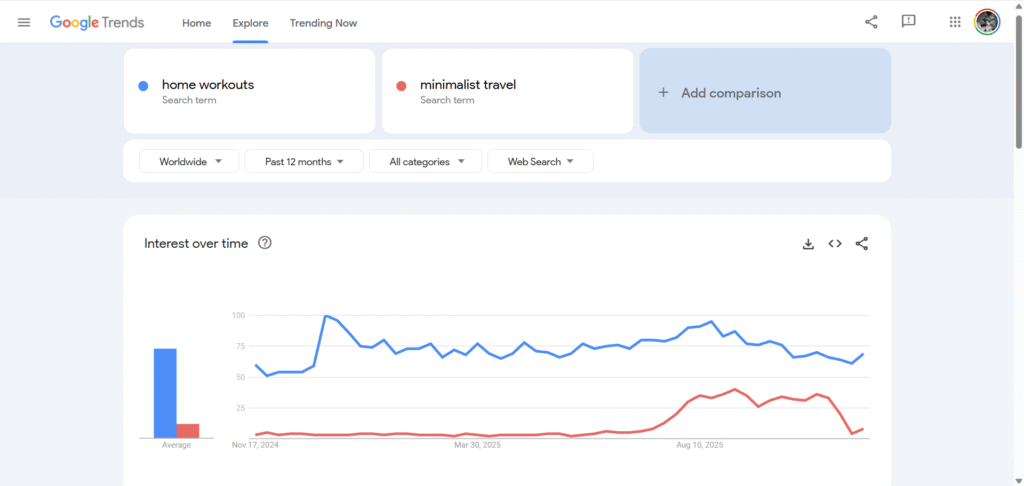
From my experience, Google Trends is your best friend here. It shows you the relative search interest for a topic over time. You can compare different niches to see which has more demand, whether it’s a stable trend or a fading fad, and if it’s seasonal.
For example, you might see that interest in “home workouts” is steady year-round, while “minimalist travel” peaks during the summer.
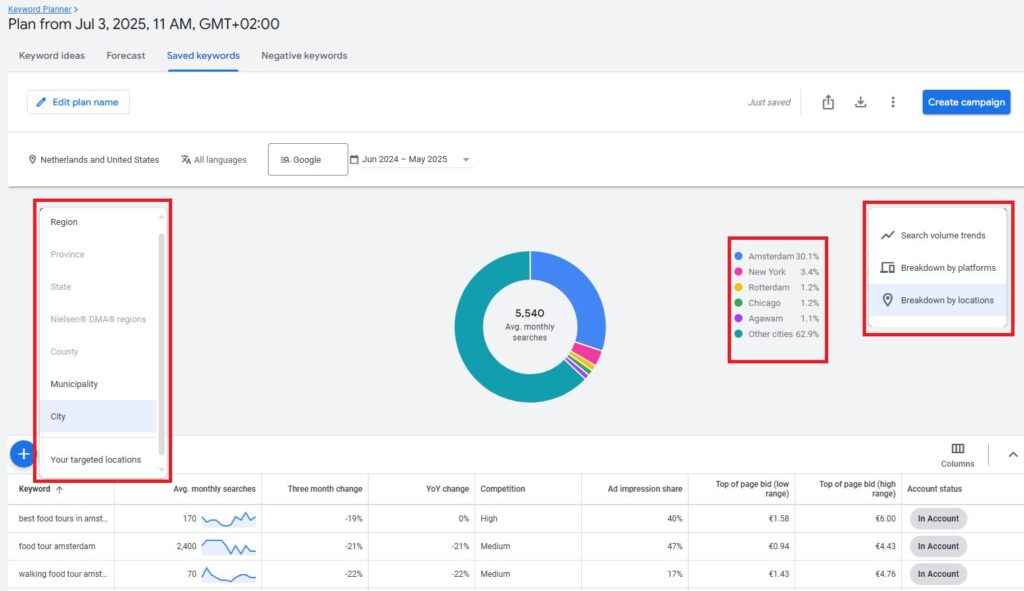
Tools like Google Keyword Planner can give you reliable search volume data for specific product keywords, helping you gauge real demand as you research. It’s free to use with a Google Ads account and provides detailed insights into how often people search for a term, plus related keyword ideas.
The goal is to find a niche with stable or growing interest where you can position yourself as a go-to expert.
Case Study: How eBike Generation Found a $3 Million Niche
Don’t underestimate the power of data. Just ask John Murphy, founder of eBike Generation. As told on the Shopify blog, his journey didn’t start with a lifelong passion for electric bikes; it started with strategic keyword research.
Murphy saw the search volume for “electric bikes” and related keywords steadily climbing. He identified a clear, growing demand that wasn’t being fully met by a dedicated, customer-focused online store.
By analyzing what people were searching for, he was able to build a brand that directly answered their questions, offered the products they wanted, and grew into a $3 million-a-year business. This is the perfect example of how validating an idea with data can turn a simple observation into a highly profitable dropshipping store.
The 5-Point Product Vetting Checklist
Once you have a promising niche, you need to find specific products that are not only desirable but also practical to dropship. Before adding any product to your store, run it through this five-point checklist, a framework adapted from best practices for sourcing on major platforms like AliExpress.
🚚 Reliable Shipping
Long shipping times are a major pain point for customers. I recommend you look for suppliers who offer reasonable and reliable shipping options.
If sourcing from AliExpress, for example, products with “ePacket” shipping (or its equivalent) were historically a good indicator, though you should always check current shipping estimates. For US/EU suppliers, look for processing times under 3 days.
🌟 Top-Tier Supplier Reliability
Your supplier is your business partner. Only work with the best.
Look for suppliers with a track record of excellence, such as a 95% or higher positive feedback rating. This shows they consistently deliver quality products and good service.
📈 Proven Order Volume
A product with a history of sales is a product with proven demand. Look for items that have at least 300+ recent orders.
This indicates that other people are successfully selling it, and the supplier knows how to handle consistent fulfillment.
📸 High-Quality, Non-Branded Photos
Great marketing starts with great visuals. Ensure your supplier provides high-quality product photos and videos.
Critically, make sure the photos don’t include another company’s logo or branding, which can confuse customers and cause legal issues.
💰Strong Profit Margin Potential
Finally, do the math. Your product needs a high enough perceived value to allow for a healthy markup.
A good rule of thumb is the 3x rule: if you can source a product for $10, you should be able to sell it for at least $30 to cover the product cost, marketing expenses, and still make a profit.
Step 3: Choosing Your Supplier: The Ultimate Partner Guide
Your dropshipping supplier isn’t just a vendor; they are the backbone of your business. They control product quality, shipping speed, and packaging—all of which directly impact your customer’s satisfaction and your brand’s reputation.
Comparison: The 5 Best Dropshipping Supplier Types for Shopify
The world of dropshipping suppliers is vast, but most can be grouped into a few key models. The right one for you depends on your niche, budget, and business goals. Here’s a comparison of the top options available through the Shopify App Store.
| Supplier App / Type | Pricing | Best For… | Shipping Locations | Key Features |
|---|---|---|---|---|
| Shopify Collective | Free to use | Curating high-quality products from trusted US-based brands. | Primarily United States | Direct Shopify integration; hand-picked suppliers; builds trust with American brands. |
| DSers-AliExpress | Free plan available | Finding the widest possible variety of products at the lowest cost. | Global (Primarily China) | Massive product selection; bulk order processing; connects directly to AliExpress marketplace. |
| FFOrder | Free to install ($15 coupon) | All-in-one dropshipping & POD sourcing directly from Chinese factories. | Global (10-15 business days) & fast shipping to US/EU in 7–9 business days | Manual QC inspections; dedicated 1-on-1 account manager; low-MOQ custom branding; 1.7M+ winning products. |
| Printify | Free plan available | Artists, designers, and creators who want to sell unique, custom products. | Global network of printers | Print-on-demand model; no upfront cost for products; huge catalog of customizable items. |
| AutoDS | Paid plans (trial available) | Automating and scaling your business by working with multiple suppliers. | Global (integrates many) | All-in-one automation; product sourcing marketplace; automated order fulfillment & tracking. |
How to Spot a Reliable Supplier (and Avoid the Bad Ones)
Once you’ve chosen a platform or app, you still need to vet the individual suppliers you work with. A great supplier makes your job easy, while a bad one can quickly ruin your brand’s reputation. Here are actionable steps to find a trustworthy partner.
Always Order Samples. This is the most important rule. You cannot judge a product’s quality, feel, and packaging from a screen. Order samples to your own home to experience exactly what your customers will.
- Does it feel cheap?
- Is the packaging secure?
- How long did it really take to arrive?
This small investment can save you from countless future headaches.
Dig Into Seller Ratings and Reviews. Don’t just look at the overall score. A 95% positive rating is a good start, but you need to read the actual reviews, especially the negative ones.
Look for patterns. Are customers consistently complaining about slow shipping, poor communication, or products not matching their description? These are clear warning signs.
Communicate With Them Directly. Before committing, send the supplier a message. Think of it as a mini-interview. Ask them about their fulfillment process, their return policy for defective items, and their typical response times.
A professional supplier will respond promptly and clearly. A slow, vague, or unhelpful response tells you everything you need to know about the service you can expect when a real customer has a problem.
Watch Out for Red Flags. Trustworthy dropshipping suppliers and apps make money when you make a sale. Be wary of any individual supplier that tries to charge you ongoing monthly fees or a “subscription” just for access to their products.
As Shopify’s guides warn, these pre-order fees are often a sign of a low-quality directory, not a true partner. Legitimate fees come from platform apps (like FFOrder or AutoDS), not from the individual product suppliers themselves.
💡Choosing the right supplier often comes down to choosing the right app to connect with them. For a full comparison of every major option at each stage of your business, see our complete guide to the best Shopify apps for dropshipping—from your first product to full-scale automation.
Step 4: Building Your Shopify Store for Conversion
Your Shopify store is your digital storefront. It’s where customers will discover your products, learn about your brand, and decide whether to trust you with their money.
A professional, easy-to-navigate store is essential for converting visitors into buyers. Here’s how to build one quickly and effectively.
Shopify Setup Essentials: From Sign-Up to Launch in Under an Hour
With Shopify, you don’t need to be a designer or developer to create a beautiful store. The platform is designed to be intuitive. Follow these five steps to get the essentials in place.
1. Start Your Free Trial: Create your store using our official Shopify partner link. Using our link doesn’t cost you anything extra and supports the content we create.
It takes you directly to Shopify’s secure signup page, where you’ll answer a few quick questions about your business.
Within minutes, you’ll be inside your admin dashboard—the central hub for managing products, customizing your store, and monitoring sales.
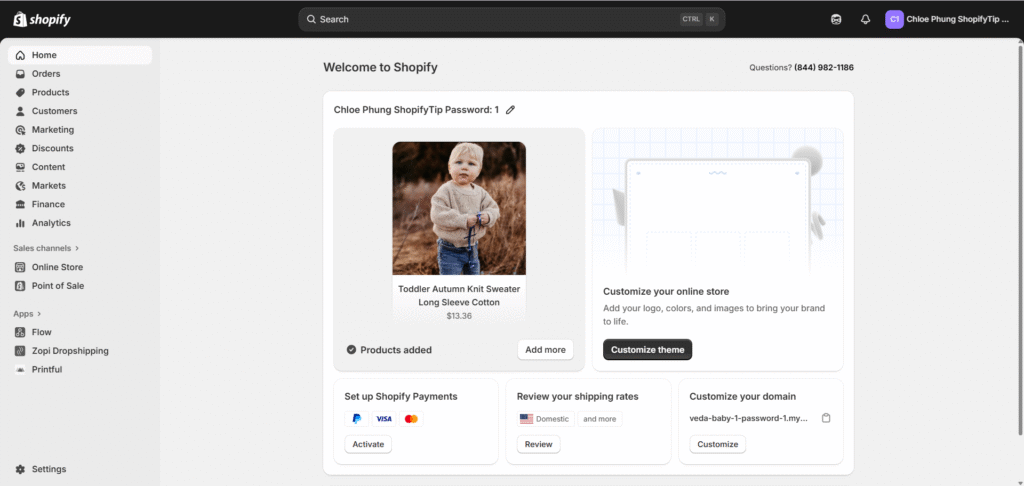
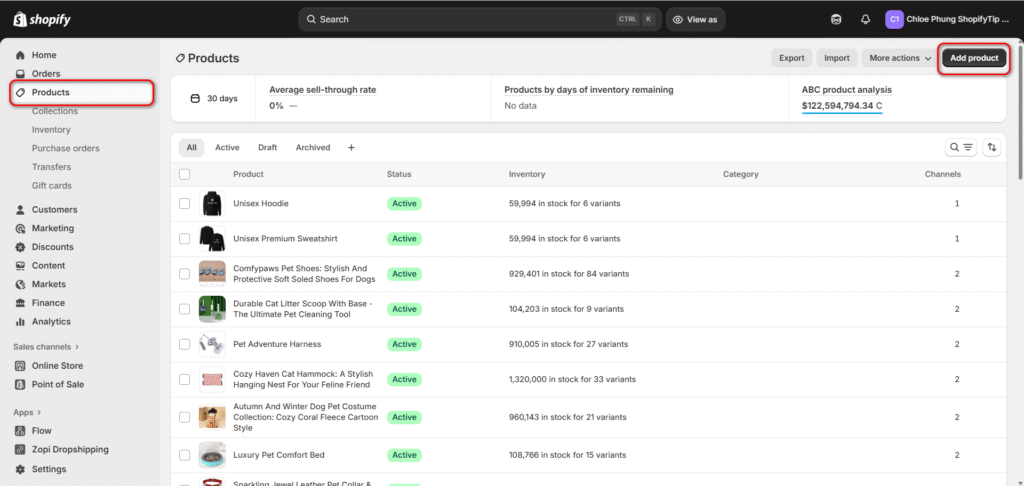
2. Add Your First Product: Before you can design your store, you need something to sell. You can either use a supplier app (like DSers or FFOrder) to import products directly or add one manually by clicking “Products” > “Add product” in your admin.
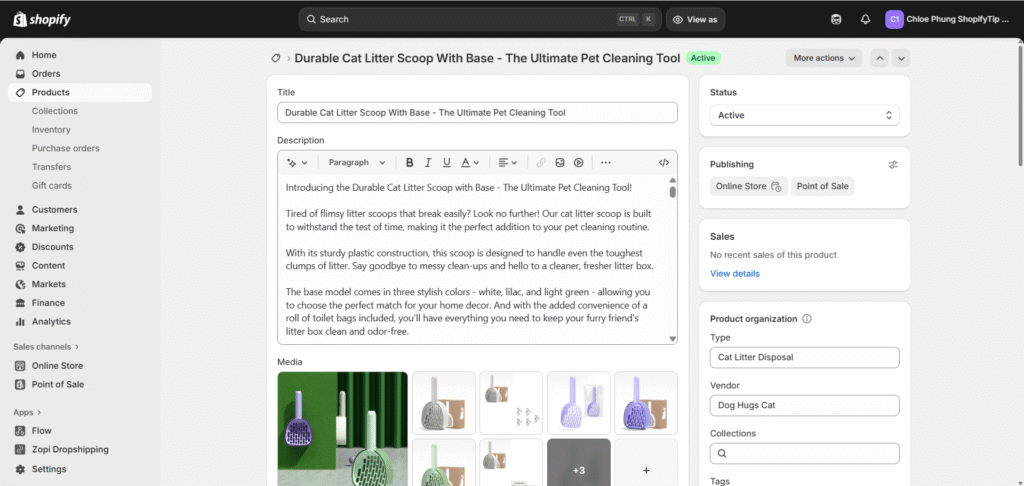
Fill in the title, description, and price, and upload the best product images from your supplier.
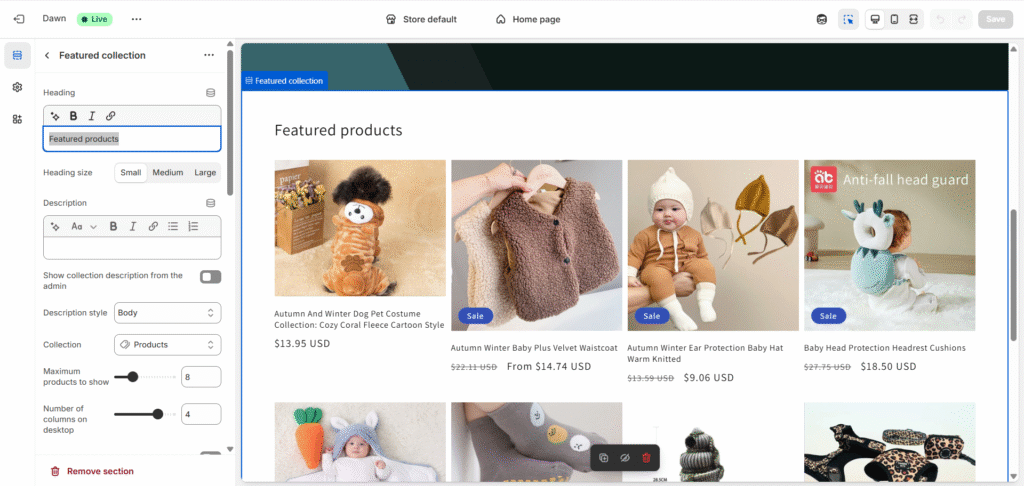
3. Choose and Customize Your Theme: Your theme is the template for your store’s design. We recommend starting with Dawn, Shopify’s free, fast, and mobile-friendly theme.
From your admin, go to “Online Store” > “Themes.”
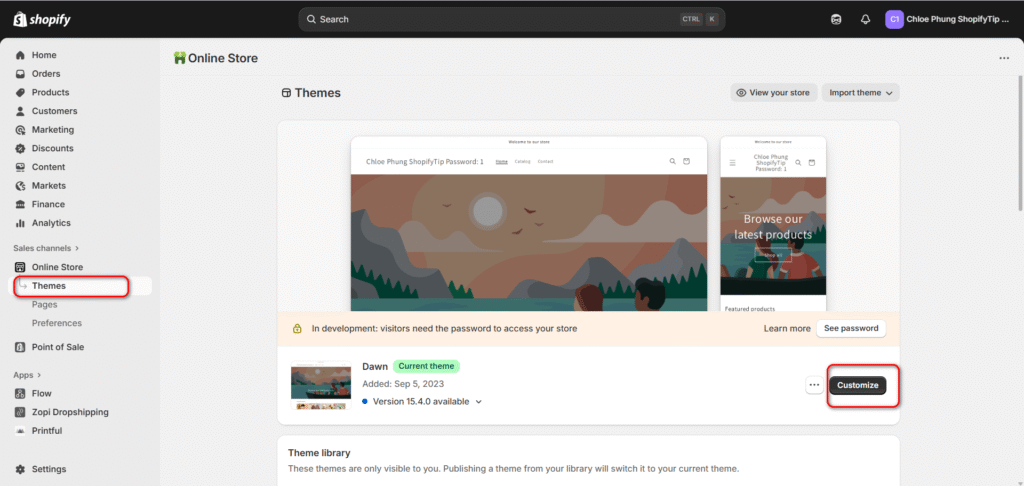
You can customize colors, fonts, and layouts to match your brand without writing a single line of code.
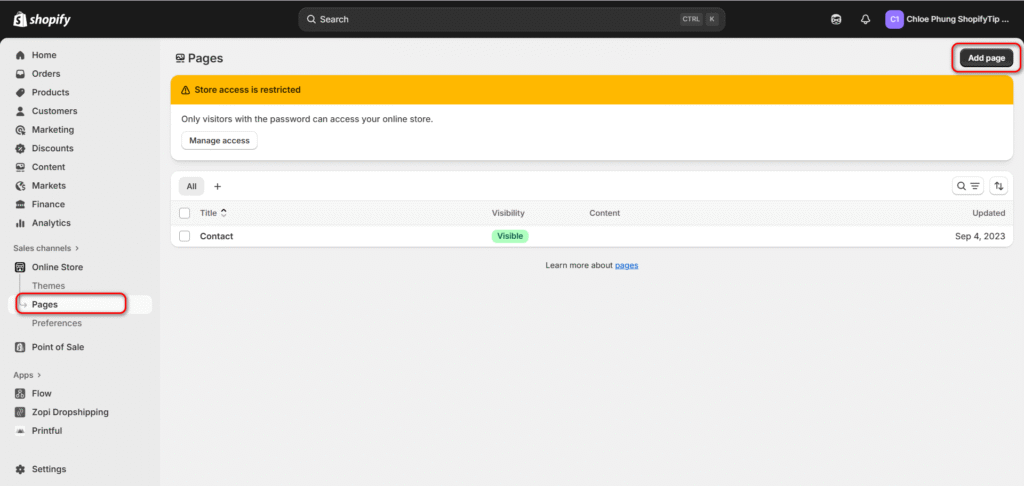
4. Create Key Pages: A trustworthy store has more than just product pages. Be sure to create an “About Us” page to tell your story, a “Contact Us” page, and clear “Shipping Policy” and “Return Policy” pages.
Under “Online Store”, click “Page” > “Add page”
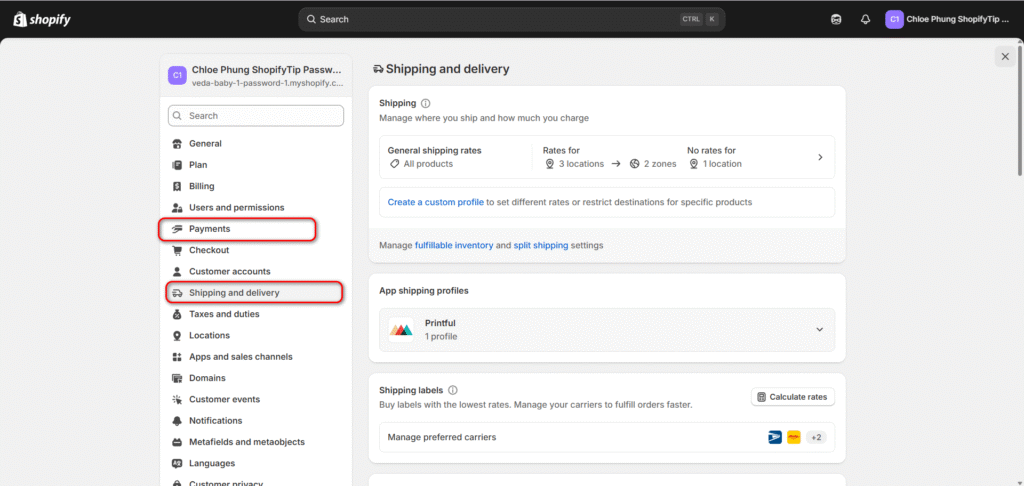
5. Set Up Shipping and Payments: In your “Settings,” navigate to “Shipping and delivery” to set your shipping rates. Then, go to “Payments” to activate Shopify Payments. This allows you to accept all major credit cards instantly. Simply connect your business bank account, and you’re ready to get paid.
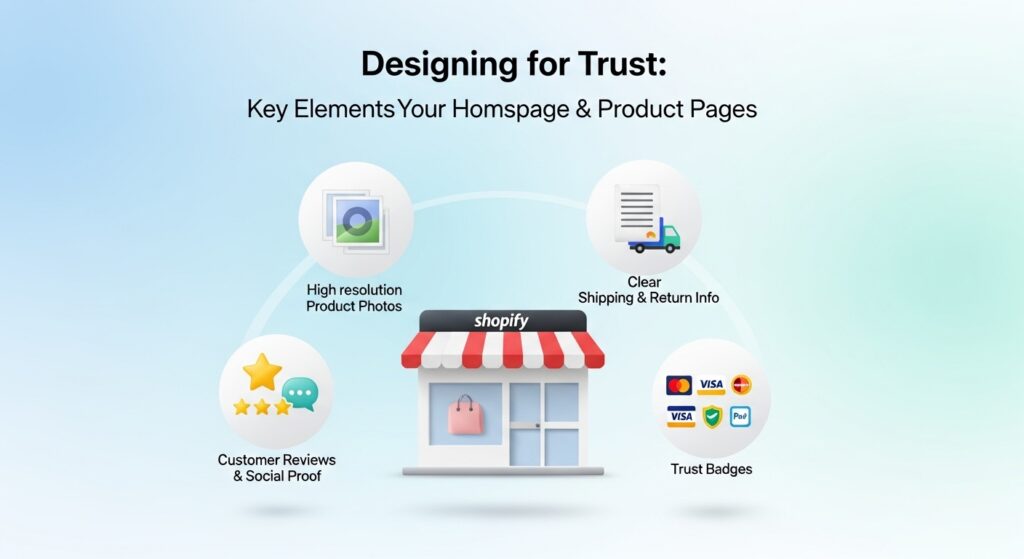
Designing for Trust: Key Elements for Your Homepage & Product Pages
A beautiful design is nice, but a design that builds trust is what drives sales. Because dropshipping customers don’t know you, they look for signals that your store is legitimate and professional. Focus on these key elements:
- High-Quality Product Photos: Your product images are your most powerful selling tool. Use the highest-resolution photos your supplier provides. If possible, use images that show the product in use.
- Clear Shipping & Return Information: Be upfront about shipping times on your product page and in a dedicated policy page. Transparency builds trust, even if shipping takes a little longer.
- Customer Reviews & Social Proof: No one wants to be the first to buy something. Use a reviews app to import reviews from your supplier or encourage new customers to leave their own. This is the single most effective way to build credibility.
- Trust Badges: Display secure payment icons (like Visa, Mastercard, PayPal) on your product pages and at checkout. This simple visual reassures customers that their financial information is safe.
The 3 Must-Have Shopify Apps for a New Dropshipping Store
Shopify apps extend the functionality of your store. While there are thousands to choose from, a new dropshipping store only needs three essential types to get started.
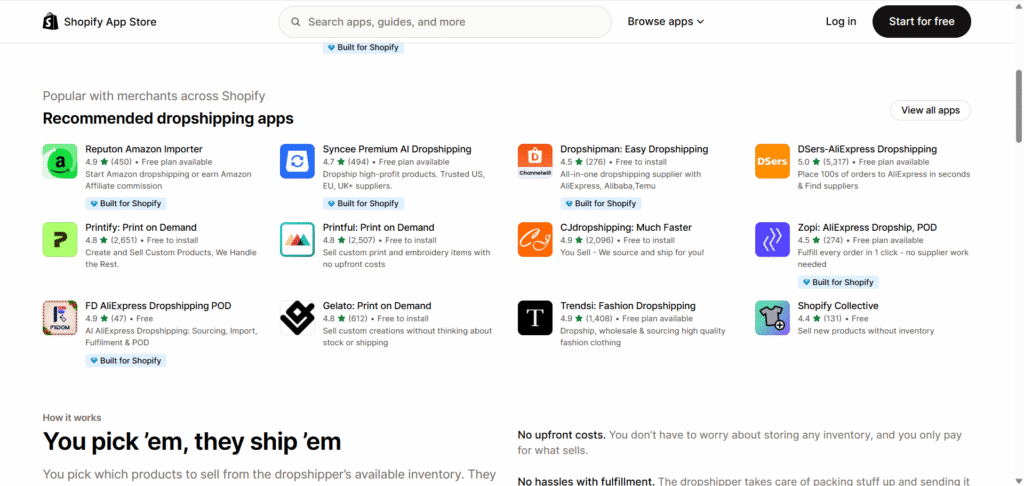
A Supplier Integration App: This is your lifeline to your products. An app like DSers for AliExpress, or the app for your chosen supplier (FFOrder, Printify, etc.), automates the process of importing products, syncing inventory, and sending orders to your supplier.
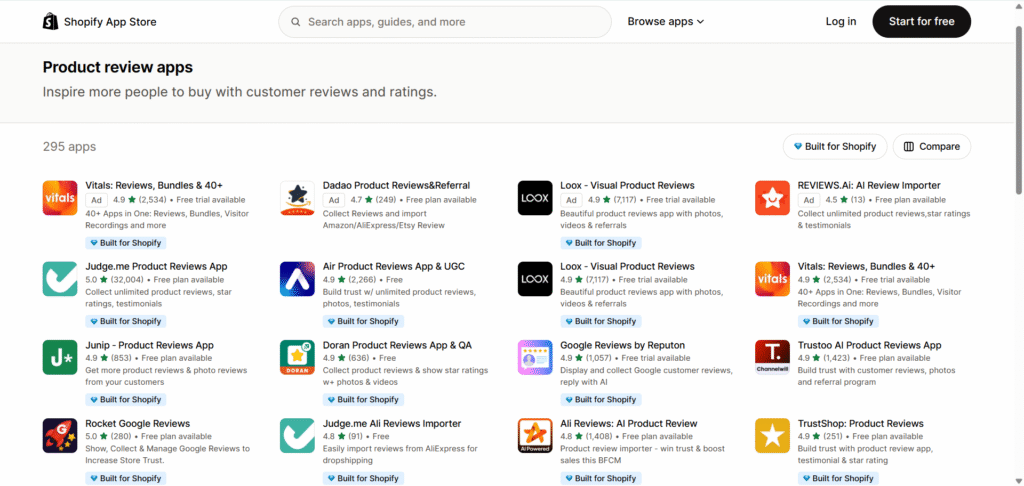
A Product Reviews App: Social proof is non-negotiable. Apps like Loox (30 day free trial) or Vitals Reviews (10% monthly discount + 40-day free trial) allow you to easily display photo and text reviews on your product pages, which is proven to increase conversion rates.
An Email Marketing App: Not every visitor will buy on their first visit. Use an app like Shopify Email (free) or Omnisend to capture email addresses, send abandoned cart reminders, and run promotions. It’s one of the most profitable marketing channels you’ll have.

Now that you have the blueprint for a high-converting store, it’s time to bring it to life. All the tools, themes, and features mentioned are ready for you. Start your free Shopify trial today and build the foundation of your business.
Step 5: A Realistic Marketing Plan for Your First Sale & Beyond
Your store is built, your products are selected, and your foundation is solid. Now, it’s time to attract customers. Marketing isn’t about trying everything at once; it’s about focusing your efforts on a few key channels, learning what works, and then scaling up.
This plan gives you a starting point for your first month and a strategy for sustainable long-term growth.
Your First 30 Days: A Simple 3-Channel Launch Plan
The goal for your first month is to generate traffic, gather data, and make your first sales. Don’t worry about perfection; focus on action. Here is a simple, manageable plan to get you started.
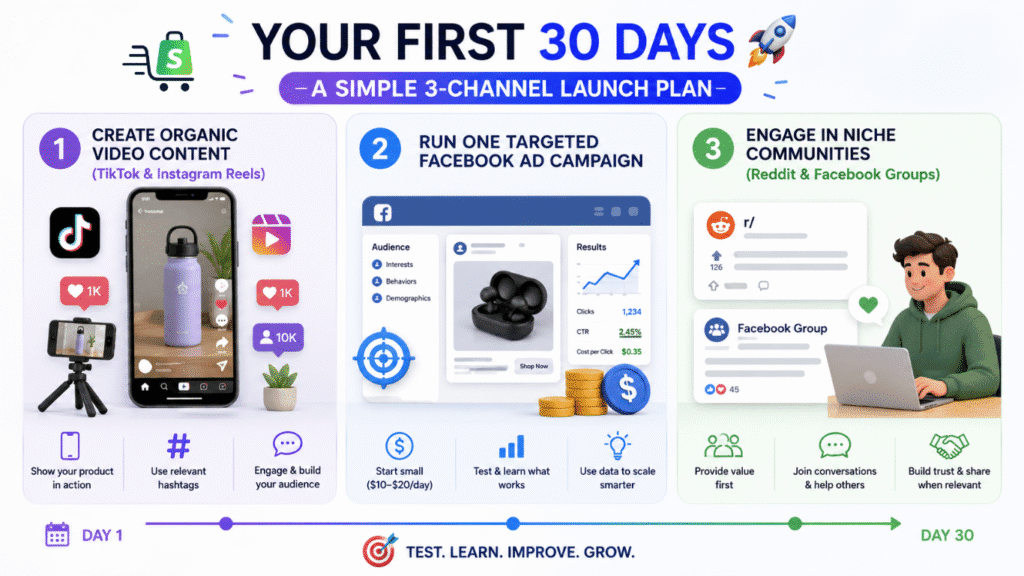
🎥 Create Organic Video Content (TikTok & Instagram Reels): Short-form video is the most powerful tool for product discovery right now.
You don’t need a professional studio—your phone is enough. Create simple videos that showcase your product in action. Unbox it, demonstrate its key feature, or show how it solves a common problem.
Post consistently, use relevant hashtags, and engage with comments to build an initial audience without spending a dollar on ads.
As your content gains traction and comments start flooding in, manually replying to every “Price?” or “How to order?” message becomes a bottleneck. Tools like IceKulfi can automate this by instantly sending a DM with your product link whenever someone comments a specific keyword, so you never miss a potential lead — even while you sleep.
📢 Run One Targeted Facebook Ad Campaign: Paid advertising is the fastest way to get your product in front of potential buyers.
Start with a small, controlled budget (10–20 per day). Use the niche and customer research you did earlier to build a specific audience in Facebook Ads Manager. Your goal here isn’t just sales; it’s to learn.
Pay attention to which ad images, headlines, and audiences get the most clicks and engagement. This data is gold for future campaigns.
🤝 Engage in Niche Communities (Reddit & Facebook Groups): Your ideal customers are already gathered online.
Find them in relevant subreddits or Facebook Groups dedicated to your niche. The key here is to provide value, not to spam. Participate in conversations, answer questions, and become a helpful member of the community.
When it feels natural and relevant, you can share your product or store as a solution. This builds authentic brand awareness and trust.
Scaling with SEO: How to Get Free Traffic Long-Term
Constantly paying for ads can be expensive. Search Engine Optimization (SEO) is your long-term strategy for generating free, consistent traffic from search engines like Google.
It’s an investment that takes time to pay off, but the returns are unmatched.
The core of SEO is understanding what your potential customers are searching for and creating content that meets their needs. This process starts with keyword research. You should focus on two main areas:
- Commercial Keywords for Product Pages: Optimize your product titles and descriptions for what people search for when they’re ready to buy. Instead of a generic title like “Cool Backpack,” use a descriptive, keyword-rich title like “Waterproof 40L Hiking Backpack for Camping.”
- Informational Keywords for Blog Content: The best way to attract new customers is to help them solve problems. Use your store’s blog to answer common questions in your niche. If you sell coffee gear, you could write an article on “How to Brew the Perfect French Press Coffee.” This attracts potential customers to your site, establishes your brand as an expert, and introduces them to your products in a helpful, non-salesy way.
Shopify has built-in features that make it easy to manage your page titles, meta descriptions, and image alt text. By consistently creating valuable content that answers your customers’ questions, you will slowly build authority and rank higher in search results, creating a sustainable engine for growth.
The Troubleshooting Guide: What to Do When Things Go Wrong
Every successful entrepreneur knows that business is about solving problems. Things will go wrong—it’s a guarantee. Your supplier will make a mistake, an ad campaign will fail, and a customer will be unhappy.
How you handle these moments is what defines your brand and sets you up for long-term success. Here’s a simple playbook for navigating the three most common challenges.
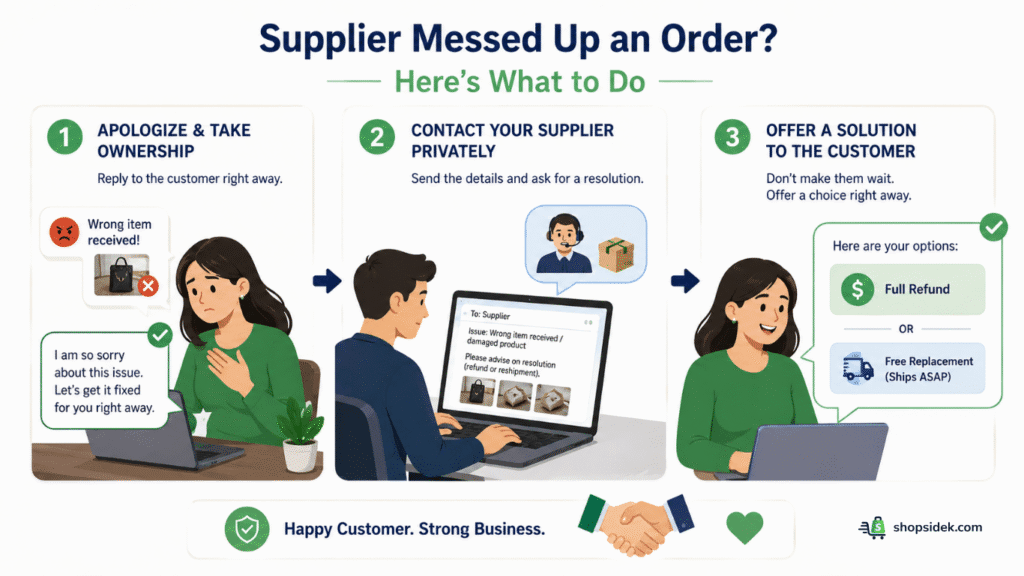
Scenario 1: Your Supplier Messed Up an Order. Now What?
A customer emails you, upset. They received the wrong item, or their product arrived damaged. This is your moment to shine with excellent customer service.
- Apologize and Take Ownership Immediately. Your first response to the customer should be a sincere apology. Do not blame your supplier. As far as the customer is concerned, you are the business. Say, “I am so sorry about this issue. Let’s get it fixed for you right away.”
- Contact Your Supplier Privately. Forward the customer’s complaint and any photos to your supplier. Clearly state the problem and ask them for their resolution (e.g., a refund to you or a reshipment to the customer).
- Offer a Solution to the Customer. Don’t make your customer wait for the supplier to respond. Immediately offer them a choice: a full refund or a free replacement sent out as soon as possible. Taking a small financial hit to keep a customer happy is always the right decision.
Scenario 2: Your Facebook Ad Isn’t Getting Sales. What Do You Do?
You’ve launched your first ad campaign, but after a few days, you have lots of views but zero sales. Don’t panic. It’s rarely just one thing. Run through this quick diagnostic checklist.
- Check Your Audience Targeting. Are you reaching the right people? Review the interests and demographics you selected. If your targeting is too broad (e.g., “people who like ‘shopping'”), try narrowing it down to more specific, niche interests related to your product.
- Test a New Creative. Your ad image or video might not be grabbing attention. The problem could be poor quality, a confusing message, or it just doesn’t showcase the product’s value. Create a completely different ad—try a video instead of an image, or use a different headline that highlights a key benefit.
- Review Your Product Page. Often, the ad is working, but your product page is losing the sale.
- Is the “Add to Cart” button obvious?
- Are there unexpected shipping costs at checkout?
- Does the page have customer reviews to build trust?
A small tweak to your page can make a huge difference.
Scenario 3: A Customer Left a Negative Review. How Should You Respond?
A one-star review pops up on your site. Your first instinct might be to get defensive or delete it. My advice is to do the opposite. A negative review is an opportunity to publicly demonstrate your commitment to customer satisfaction.
- Respond Publicly and Professionally. Write a calm, professional reply directly to the review. Thank the customer for their feedback and apologize that their experience didn’t meet their expectations. This shows potential buyers that you are engaged and that you care.
- Take the Conversation Offline. In your public reply, offer to make things right. Say something like, “We are very sorry to hear this and want to resolve it for you. We have just sent you an email so we can help.” This moves the specific, messy details out of the public eye.
- Learn From the Feedback. A negative review is free business consulting.
- Is the customer right?
- Is your product description misleading?
- Are your shipping times unclear?
Use the criticism to find and fix a weak spot in your business.
How to Dropship on Shopify: Frequently Asked Questions
How much does it cost to start dropshipping on Shopify?
While dropshipping has low startup costs, it isn’t free. A realistic starting budget is between $500 and $1,000. This covers essential expenses like your monthly Shopify plan, a custom domain name, ordering product samples to test quality, and most importantly, a starting budget for marketing and advertising to attract your first customers.
Can you dropship on Shopify with no money?
Starting a successful dropshipping business with absolutely zero money is nearly impossible. While you can use Shopify’s free trial to build your store, you will still need to pay for a plan to launch. More critically, without any money for marketing, you will have no way to drive traffic to your store, meaning no one will see your products.
Is dropshipping still profitable in 2026?
Yes, dropshipping is still highly profitable, but the strategy has evolved. The days of selling low-quality gadgets with slow shipping are over. Today, profitability comes from building a real brand, curating high-quality products, providing excellent customer service, and using creative marketing. The business model is thriving for entrepreneurs who treat it like a real business, not a get-rich-quick scheme.
Do I need to register a business to dropship?
In many regions, you can start selling as a sole proprietor without needing to formally register your business. In this structure, you and the business are considered the same legal entity.
However, it is highly recommended that you form a separate business entity, such as an LLC, as soon as your store starts generating consistent income. This protects your personal assets from any business liabilities. Always consult with a legal professional to understand the specific requirements in your area.
💡For a deeper dive into local regulations, read our full breakdown on whether you need a business license to sell on Shopify.