Let’s get right to the point, is Shopify free? No, Shopify is not completely free. However, you can start building your online store and test your business idea for next to nothing.
Shopify offers a 3-day free trial that lets you explore its features and build your site without spending a dime.
After that, you can unlock a special introductory offer: your first three months for just $1 per month. This gives you a 93-day runway to launch your business and start making sales with minimal financial risk.
Prefer learning by watching? Check out the explainer video I made on this topic.
This guide breaks down the real cost of using Shopify in 2026. We’ll cover everything from the trial period and pricing plans to the “hidden” fees like transaction charges and app subscriptions, so you can make an informed decision with a clear budget in mind.
Key Takeaways: Shopify Costs at a Glance
- Is it free? No, but it offers a free trial to start.
- Free Trial: You get a 3-day free trial to build your store, with no credit card required upfront.
- Introductory Offer: After the trial, you can get your first 3 months for just $1/month on select plans.
- Cheapest Plan: The Shopify Starter plan costs $5/month for selling through social media and messaging apps.
- Full Store Plans: Standard plans like Basic Shopify start at $25/month after the introductory offer ends.
Your Shopify Free Trial: How to Get 93 Days for Just $3
Shopify’s introductory offer is one of the most generous in eCommerce. It’s designed as a low-risk “test drive” that gives you a three-month window to build your store, find your customers, and start generating revenue before committing to a full-priced plan.
Here’s how to make the most of it.
Step 1: Activating Your 3-Day Free Trial (No Credit Card Required)
The journey begins with a completely free 3-day trial. You can sign up in minutes with just an email address—no credit card is required. This initial period is your sandbox for building the foundation of your store.
During these first three days, you can:
- Add an unlimited number of products
- Customize your store’s look and feel with free themes
- Set up collections and navigation menus
- Explore the Shopify App Store and install free apps
The only significant restriction to keep in mind is that you can’t make sales yet. Your storefront will be password-protected, allowing you to build everything perfectly behind the scenes before you launch.
Step 2: Choosing a Plan to Unlock the 3-Month, $1/Month Offer
Once you’re ready to start selling, you’ll need to choose a paid plan like Basic Shopify. This is the step that removes the password from your site and activates your checkout.
By selecting a plan, you unlock the introductory offer of $1 per month for your first three months. At this point, you will enter your payment details, but you’ll only be charged the promotional rate.
This small investment makes your store fully operational, enabling you to use features like Shopify Payments to accept credit card transactions right away.
What You Can Realistically Achieve in Your 93-Day “Test Drive”
Think of the 93-day period (3 days free + 90 days for $3) as your startup incubator. It’s more than just a discount; it’s a strategic window to validate your business idea before committing to the full monthly fee.
If you’re still wondering if Shopify is free, this period shows you can start with almost zero investment.
Use this time to:
- Prove your concept: Make your first 10, 50, or 100 sales to confirm there’s real demand for your products.
- Test marketing channels: Run small, experimental ad campaigns on platforms like Facebook or TikTok to see what drives traffic.
- Gather customer feedback: Refine your product descriptions, images, and overall store experience based on early visitor behavior.
The goal is to build momentum and generate enough revenue to confidently cover your first full-priced subscription. This approach turns a simple trial into a powerful tool for building a sustainable business.
Ready to see if Shopify is right for you? Start your 3-day free trial here and activate the 3 months for $1 offer. It’s the smartest way to build your store without the financial pressure.
Shopify Pricing Plans: What You’ll Pay After the Intro Offer
Once your 93-day introductory period ends, you’ll move to one of Shopify’s standard monthly plans. Choosing the right one depends on your business stage, sales volume, and the features you need to grow.
You can save up to 25% by paying for your plan annually instead of monthly, which, from my experience, is a great option once you’ve validated your business and are ready to commit long-term.
Here’s a breakdown of the main Shopify plans.
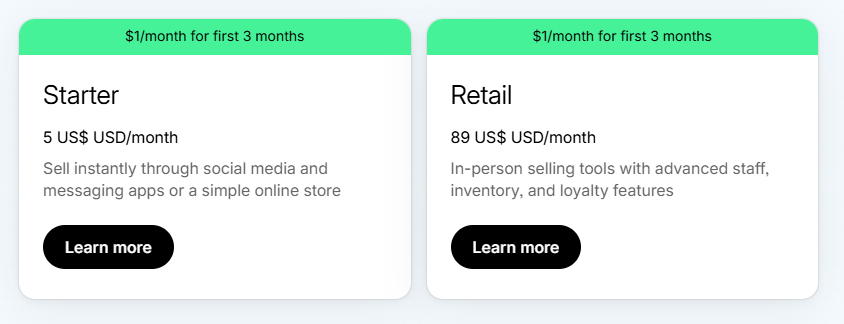
Shopify Starter ($5/month): For Selling on Social Media
The Starter plan is the most affordable way to sell with Shopify, but it doesn’t include a full, standalone online store. Instead, it’s designed for merchants who want to sell products through their existing social media profiles, email newsletters, or messaging apps like WhatsApp.
You get simple, shareable product links and a “Link in Bio” page powered by Shopify’s Linkpop tool. It’s perfect for creators, influencers, or anyone testing a single product without the need for a complete website.
- Best for: Social media sellers and influencers.
Basic Plan (from $25/month): Best for New Online Stores
The Basic plan is the most popular starting point for new eCommerce businesses. It gives you everything you need to launch a professional, fully functional online store.
Key features include:
- A complete eCommerce website and blog
- 10 inventory locations
- 24/7 chat support
- In-person selling by phone or POS device
Card rates starting at
- 2% 3rd-party payment providers
The main limitation is its basic reporting, but it provides all the essential tools for a new business to find its footing and start growing.
- Best for: New entrepreneurs launching their first online store.
Grow Plan (from $65/month): For Growing Businesses
As your sales volume increases, the Shopify plan (sometimes called the Grow plan) becomes a smart upgrade. While it includes all the features of the Basic plan, its real value lies in superior analytics and lower transaction fees.
Key additions include all features from the Basic Plan, plus:
- 5 staff accounts
- Full Shopify API access for custom apps, including PII for deeper customization
- Lower credit card rates (2.6% + $0.30 online)
Card rates starting at
- 1% 3rd-party payment providers
If your store is generating steady revenue, the savings on transaction fees alone can often justify the higher monthly cost of this plan.
- Best for: Businesses with consistent sales looking to optimize and grow.
Advanced Plan (from $399/month): For Scaling and Automation
The Advanced plan is built for high-volume businesses that need powerful tools to manage complexity and scale efficiently. It offers the lowest transaction fees and the most sophisticated features available outside of the enterprise-level Shopify Plus.
Key advantages include all features from the Grow Plan, plus:
- 15 staff accounts
- Enhanced 24/7 chat support
- Up to 2× higher API rate limits for smoother custom and third-party app integrations.
- Local storefronts by market
- The lowest credit card rates (2.4% + $0.30 online).
Card rates starting at
- 0.6% 3rd-party payment providers
This plan is ideal for established businesses with large teams and a high volume of orders that require precise shipping calculations and granular data.
- Best for: Scaling businesses that need advanced analytics and shipping automation.
Plus Plan (from $2,300/month): For more complex business
This plan is tailored for more complex businesses that need advanced scalability, deeper customization, and dedicated support. It’s available on a 1- or 3-year term.
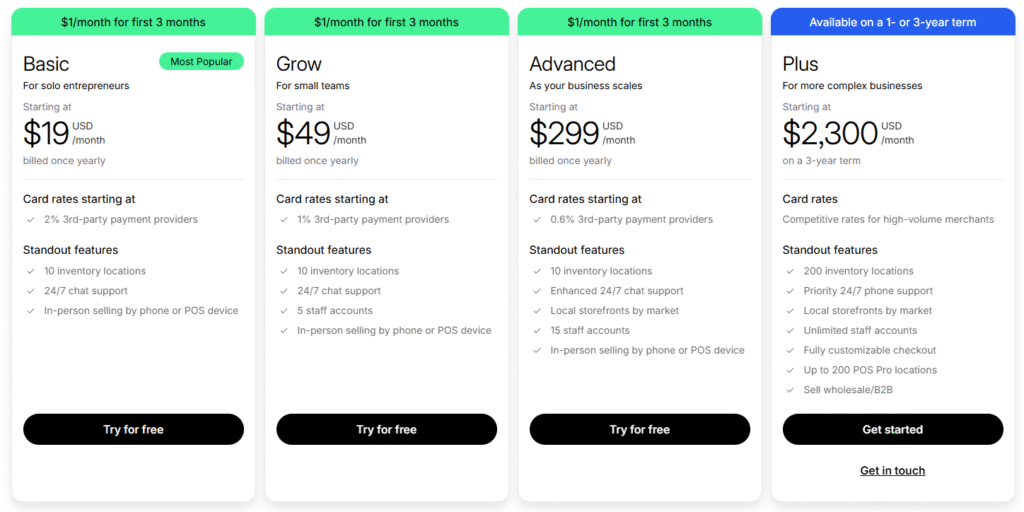
You can explore the full pricing list here for your reference.
The Hidden Costs: A Transparent Breakdown of a Real Shopify Budget
Your monthly plan is the foundation of your Shopify costs, but it’s not the full picture. Like any business, there are other operational expenses to consider. Being aware of these from the start helps you create a realistic budget and avoid surprises.
These aren’t “hidden fees” so much as variable costs that depend on the choices you make for your business. Let’s break them down.
Shopify Payments vs. Third-Party Transaction Fees
Every time you make a sale online, a small percentage of the transaction is paid to a payment processor. This is standard across all eCommerce platforms.
Shopify has its own integrated solution called Shopify Payments (powered by Stripe). If you use it, you only pay a standard credit card processing fee, which varies by plan (e.g., 2.9% + $0.30 per transaction on the Basic plan in the US). There are no additional fees.
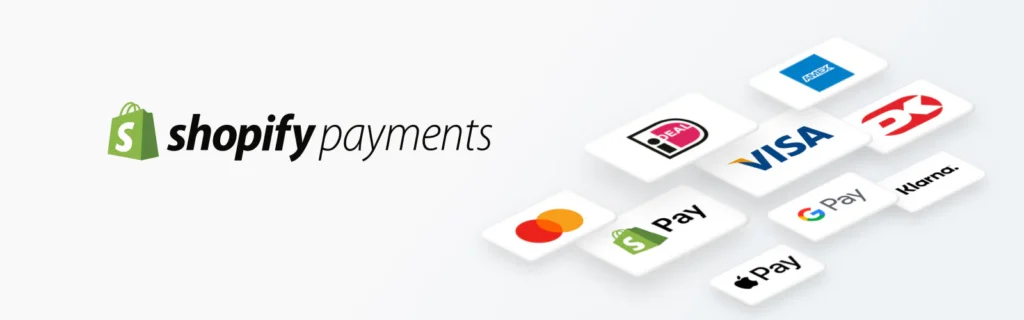
However, if you choose to use a third-party payment gateway like PayPal, Shopify charges an extra transaction fee on top of what the gateway charges you. This additional fee is:
- 2.0% on the Basic plan
- 1.0% on the Shopify plan
- 0.6% on the Advanced plan
My advice is that for most new stores, using Shopify Payments is the most straightforward and cost-effective option.
Domain Names: Your First-Year Cost
To build a credible brand, you’ll need a custom domain name (e.g., yourbrand.com). While your store starts with a default mystore.myshopify.com URL, a custom domain is essential for marketing and trust.
You can purchase a domain through Shopify or a third-party registrar. Expect to pay around $12 to $18 per year for a standard .com domain. This is an annual recurring cost.
Shopify Themes: Free vs. Premium
Your theme dictates the design and layout of your store. The Shopify Theme Store offers a selection of excellent free themes that are professional, mobile-friendly, and perfect for getting started.
For more advanced features or a unique design, you might opt for a premium theme. These come with a one-time cost, typically ranging from $140 to $350. A premium theme is a one-time investment in your brand’s visual identity, not a recurring subscription.
Essential Shopify Apps: Budgeting for Monthly Subscriptions
The Shopify App Store is a major advantage, allowing you to add powerful features to your store. While many apps offer free plans, some of the most crucial ones for growth require a monthly subscription.
Common app categories include:
- Email Marketing: Tools like Klaviyo or Shopify Email to connect with customers.
- Product Reviews: Apps like Judge.me or Loox to build social proof.
- Upselling & Cross-selling: Tools to increase your average order value.
A realistic starting budget for 2-3 essential paid apps is $20 to $60 per month. I always suggest starting with free app versions and only upgrade as your revenue grows and justifies the investment.
Now that you have a realistic budget, you can use the low-cost trial period to your advantage. Click here to start building your store for free and test your business idea before you spend more.
Special Programs: How to Get a Longer Shopify Trial
While the standard 93-day, $3 offer is available to everyone, Shopify also provides special programs with even more generous terms for specific groups. For some groups, the answer to Shopify free can be “yes” for a much longer period, as these offers function like an extended free Shopify plan. These initiatives are designed to lower the barrier to entry for entrepreneurs.
For Black-Owned Businesses: The 120-Day Free Trial via the 1MBB Initiative
As part of its commitment to supporting underrepresented entrepreneurs, Shopify created the 1 Million Black Businesses (1MBB) initiative. In partnership with organizations like Operation HOPE, this program aims to empower a new generation of Black business owners.
Eligible participants who self-identify as Black business owners can receive a 120-day free trial of Shopify. This extended period provides four full months to build, launch, and grow a business, offering a significant advantage over the standard trial. The program also provides access to a network of support and educational resources to help ensure long-term success.
For Non-Profits: NPO Lite and NPO Full Discounted Plans
Shopify also extends its platform to support charitable causes by offering special discounted plans for registered non-profit organizations. To qualify, organizations must be a verified 501(c)(3) in the United States or a registered charity in other supported countries.
There are two main plans available for non-profits:
- NPO Lite (from $29/month): This plan offers all the features of the Basic Shopify plan at a reduced rate, making it an accessible option for charities looking to sell merchandise or accept online donations.
- NPO Full (from $99/month): Based on the more powerful Shopify plan, this option provides lower transaction fees and advanced reporting features for larger non-profits with more complex operational needs.
These programs demonstrate that Shopify’s ecosystem is flexible enough to support a wide range of ventures, from commercial stores to mission-driven organizations. You can think of these specialized discounts and extended trials as the closest things to free versions of Shopify.
Shopify vs. Cheaper Alternatives: Is It Worth the Price?
When you’re starting on a tight budget, platforms like Wix or the “free” open-source software WooCommerce can seem tempting. However, it’s crucial to look beyond the sticker price and consider the total cost of ownership, which includes not just money but also your time, security, and peace of mind.
Shopify is an all-in-one platform. Your monthly fee includes top-tier web hosting, security (SSL certificate), and 24/7 customer support. Everything is integrated to work seamlessly, so you can focus on growing your business instead of managing technical issues.
With a “free” alternative like WooCommerce, the software itself costs nothing, but you have to build and manage the infrastructure yourself. This often leads to a collection of recurring costs that can quickly add up.
Let’s compare a standard Shopify setup to a typical WooCommerce store:
| Feature/Cost | Basic Shopify ($25/mo) | “Free” WooCommerce (Typical Setup) |
|---|---|---|
| Platform Fee | $25/month | $0 (Software is free) |
| Web Hosting | Included | ~$15 – $30/month (Required) |
| Security (SSL) | Included | Often included with hosting |
| Maintenance | Handled by Shopify | Your responsibility (updates, security) |
| Support | 24/7 Expert Support | Community forums, hosting support |
| Typical Monthly Cost | ~$25 – $49 (Plan + Apps) | ~$35 – $80+ (Hosting + Plugins) |
As the table shows, the “free” path often involves paying for separate hosting, premium plugins for essential features, and potentially a developer for help with maintenance.
More importantly, you become your own IT department, responsible for software updates, security patches, and troubleshooting conflicts between plugins.
With Shopify, you pay a predictable monthly fee for a powerful, reliable, and secure platform that simply works. For most new entrepreneurs, the value of having a dedicated support team and a hassle-free technical foundation is well worth the cost.
The Verdict: Should You Use Shopify to Start Your Business?
So, is Shopify free? No. But is it worth the investment for a serious entrepreneur? Absolutely.
While there are cheaper ways to get a website online, none offer the same combination of power, simplicity, and scalability that Shopify provides right out of the box.
The platform is designed for one thing: to help you sell effectively and grow your business. The all-in-one nature means you spend less time worrying about hosting, security, and plugin conflicts, and more time focused on your products and customers.
The low-cost entry point—a 3-day free trial followed by three months for just $1 per month—removes nearly all of the financial risk. It gives you an incredible opportunity to validate your business idea on the industry’s leading platform, which is a better starting point than focusing only on if is Shopify free.
To me, if you’re ready to build a real, scalable online business, Shopify is the smartest investment you can make.
The best way to know if Shopify is worth it is to try it yourself. Claim your 3-day free trial and unlock 3 months of Shopify for $1/month now—and take the first step toward launching your business.
FAQs
Do I need a credit card to start the Shopify free trial?
No, you do not need a credit card to sign up for the initial 3-day free trial. You can create your account and start building your store with just an email address. You’ll only need to enter payment details when you’re ready to choose a plan and activate the $1 per month introductory offer to begin selling.
Can I sell products during my free trial?
During the initial 3-day free trial, your online store is password-protected, meaning you can add products and design your site, but customers can’t make purchases. To start selling, you need to select a paid plan (like the Basic plan), which unlocks your checkout and activates the 3-month, $1/month offer.
What happens after the 3-month, $1/month offer ends?
After your first three months are over, your subscription will automatically renew at the standard monthly price for the plan you selected. For example, if you chose the Basic plan, you would begin paying $25 per month (or the equivalent annual rate if you choose to switch to yearly billing for a discount).
How do I cancel my Shopify trial?
If you decide Shopify isn’t the right fit, you can easily cancel your account before the trial or introductory period ends to avoid any charges. You can do this directly from your store’s admin settings under the “Plan” section by closing your store.
Can I pause my Shopify store instead of closing it?
Yes. If you need to take a break but don’t want to lose your work, Shopify offers a “Pause and Build” plan. For a reduced fee (typically $9/month), you can keep your store offline and continue to access your admin to work on your site. Your products and data will be saved for when you’re ready to start selling again.
Can I use my own domain name with Shopify?
Absolutely. You can purchase a new custom domain name directly through Shopify (which is often the easiest option) or connect an existing domain that you’ve purchased from a third-party registrar like GoDaddy or Namecheap.