It’s the question every aspiring entrepreneur asks before taking the leap: how much does the average Shopify store make per month? You have the passion and the product idea, but you need to know if the numbers can transform your dream into a sustainable business.
Personally, I think you may have seen an “average” revenue figure online, but that number is one of the most misleading statistics in eCommerce. It blends the income of a brand-new store making its first sale with global empires like Gymshark, creating a picture of reality that doesn’t apply to you.
This guide cuts through the noise. We’ll provide a detailed, realistic breakdown of your earning potential based on your business model, the real costs involved, and a practical timeline to profitability.
Ready to see how the numbers apply to you? Start your free Shopify trial and build alongside this guide.
If you prefer watching over reading, this video dives straight into the REAL Answer of How Much Does the Average Shopify Store Make Per Month.
The Short Answer: Average Shopify Store Monthly Revenue
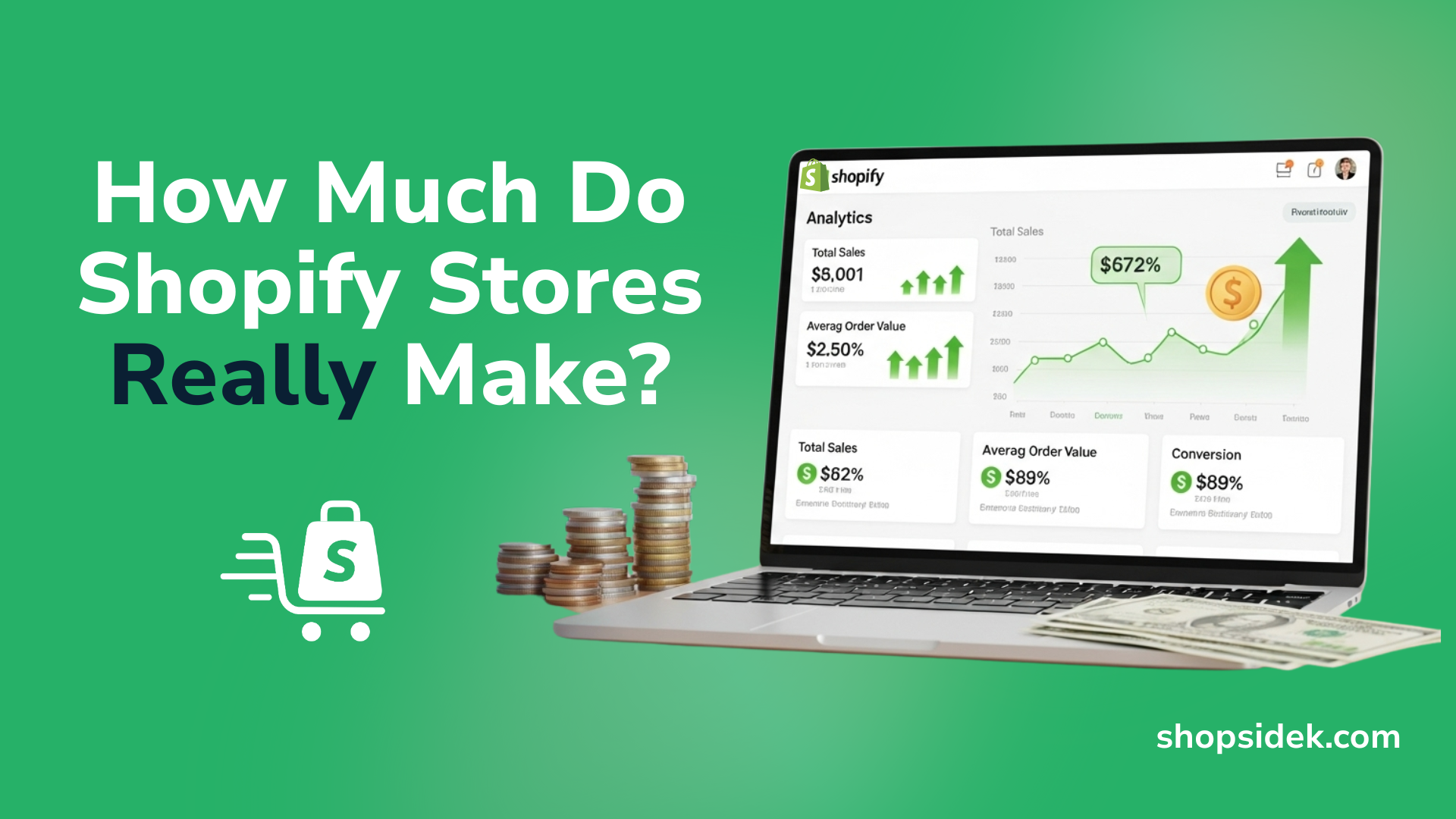
Let’s get straight to the number you’re looking for when asking how much does the average shopify store make per month. Across various industry reports and agency analyses, the most commonly cited figure for the average Shopify store revenue is approximately $5,583 per month, which translates to around $67,000 per year.
However, this number is both interesting and almost completely useless for a new entrepreneur.
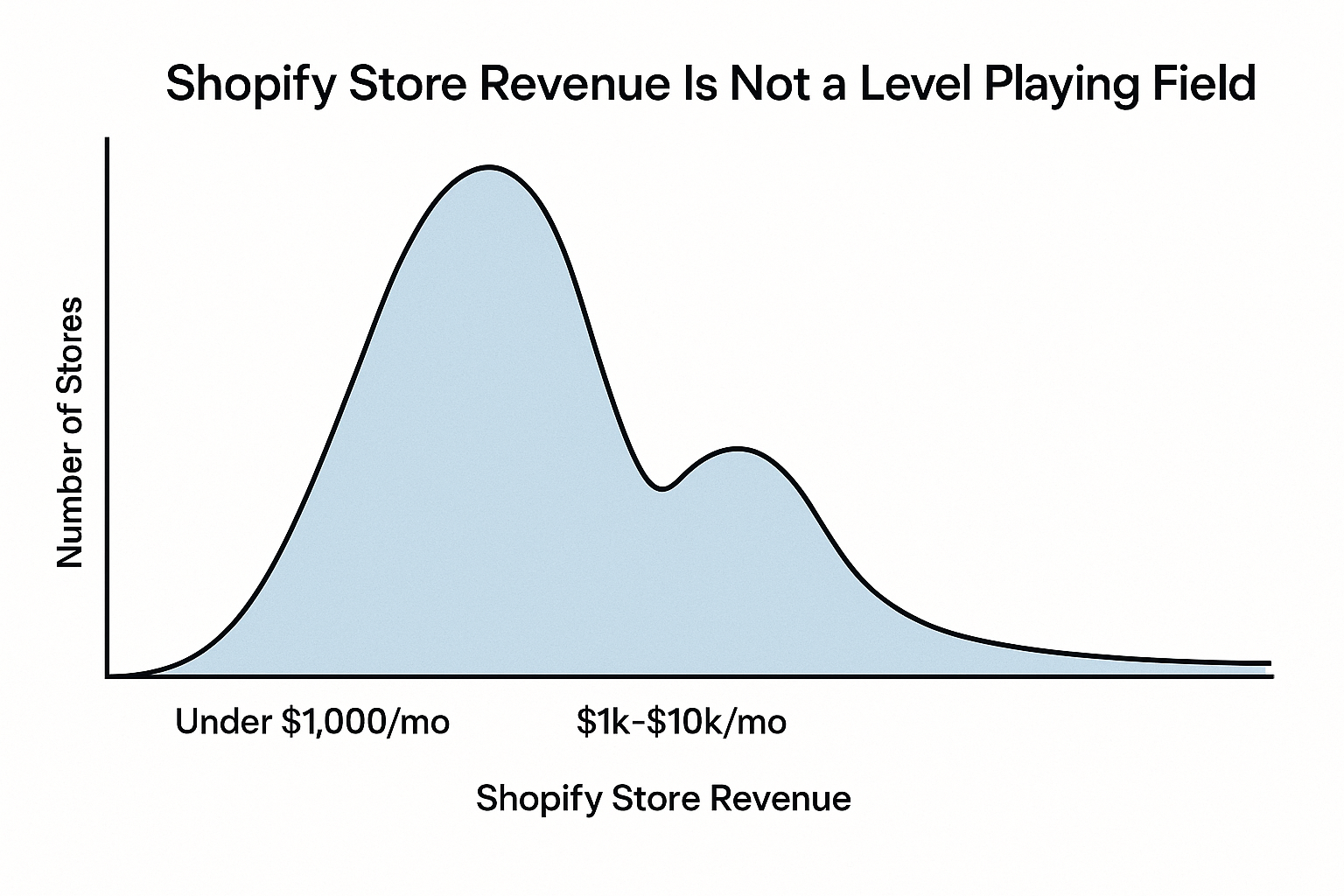
The problem lies in the difference between an “average” and a “typical” store. This figure is a mathematical mean, calculated by adding up the revenue of every Shopify store—from a brand new shop that just made its first $20 sale to titans like Huel and Kylie Cosmetics—and dividing by the total number of stores.
The massive success of the top 10% of stores dramatically skews this average upward. A more realistic picture comes from looking at the median, or the middle-of-the-road performance.
While Shopify doesn’t publish official median data, industry estimates suggest that over 60% of new stores earn less than $1,000 per month in their first year. This is the reality of starting from scratch.
It’s worth remembering the journey to a higher monthly revenue is a gradual climb, not an overnight leap to the average.
Your Path Determines Your Paycheck: Shopify Earnings by Business Model
The single biggest factor influencing your store’s income potential isn’t your marketing budget or your website design—it’s your business model. What you sell and how you sell it sets the ceiling for your revenue and, more importantly, your profit margin.
Below, we break down the four most common paths on Shopify, each with a very different financial reality.
📦Dropshipping: Low Risk, Lower Margins
Dropshipping is a popular entry point into eCommerce because you don’t have to purchase or hold any inventory. When a customer places an order, you simply pass it on to a third-party supplier who ships the product directly to them.
This low-risk model, historically powered by apps like Oberlo, is perfect for learning the ropes of marketing and store management. However, the convenience comes at a cost. Since you’re a middleman, profit margins are thin, typically ranging from 15-30%.
A realistic monthly revenue for a beginner who finds a winning product is between $500 and $3,000.
🎨Print-on-Demand (POD): For Creators & Niche Brands
Print-on-demand is a specialized form of dropshipping ideal for artists, influencers, and community builders. Using apps like Printify, you can sell custom-designed products like t-shirts, mugs, and posters without holding inventory. When an order comes in, your POD partner prints and ships it for you.
This model is fantastic for building a brand with a dedicated following. The financial profile is similar to general dropshipping, with profit margins in the 15-30% range.
Successful POD stores typically generate between $300 and $2,500 per month, depending heavily on the creator’s audience and design appeal.
🏷️Private Label & Branded Products: The Path to Scale
This is the traditional eCommerce model where you create, manufacture, and sell your own unique products under your own brand name. It requires a significant upfront investment in product development and inventory, making it a higher-risk path.
This is the model used by powerhouse Shopify brands like Gymshark and Huel. The reward for this risk is control and profitability. With profit margins often exceeding 40%, the scaling potential is immense.
While it takes time to build momentum, a growing private label brand can realistically generate $2,000 to $50,000+ per month.
💻Digital Products & Courses: The Highest Margin Model
Selling digital products—like e-books, software, design templates, or online courses—is the most profitable business model on Shopify.
With no inventory and near-zero cost of goods sold, your profit margins can be incredibly high. Success here is tied directly to your expertise and your ability to build an audience that trusts you.
The income potential is the most variable of any model. While a new creator might make $500 per month, an established expert with a strong following can generate well over $100,000 per month selling high-value courses or software.
| Business Model | Startup Cost | Profit Margin | Monthly Potential | Best For… |
|---|---|---|---|---|
| Dropshipping | Very Low | 15-30% | $500 – $3,000 | Beginners testing the market. |
| Print-on-Demand | Very Low | 15-30% | $300 – $2,500 | Creators, artists, and influencers. |
| Private Label | High | 40%+ | $2,000 – $50,000+ | Entrepreneurs building a long-term brand. |
| Digital Products | Low | 80%+ | $500 – $100,000+ | Experts and educators with an audience. |
What’s Left After Costs? Decoding Your Real Profit Margin
Revenue is the exciting number everyone focuses on, but it doesn’t pay the bills. Profit is the money you actually keep after all your expenses are paid, and understanding the difference is the most critical lesson in eCommerce.
A store generating $10,000 in monthly revenue might sound successful, but if its costs are $9,500, the founder is only taking home $500.
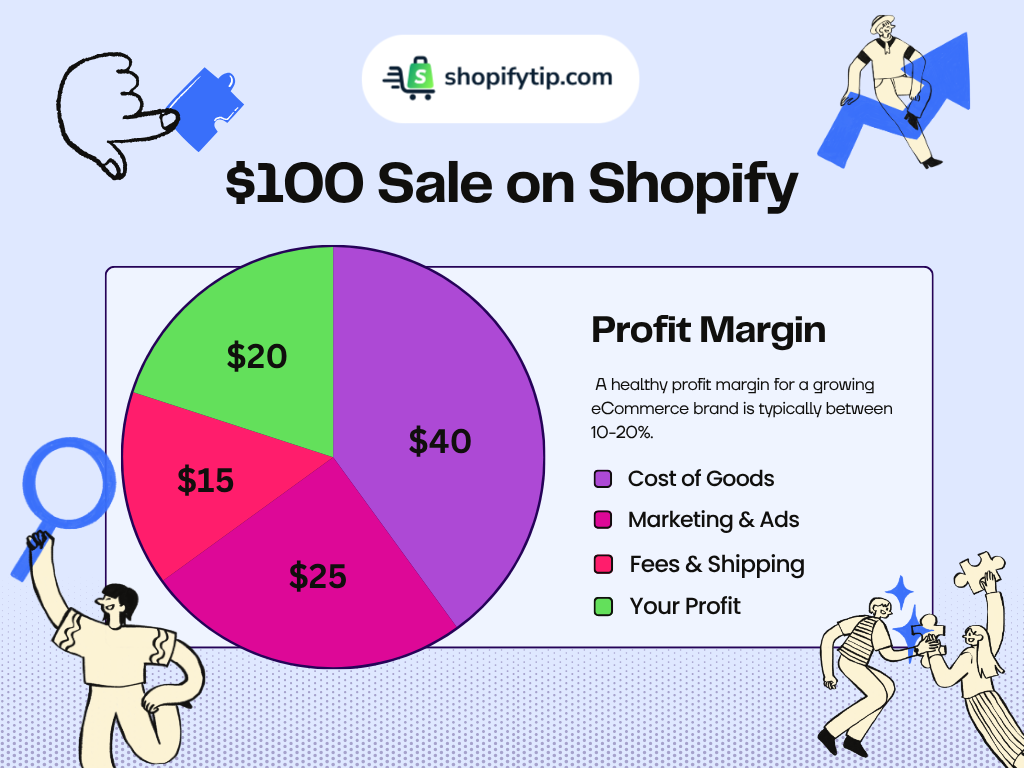
To calculate your real profit, you need to subtract all the costs of doing business from your total revenue. For most Shopify stores selling physical products, these costs fall into four main categories:
- Cost of Goods Sold (COGS): This is what you pay to acquire or manufacture the products you sell. For a private label brand, this is the factory cost; for a dropshipper, it’s the price you pay your supplier.
- Platform & App Fees: This includes your monthly Shopify subscription plan, transaction fees on every sale (typically around 2.9%), and the cost of any third-party apps you use to add functionality to your store.
- Marketing & Advertising: This is what you spend to attract customers. It includes ad spend on platforms like Meta (Facebook and Instagram), Google, and TikTok, as well as influencer marketing fees or content creation costs.
- Shipping & Fulfillment: These are the costs associated with packing your products and getting them to your customers’ doorsteps. This includes packaging materials, postage, and any warehouse fees if you use a fulfillment service.
Something I’ve learned is that managing these expenses is the key to profitability. A healthy profit margin for a growing eCommerce brand is typically between 10-20%.
The Founder’s Roadmap: How Long Until Your Shopify Store Is Profitable?
Earning a profit on Shopify is a marathon, not a sprint. New entrepreneurs often get discouraged when sales don’t flood in overnight, but building a sustainable business takes time.
Data from analytics firms like LittleData shows that the average conversion rate for a Shopify store is just 1.4%. This means for every 100 visitors, you can expect about one or two sales. Building momentum requires driving consistent traffic and optimizing your store over weeks and months.
This timeline breaks down a realistic journey from launch to profitability.
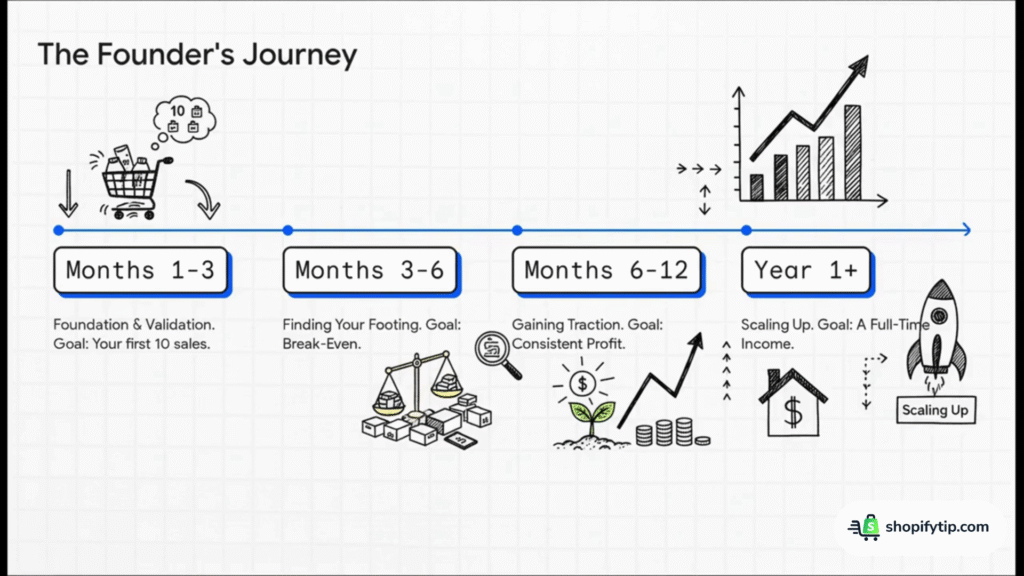
Months 1-3: The Foundation (Goal: Your First 10 Sales)
The first three months are all about learning, testing, and validation. Your focus isn’t on profit, but on setting up a functional store, understanding the Shopify platform, and launching your first marketing experiments to see if people are interested in your products.
During this phase, your expenses on the Shopify plan, apps, and initial ad tests will almost certainly outweigh your revenue. Most stores are not profitable here. Keep in mind that any money spent here is an investment in valuable data that will guide your next steps. The goal is to prove your concept and make those crucial first few sales.
Months 3-6: Finding Your Footing (Goal: Break-Even)
Armed with data from your launch phase, you can now start making smarter decisions. This period is about identifying your first winning product or your most effective marketing channel. You’ll learn which ads generate sales and which ones don’t, allowing you to cut wasteful spending and double down on what works.
The primary financial goal here is to break even—the point where your monthly revenue consistently covers your monthly costs. Your store is now self-sustaining, though likely not generating enough profit to pay you a salary. The focus is on relentless optimization to build a solid foundation.

Months 6-12: Gaining Traction (Goal: Consistent Monthly Profit)
With a break-even business, you can now shift your focus from survival to strategic growth. Sales should be more predictable, and you have a clear idea of who your customer is and how to reach them. The goal is no longer just to make a sale, but to increase the value of every sale.
This means focusing on metrics like Average Order Value (AOV) and customer retention. It’s far cheaper to get a past customer to buy again than to find a new one. As Nudgify reports, repeat customers spend 67% more on average, making email marketing and loyalty programs essential for achieving consistent monthly profit.
Year 1 & Beyond: Scaling Up (Goal: A Full-Time Income)
Once your store is consistently profitable, you can enter the scaling phase. This is when you can confidently reinvest profits back into the business to accelerate growth. Activities include expanding your product line, significantly increasing your ad spend on proven campaigns, and exploring new marketing channels.
This is the stage where a Shopify store evolves from a side hustle into a durable brand capable of providing a full-time income. It’s a journey that requires patience and persistence, but this is when stores finally begin to hit the higher revenue numbers that inspired you to start in the first place.

5 Actionable Steps to Maximize Your Store’s Revenue
Understanding the numbers is the first step; influencing them is the next. While many guides offer generic advice like “do good marketing,” this playbook provides a concrete, five-step framework to systematically increase your store’s revenue and profitability.
1. Nail Your Niche and Product Sourcing
The foundation of a profitable store is selling the right products to the right people. Instead of chasing broad, “trending” items, focus on a specific niche where you can become the go-to expert. Research product categories with high demand but fragmented or low-quality competition.
Your goal is to find products with a high perceived value and a healthy margin, ensuring you have enough room for marketing costs and profit.
2. Optimize Your Store for Conversion
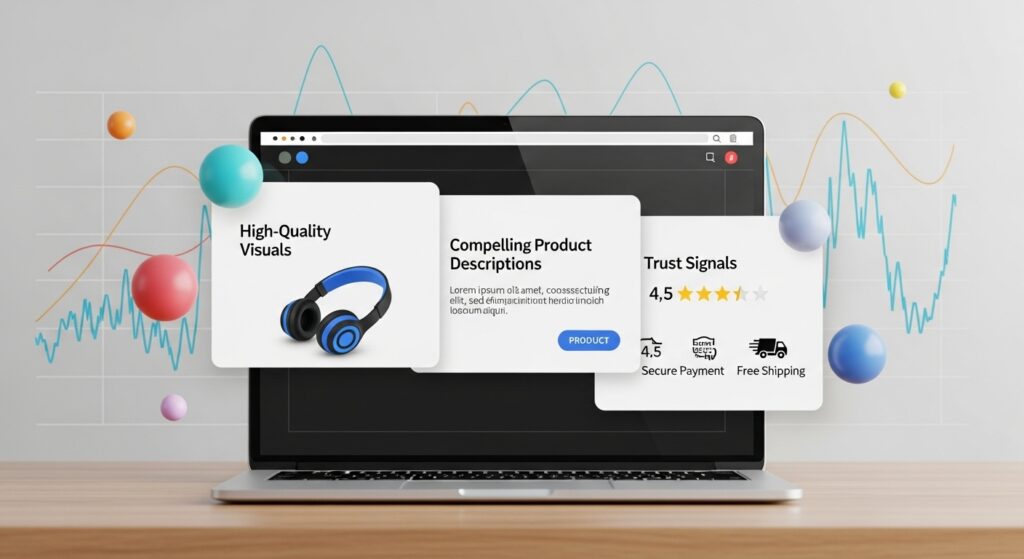
Getting traffic to your store is only half the battle. You must convert those visitors into customers. This comes down to building trust and creating a seamless shopping experience. Focus on these core elements:
- High-Quality Visuals: Use professional, clear photography and video that showcase your product from every angle.
- Compelling Product Descriptions: Go beyond listing features and sell the benefits. Explain how your product solves a problem or improves the customer’s life.
- Trust Signals: Prominently display customer reviews, clear shipping and return policies, and security badges to reassure hesitant buyers.
3. Master One Customer Acquisition Channel
One of the biggest mistakes new entrepreneurs make is trying to be everywhere at once—running Facebook ads, posting on TikTok, and trying to rank on Google simultaneously. This spreads your budget and focus too thin. Instead, master one channel first.
If you sell a visually appealing product, focus on Meta Ads (Facebook & Instagram). If your product solves an urgent problem people search for, master Google Ads. Dedicate your energy to becoming an expert on one platform to generate consistent traffic before diversifying.
4. Leverage Email Marketing for Retention
It costs five times more to acquire a new customer than to keep an existing one. This single statistic is why email marketing is not optional—it’s your most profitable channel. As soon as you launch, set up a simple automated welcome email series for anyone who subscribes or makes a purchase.
This builds a direct line of communication with your audience, allowing you to nurture relationships, announce new products, and drive repeat purchases without paying for more ads.
5. Analyze Your Data in Shopify Analytics
Your Shopify Analytics dashboard is the scoreboard for your business. To avoid getting overwhelmed, focus on tracking just two key metrics every week:
- Conversion Rate: The percentage of store visitors who make a purchase. Improving this number means you make more money from the traffic you already have.
- Average Order Value (AOV): The average amount each customer spends in a single transaction. Increasing your AOV through tactics like product bundling or upselling is one of the fastest ways to grow revenue.
This playbook is your starting point. The best way to learn is by doing. Click the below button to activate your Shopify free trial and apply these steps today.
(Disclosure: As an official Shopify Media Partner, I may earn a small commission if you sign up, at no extra cost to you. This is what helps support the blog and allows me to keep creating valuable, free content for you.)
Conclusion: Your Shopify Earnings Are in Your Control
So, how much can a Shopify store really make? The answer has less to do with misleading averages and more to do with you. The data shows that a wide range of outcomes is possible, but your success isn’t left to chance.
Your true potential is defined by your chosen business model—whether you’re dropshipping, building a unique brand, or selling digital expertise. As we’ve covered, profitability isn’t a secret; it’s the direct result of a clear strategy, consistent effort, and a willingness to learn from your data. The founder’s journey is a marathon, but a profitable store is an achievable goal.
The potential is there, but it’s not found in a statistics report. It’s waiting for you to build it.
Frequently Asked Questions (FAQ)
What is a good profit margin for a Shopify store?
A typical, healthy profit margin for a Shopify store selling physical products is between 10% and 20%. Margins can be lower for highly competitive models like dropshipping. For brands selling their own unique products (private label) or digital goods, an excellent profit margin can be 40% or higher.
Can you still make money with dropshipping on Shopify?
Yes, you can absolutely still make money with dropshipping, but the market is extremely competitive. From what I’ve seen, success is no longer about simply finding a random product. It now requires excellent branding, a unique marketing angle, and a strong focus on creating a trustworthy customer experience to stand out from the crowd.
How many Shopify stores are successful?
The definition of “success” varies. While the top 10-20% of stores generate a significant income that can replace a full-time job, many more find success as a profitable side-hustle that provides a supplementary income stream. The key takeaway is that a small percentage of stores become massive brands, but a much larger group can and do build sustainable, profitable businesses.