⚡ ShopSideK Verdict
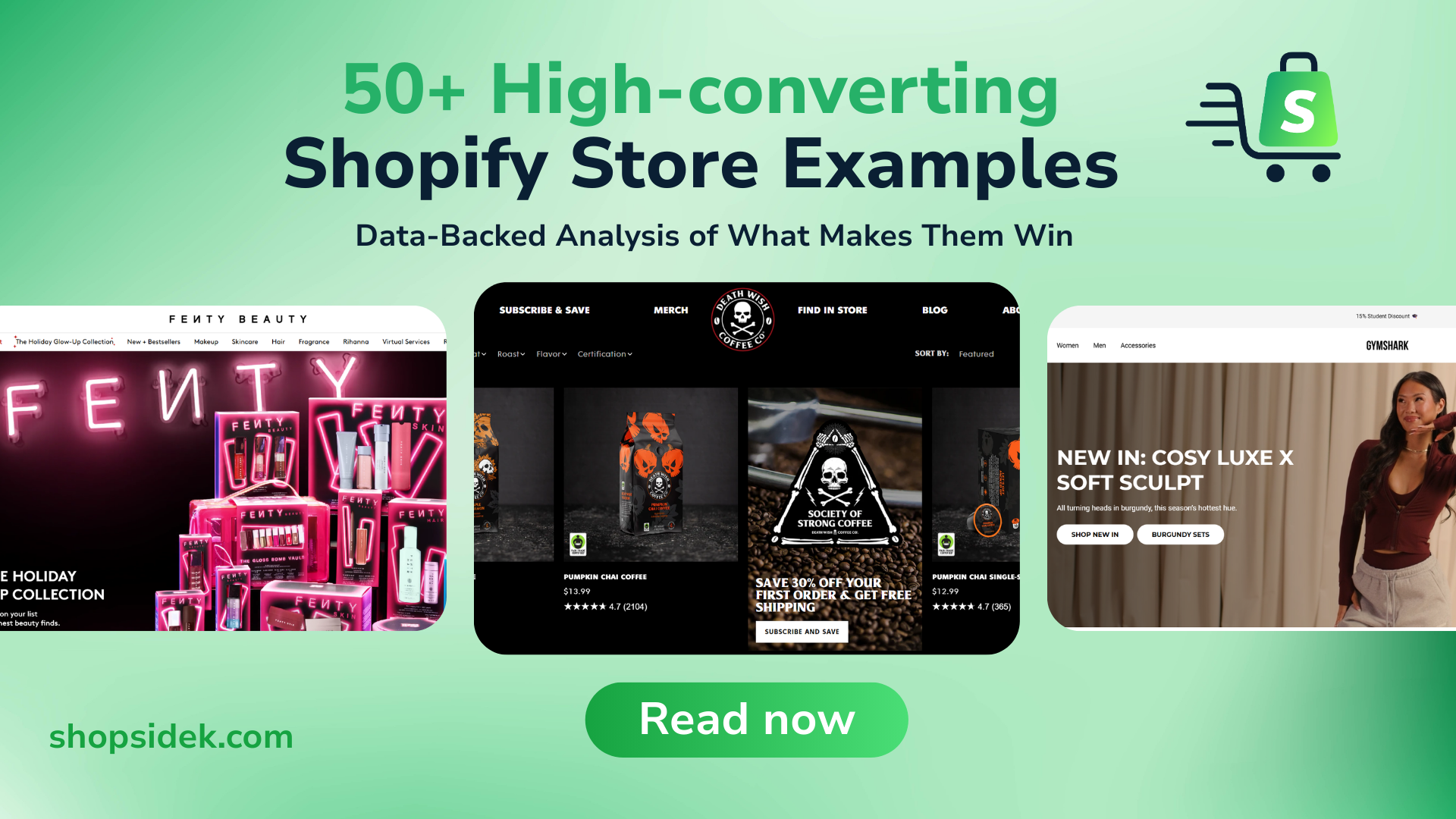
50+ Stores AnalyzedThe best Shopify stores share 5 traits: a compelling brand story, mobile-first UX, high-quality visuals, trust-building social proof, and a frictionless checkout. Below are the key patterns from 50+ real stores — including brands like Gymshark ($709M), Fenty Beauty ($600M), and Allbirds ($254M) — so you can reverse-engineer their success for your own store.
- 1Story sells more than product. Every top store — from Bombas (100M+ items donated) to Death Wish Coffee (“World’s Strongest”) — leads with a clear brand identity, not just a product catalog.
- 2Social proof is the #1 conversion driver. Brands like Brooklinen (“The Internet’s Favorite Sheets”), Hismile, and Fashion Nova build trust through customer reviews, UGC, and influencer endorsements — not ad spend.
- 3Niche focus beats wide catalogs. One-product stores (Snooz, BlendJet, PillowPug) prove you don’t need 1,000 SKUs — you need one clear solution to one specific problem.
- 4Purpose-driven brands win long-term loyalty. Tentree (100M+ trees planted), BLK & Bold (5% profit pledge), and Pela (plastic-free mission) show that customers pay more when buying aligns with values.
- 5You don’t need a custom-coded site to start. Premium themes like Impulse and Prestige + apps like Loox, Omnisend, and Section Store let you replicate these strategies without hiring a developer.
Free trial • No credit card required to start building
If you want to start a business on Shopify, you need more than just an idea—you need a vision. Seeing what is possible is the first step to building a brand that looks great and drives sales.
That is why we built this list of Shopify store examples. It is not just a gallery of pretty websites. Instead, it is a practical analysis of the design, conversion strategies, and storytelling behind the world’s most successful brands.
We analyzed over 50 top examples to bring you actionable takeaways from real-world success. Here is a quick look at some of the major brands we will cover, along with their estimated annual revenue.
| Store Name | Niche | Estimated Annual Revenue / Success Metric |
|---|---|---|
| Gymshark | Fashion & Apparel | ~$709 Million |
| Fenty Beauty | Beauty & Wellness | ~$600 Million |
| Ruggable | Home & Goods | ~$500 Million+ |
| Allbirds | Fashion & Apparel | ~$254 Million (Publicly Reported) |
| Bombas | Fashion & Apparel | ~$250 Million+ & 100M+ items donated |
| Kylie Cosmetics | Beauty & Wellness | ~$200 Million |
| Loop Earplugs | Electronics & Wellness | ~$130 Million+ |
| Pura Vida Bracelets | Accessories | Acquired for $130 Million |
| Death Wish Coffee | Food & Beverage | ~$100 Million+ |
| Hismile | Beauty & Wellness | ~$100 Million+ |
| Magic Spoon | Food & Beverage | Raised over $100 Million in funding |
| Brooklinen | Home & Goods | ~$100 Million+ |
| Tentree | Fashion & Apparel | ~$50 Million+ |
| BLK & Bold | Food & Beverage | 5% Profit Pledge & NBA Partnership |
| Made In | Home & Goods | Content-driven growth, chef-endorsed |
Note: Revenue figures are estimates based on public reports, news articles, and industry analysis to show the scale of these brands.
Feeling inspired? The best way to learn is by doing. You can start a free Shopify trial and explore these features for yourself as you read along.
- Gymshark: Mastering Community and Scarcity
- Allbirds: Simplicity in Design and Sustainability
- Tentree: Purpose-Driven Branding in Action
- Bombas: A Masterclass in Value Proposition
- Fashion Nova: Leveraging Social Proof and Trend Velocity
- Alo Yoga: Premium Branding for a Lifestyle Niche
- Kirrin Finch: Inclusive Branding and Authentic Storytelling
- ColourPop Cosmetics: High-Volume E-commerce at Scale
- Ruggable: Solving a Problem with Smart UX
- Brooklinen: Building Trust with Social Proof
- Made In: Content-Driven Commerce for Experts
- Haus: Modern Design for a Niche Audience
- The Citizenry: Ethical Storytelling and Artisan Goods
- Poly & Bark: High-Quality Visuals and Room Mockups
- GOODEE: A Curated Marketplace with a Mission
- Death Wish Coffee: Creating a Powerful Brand Identity
- BLK & Bold: Mission-Driven Brand with Strong Partnerships
- Magic Spoon: Nostalgia-Infused Web Design
- Fly by Jing: Bold Visuals for a Breakthrough Product
- Partake Foods: Serving the Allergy-Friendly Niche
- Taza Chocolate: Highlighting Ethical Sourcing and Process
- Verve Coffee Roasters: Mastering the Subscription Model
- Fenty Beauty: Championing Inclusivity with Product Visualization
- Kylie Cosmetics: Driving Hype Through Product Drops
- The Honey Pot: Building a Brand on Transparency and Education
- Hismile: Using Influencer Marketing and Social Proof
- Beauty Bakerie: Creative Branding That Stands Out
- Pela: Sustainability as a Core Product Feature
- Beardbrand: Building a Strong Community for a Niche Market
- MVMT Watches: A Disruptor Brand Story
- Pura Vida Bracelets: Selling a Lifestyle Through Community
- Loop Earplugs: Solving a Specific Problem with Great Design
- Spigen: Dominating the Electronics Accessories Market
- Tattly: Turning Temporary Tattoos into a Design-Forward Product
- WP Standard: Highlighting Craftsmanship with Quality Photography
The 5 Elements of a High-Converting Shopify Store
Every successful Shopify store shares a common DNA. They use a specific set of strategic elements to attract customers, build trust, and drive sales.
Before we dive into our Shopify store examples, let’s establish the framework we will use to analyze them. Understanding these five pillars helps you see the business strategy behind the web design.
1. 📑A Compelling Brand Story & Niche
A strong brand is a promise. It is the mission, values, and personality that connect with a specific audience. I often notice that the best stores do not just sell products. They sell a story, a feeling, or a solution to a specific problem.
By owning a niche and sharing a clear purpose—like sustainability, inclusivity, or high quality—these brands build loyal communities.
2. 📱Intuitive, Mobile-First UX Design
User experience (UX) is how a customer feels when they navigate your store.
- Is it easy to find products?
- Does the site load quickly?
With over 78% of traffic on some stores coming from mobile devices, a mobile-first design is non-negotiable.
This means clean menus, logical categories, and a layout that works well on small screens to keep the shopping experience effortless.
3. 🖼️High-Quality Visual Merchandising
In e-commerce, your product photos are your product. High-quality visual merchandising showcases your items in the best light.
This includes crisp, professional photography from multiple angles, lifestyle shots, and engaging videos. Great visuals don’t just show what a product looks like; they help the customer imagine it in their own life.
4. ⭐Trust-Building Social Proof (Reviews & UGC)
Modern shoppers are heavily influenced by their peers. Social proof shows that other people have bought and loved your products.
This includes customer reviews, star ratings, photo testimonials, and user-generated content (UGC). Displaying this feedback directly on your site builds credibility and overcomes purchase hesitation.
🔧 Review Apps Worth Exploring
- Rivyo AI Reviews – Turns customer feedback into verified social proof and visual content.
- Yotpo: Product Reviews – Collects and displays customer ratings, photos, videos, and social proof.
- Loox: Product Reviews & AI – Convert more shoppers with visual product reviews, superpowered by AI (30 day free trial).
5. 🛒A Frictionless Path to Purchase
Even the most beautiful store will fail if the checkout process is complicated. A frictionless path to purchase makes it easy for customers to buy.
Use prominent “Add to Cart” buttons, minimal checkout steps, clear shipping costs, and multiple payment options like Shop Pay or PayPal.
Many top-performing brands in this guide also customize their checkout pages with branded trust signals, express checkout, and upsells to reduce cart abandonment and boost average order value (AOV).
Top Shopify Store Examples: Fashion & Apparel (8 Stores)
The fashion and apparel industry is one of the most competitive spaces in e-commerce, and Shopify is home to some of its biggest disruptors.
From global giants to niche trailblazers, these Shopify store examples masterfully blend brand storytelling with a seamless shopping experience. Here’s what makes them stand out.
Gymshark: Mastering Community and Scarcity
With an estimated annual revenue of around $709 million, Gymshark has become a global fitness apparel phenomenon. Their success is built on a powerful brand story centered around community.
Instead of traditional models, they partner with fitness influencers and use user-generated content. This builds an active and aspirational community.
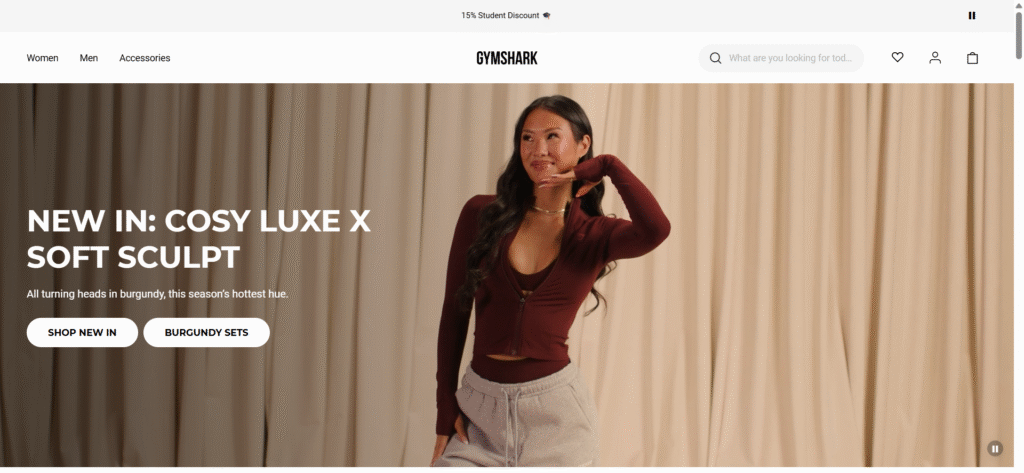
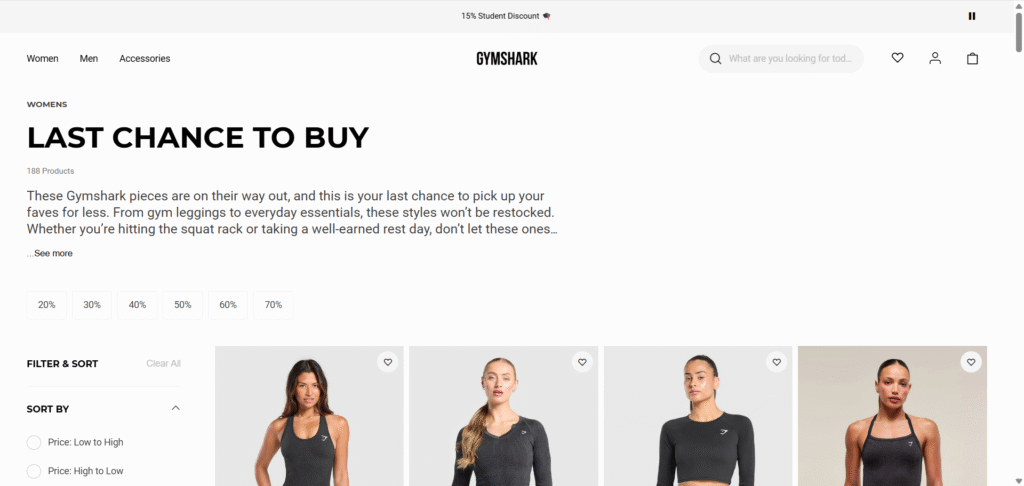
Their site’s path to purchase is driven by hype and scarcity. Limited-edition product “drops” create a sense of urgency, driving massive traffic and quick sell-outs.
This strategy, paired with a clean, mobile-first design, makes browsing easy. It turns shoppers into fans who buy as soon as new items drop.
Allbirds: Simplicity in Design and Sustainability
Allbirds proves that simple messages work best. Their entire brand is built on a crystal-clear niche: creating comfortable, high-quality footwear with sustainable materials.
This eco-conscious ethos is reflected in their website’s minimalist UX design. It uses clean lines, soft colors, and simple navigation to make shopping feel calm and intentional.
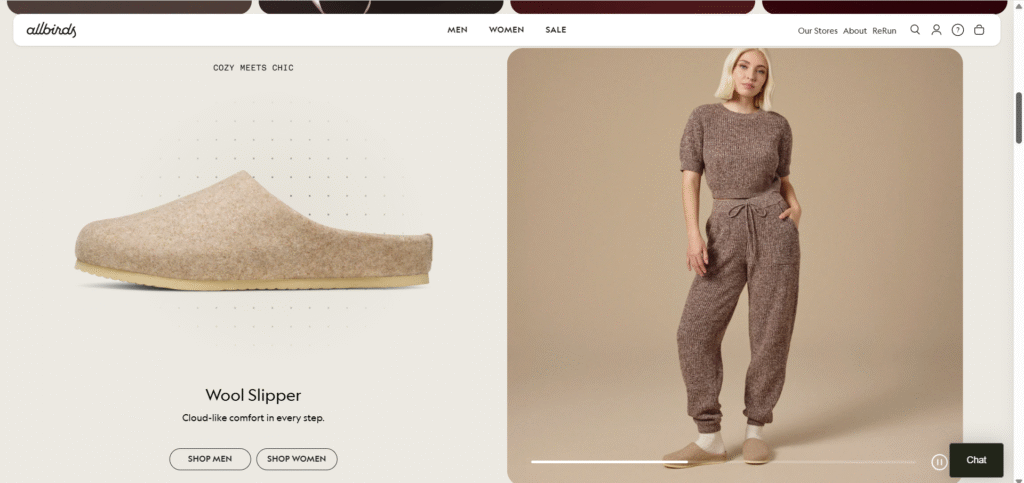
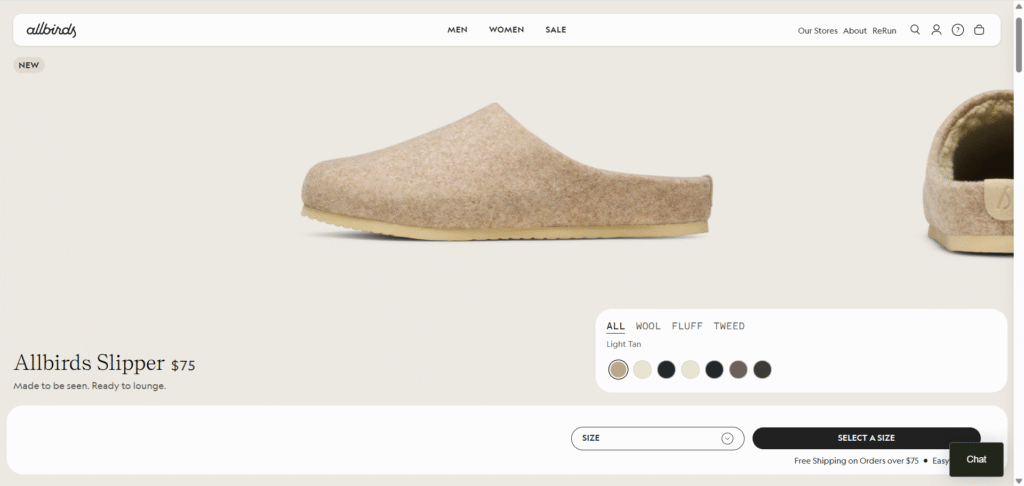
Their product pages are a masterclass in visual merchandising, using high-resolution images and videos to highlight the texture and detail of their unique materials.
By focusing on their core values, Allbirds built a loyal following. They also reduced cart abandonment with a simple, transparent purchase path.
Tentree: Purpose-Driven Branding in Action
Tentree’s brand is its mission: for every item purchased, they plant ten trees. This compelling brand story is not just a slogan; it’s woven into every aspect of their Shopify store.
An impact counter on the homepage shows the running total of trees planted (over 100 million), instantly connecting a purchase to a positive outcome.
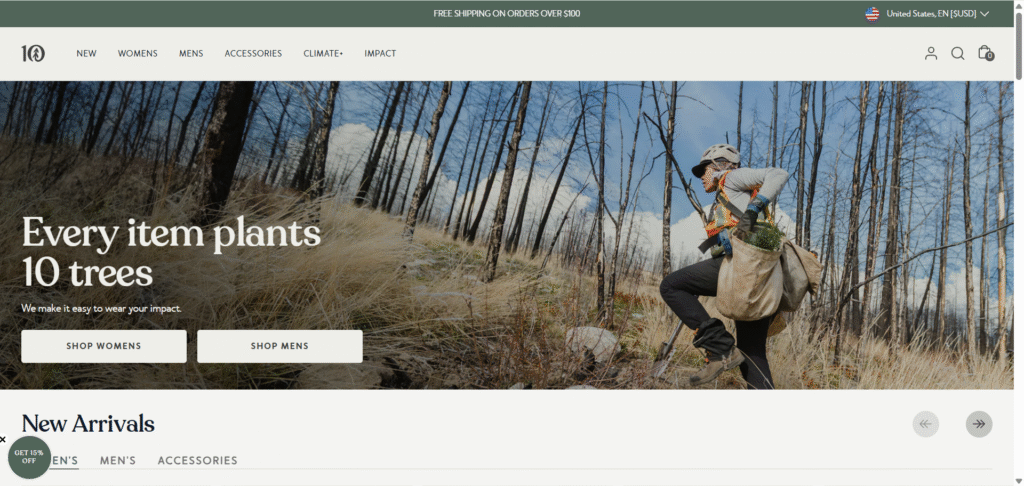
This purpose-driven approach excels at building trust. The site is filled with content about their planting projects and sustainability efforts, giving customers a powerful reason to choose them over a competitor.
Their visual merchandising, featuring products in beautiful, natural settings, constantly reinforces the brand’s eco-friendly identity.
Bombas: A Masterclass in Value Proposition
Like Tentree, Bombas built its brand on a social mission: “one pair purchased = one pair donated.” With over 100 million items donated to date, this simple, powerful message is the first thing you see on their site.
This isn’t just a marketing tactic; it’s the core of their brand story, creating an immediate emotional connection.
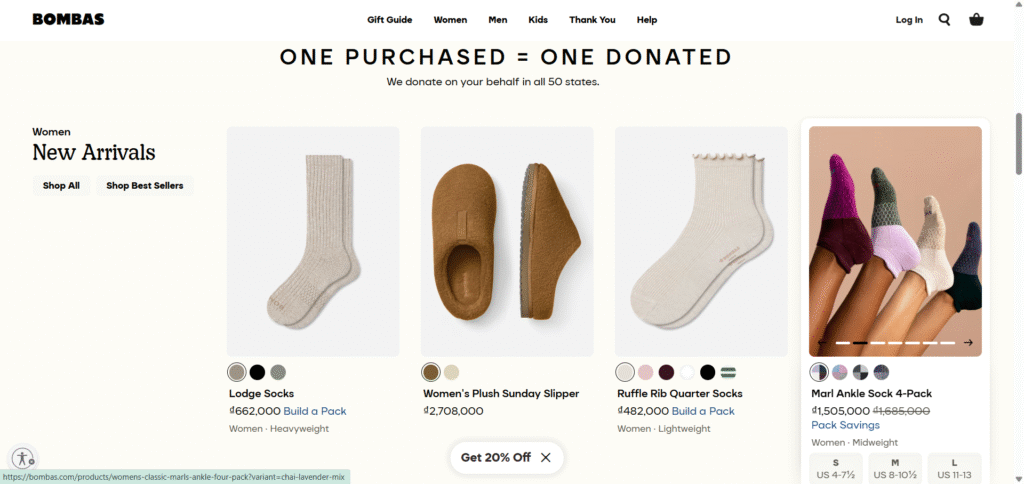
The store design uses a bright, optimistic color palette and intuitive navigation to make shopping enjoyable. To me, their real strength is in removing friction from the path to purchase.
By clearly communicating their value proposition and offering a “Happiness Guarantee,” they build immense trust that makes clicking “Add to Cart” an easy decision.
Fashion Nova: Leveraging Social Proof and Trend Velocity
Fashion Nova operates at the speed of social media, and their Shopify Plus store is built to handle the immense traffic generated by their viral marketing.
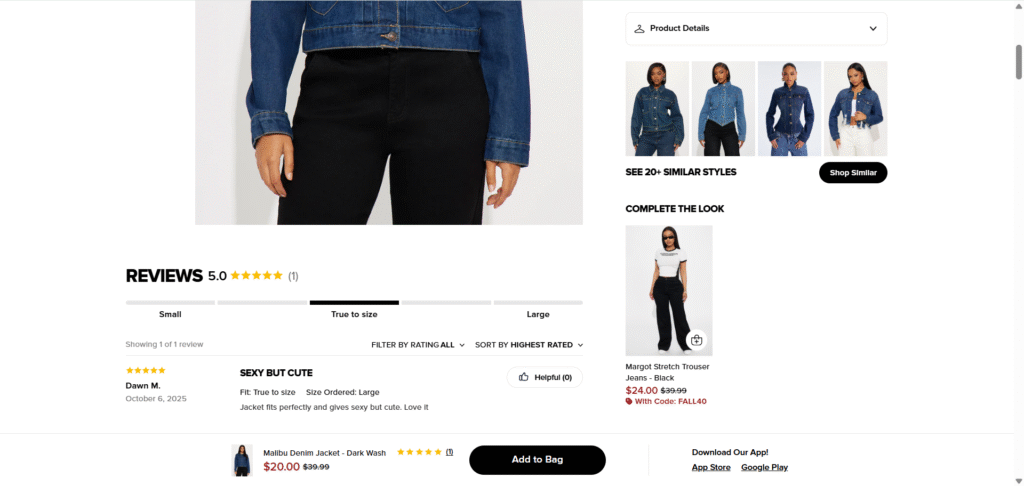
Their strategy is rooted in social proof, heavily featuring user-generated content from Instagram with the #NovaBabe hashtag. This creates a powerful, real-time gallery of customers styling their clothes, which is far more persuasive than traditional modeling.
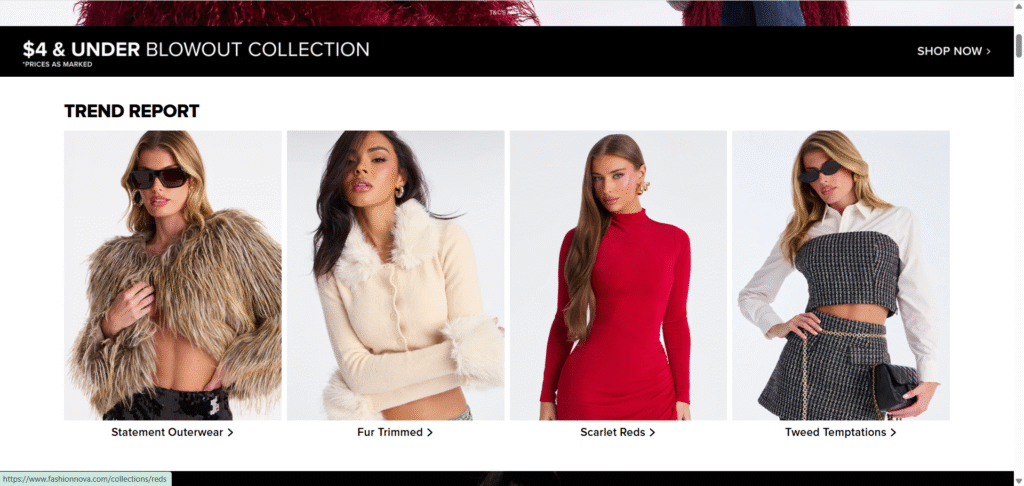
The site’s UX design is optimized for rapid discovery, with endless-scroll product feeds and “Shop The Look” features that make it easy for shoppers to buy entire outfits seen on their favorite influencers.
This creates a high-energy, trend-driven shopping experience that keeps customers coming back.
Alo Yoga: Premium Branding for a Lifestyle Niche
Alo Yoga sells more than just yoga wear; they sell a complete wellness lifestyle. Their brand story is one of luxury, mindfulness, and studio-to-street fashion, which is perfectly reflected in their site’s sophisticated and editorial-style design.
The use of high-end, atmospheric photography for their visual merchandising elevates their products beyond simple apparel.
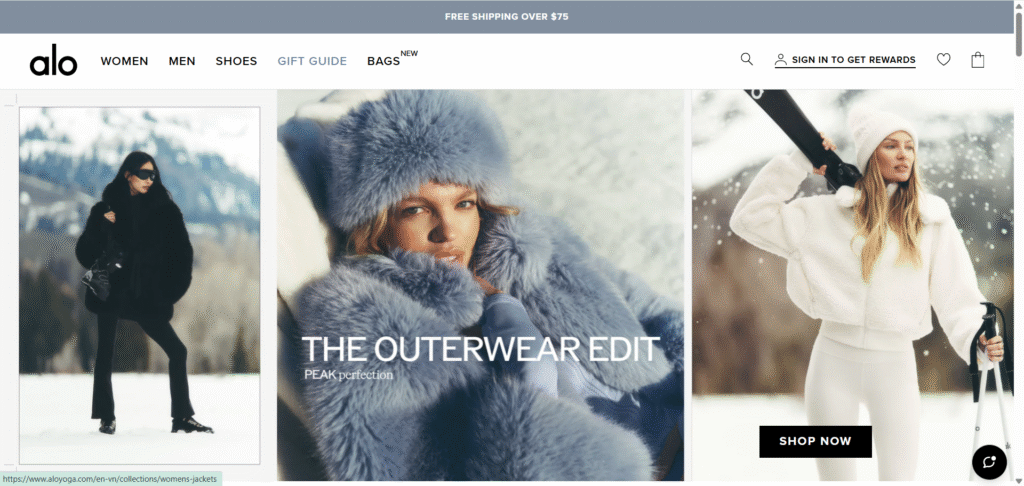
Their website functions like a content hub, featuring a blog and videos that provide value beyond the products themselves.
By building this aspirational world around their brand, Alo Yoga has established itself as a premium player, attracting a loyal following willing to invest in high-quality, fashion-forward activewear.
Kirrin Finch: Inclusive Branding and Authentic Storytelling
Kirrin Finch was founded to meet a specific need in a niche market: creating menswear-inspired apparel designed to fit female and non-binary bodies.
This authentic brand story is at the heart of their Shopify store. They don’t just sell clothes; they champion inclusivity and self-expression.
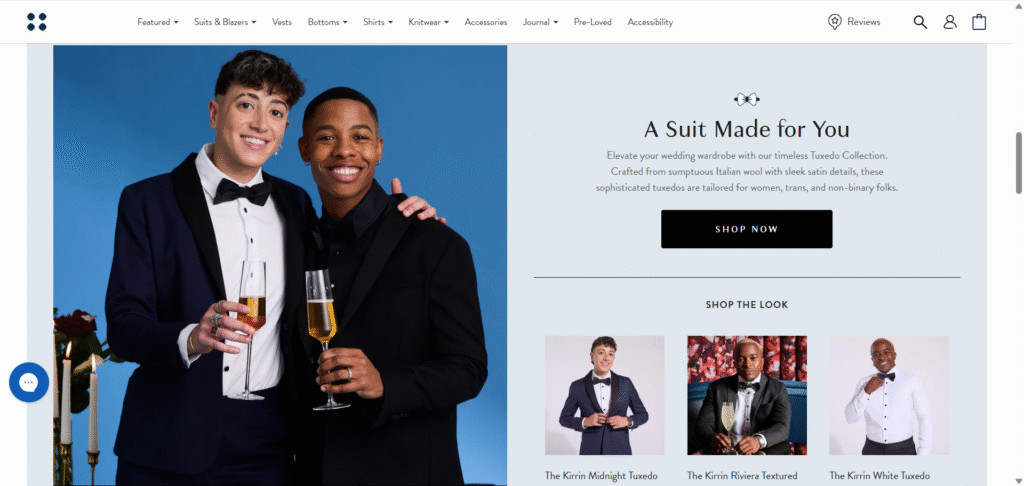
Their visual merchandising is a powerful tool for this mission, showcasing their clothing on a diverse range of models with different body types.
The website copy and “About Us” page reinforce their story, creating a strong sense of community and trust with their target audience. This focus on authenticity makes their brand deeply relatable and memorable.
ColourPop Cosmetics: High-Volume E-commerce at Scale
While a beauty brand, ColourPop’s business model operates with the speed and volume of fast fashion.
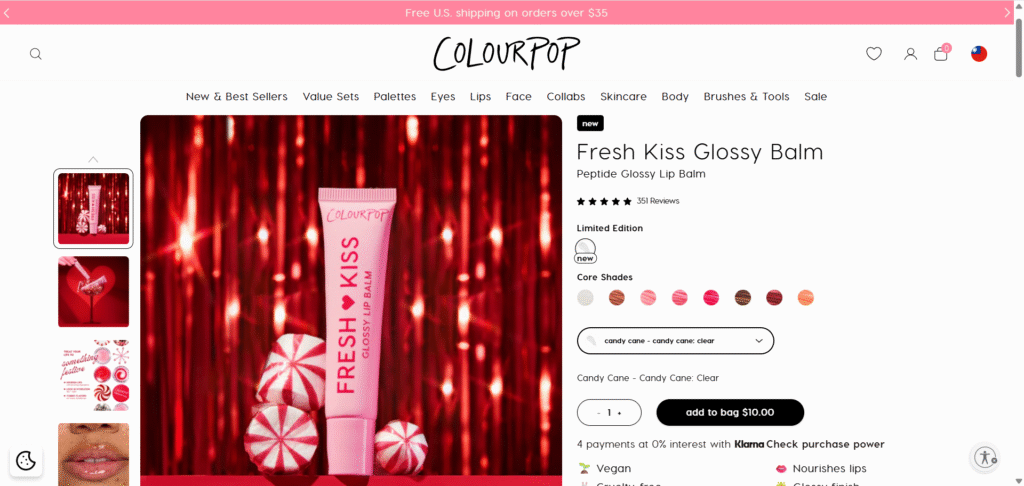
Their Shopify store is a perfect example of high-velocity e-commerce, built to showcase a massive, ever-changing product catalog and handle huge volumes of orders. Their brand niche is affordable, trend-driven makeup.
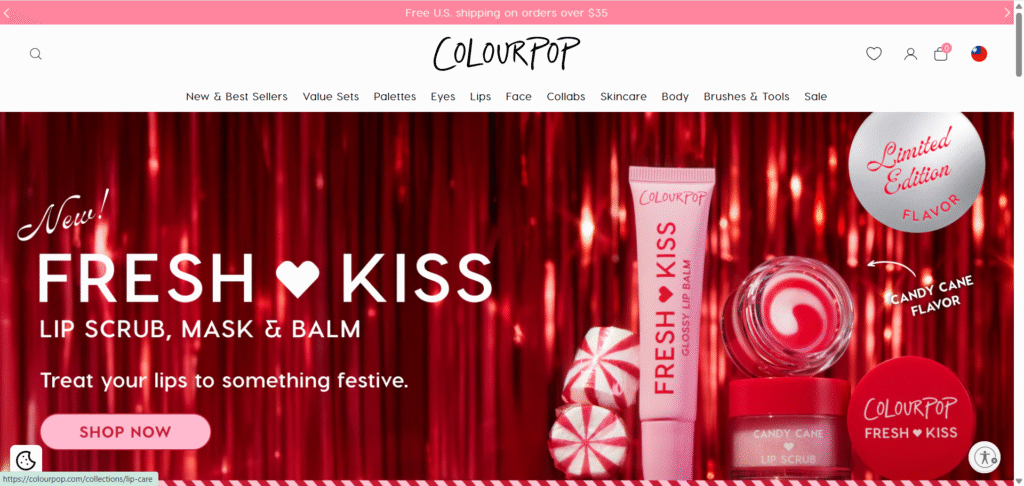
The website’s UX design is all about discovery and conversion. Bright, bold visuals, frequent new arrivals, and collaborations with major franchises (like Disney and Star Wars) create constant excitement.
They master the path to purchase with low prices, frequent promotions, and a simple checkout process, encouraging impulse buys and repeat customers.
Top Shopify Store Examples: Home & Goods (7 Stores)
For home and goods brands, a Shopify store must do more than just display products—it has to help customers visualize those items in their own space.
The best Shopify store examples in this category are masters of visual storytelling, using stunning photography and intuitive design to build trust and inspire creativity.
Ruggable: Solving a Problem with Smart UX
Ruggable built an empire on a single, brilliant idea: machine-washable rugs. Their entire brand story is about solving a common frustration, and their website’s UX design is expertly crafted to communicate this solution.
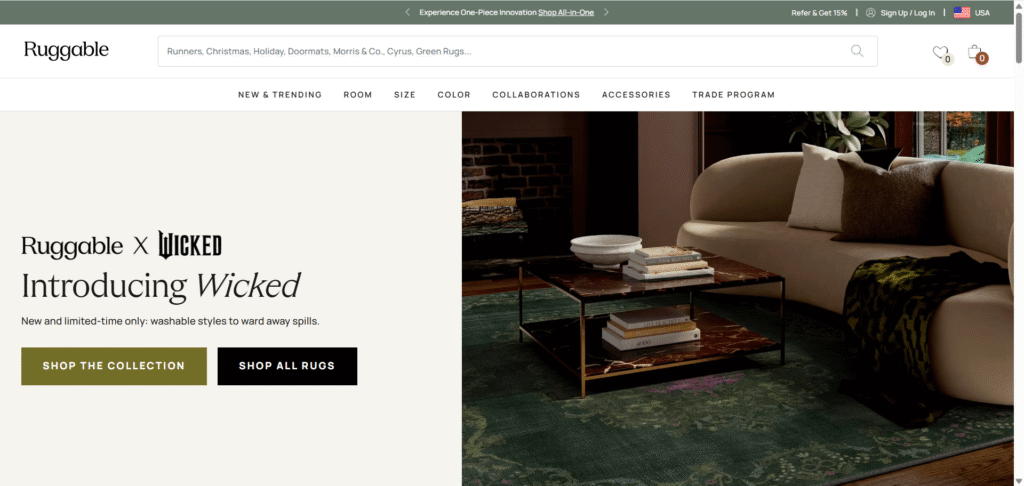
The site immediately educates visitors on their two-piece system (rug cover + pad) and uses interactive features that allow shoppers to visualize different rug styles in their own rooms.
This problem-solving approach simplifies the path to purchase and gives customers the confidence to buy.
Brooklinen: Building Trust with Social Proof
Brooklinen’s tagline, “The Internet’s Favorite Sheets,” is a bold claim they back up with overwhelming social proof.
Their product pages are loaded with thousands of customer reviews, star ratings, and testimonials that build immense credibility.
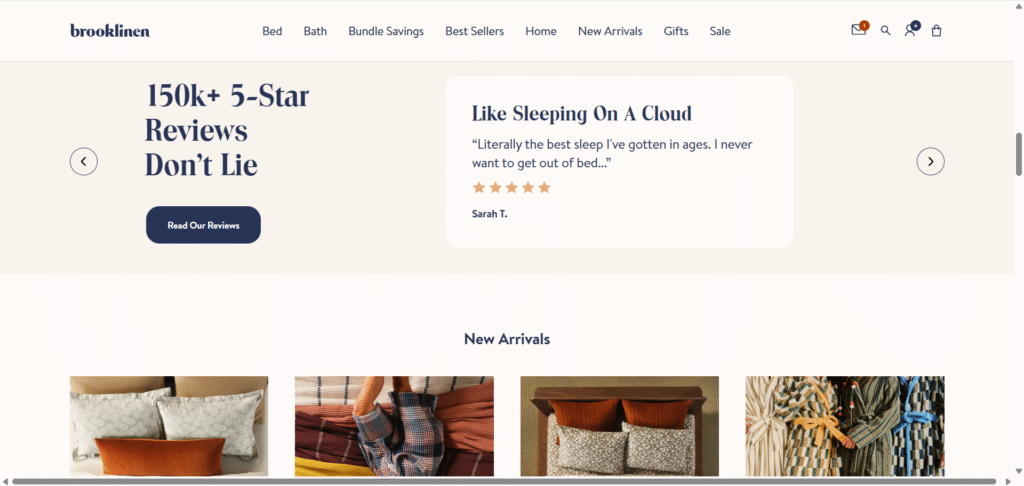
This focus on user feedback is a core part of their brand story, positioning them as a transparent, customer-approved choice for luxury bedding.
Their soft, inviting visual merchandising makes the comfort of their products feel tangible, turning browsers into believers.
Made In: Content-Driven Commerce for Experts
Made In targets home chefs who want professional-grade cookware, and they build authority through a content-rich shopping experience.
Their brand story is one of expertise and quality, reinforced by collaborations with famous chefs and detailed blog posts about their manufacturing process.
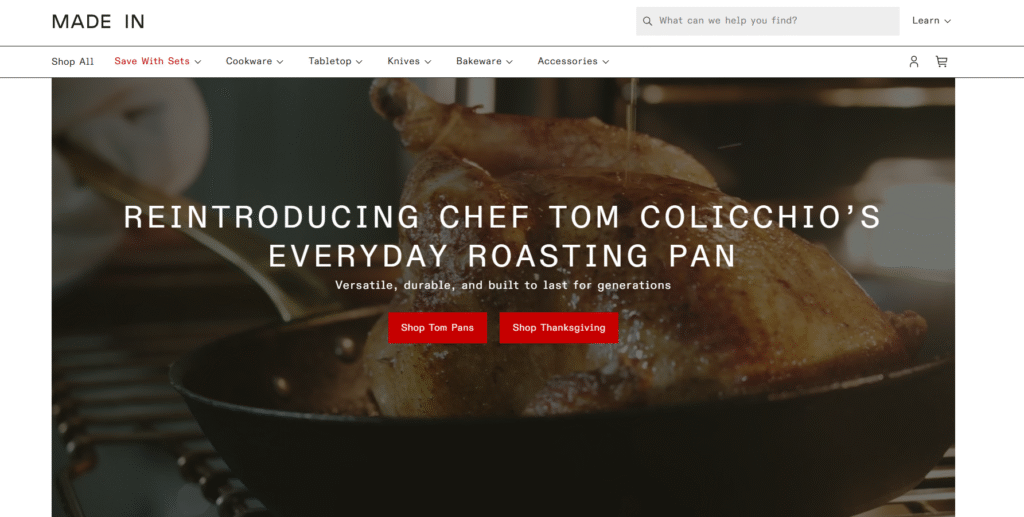
This content-first approach establishes trust not just in their products, but in their authority within the culinary world.
The clean, professional design of their store makes it feel less like a shop and more like a resource for serious cooks.
Haus: Modern Design for a Niche Audience
Haus is disrupting the spirits industry with its line of low-ABV aperitifs, and its brand niche targets a modern audience that values transparency and design.
Their Shopify store, frequently praised for its aesthetics, features a bold, minimalist UX design that feels more like a high-end fashion label than a beverage company.
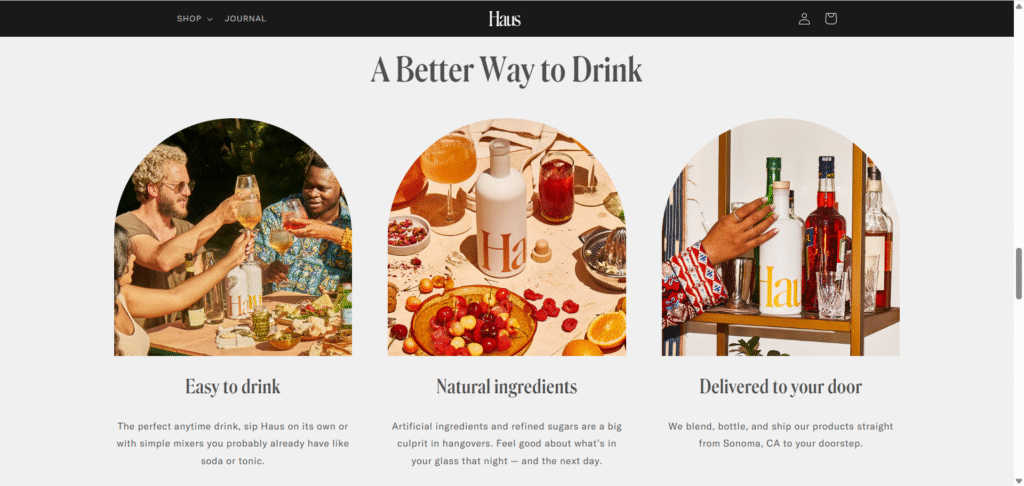
The visual merchandising is stunning, presenting their distinctively shaped bottles as objects of desire. This design-forward approach perfectly captures their brand story of creating a “better way to drink.”
The Citizenry: Ethical Storytelling and Artisan Goods
The Citizenry’s store is a beautiful example of a brand leading with its story. Their niche is ethically crafted, artisan-made home goods from around the world.
Every product page is rich with detail about the country of origin and the artisan who made it.
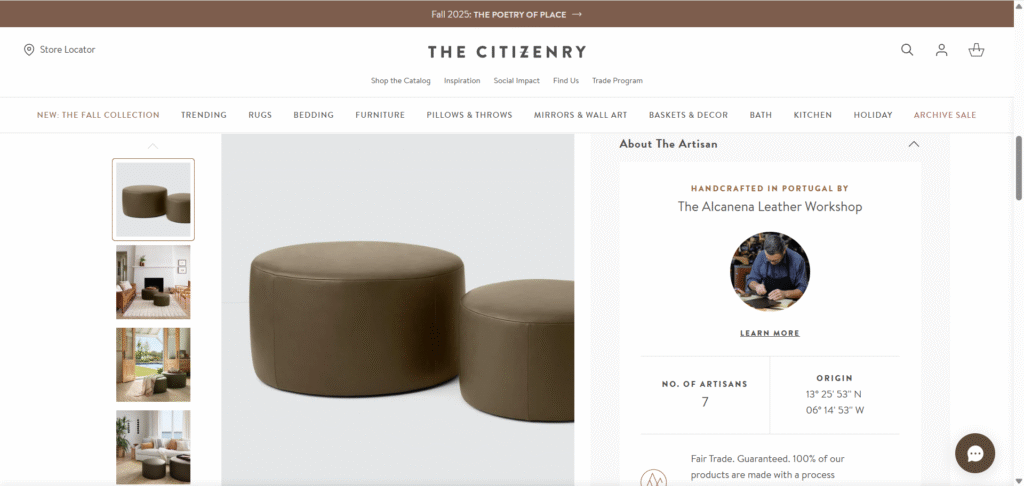
This deep, transparent brand storytelling creates a powerful emotional connection and justifies their premium price point.
Their photography feels authentic and warm, highlighting the unique, handmade quality of each item and turning the shopping experience into a journey of discovery.
Poly & Bark: High-Quality Visuals and Room Mockups
Buying furniture online can be daunting, but Poly & Bark overcomes this hesitation with exceptional visual merchandising.
Their Shopify store uses crisp, high-resolution photos, 360-degree product views, and detailed dimension diagrams to give shoppers a complete picture of each item.
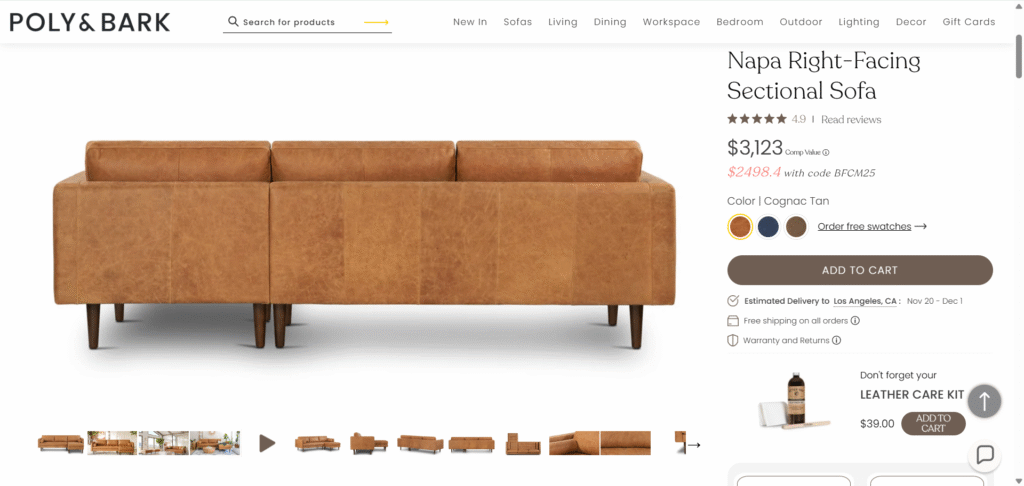
More importantly, they feature extensive “Shop the Room” galleries and user-submitted photos, allowing customers to see how the furniture looks in real, styled homes.
In practice, this visual-first strategy builds confidence and makes the path to purchase feel much less risky.
GOODEE: A Curated Marketplace with a Mission
GOODEE is a curated marketplace focused on “good design, good people, and good impact.” Their brand story is about ethical curation, offering products from artisans and brands that meet high standards for social and environmental responsibility.
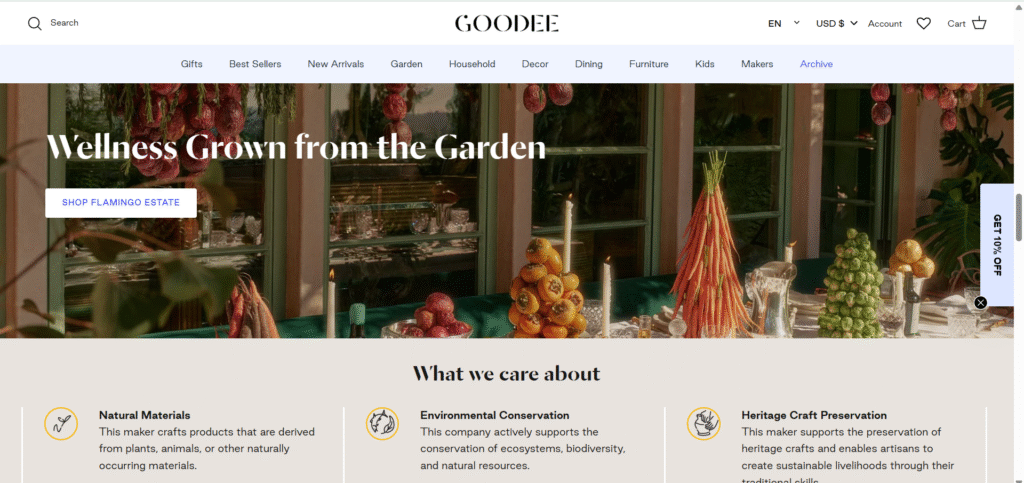
Their store’s UX design is clean, minimalist, and editorial, feeling like a high-end design publication.
By highlighting the stories behind the brands they carry, they build a strong sense of trust and community, positioning themselves as a leading voice in the conscious consumerism movement.
Top Shopify Store Examples: Food & Beverage (7 Stores)
Selling food and drinks online presents a unique challenge: you have to make the customer taste the product through their screen.
The most successful food & beverage Shopify store examples do this by combining mouth-watering visuals with a compelling brand story that makes you want to take a bite.
Death Wish Coffee: Creating a Powerful Brand Identity
Death Wish Coffee’s brand story is simple and audacious: they are “The World’s Strongest Coffee.” This powerful identity is infused into every pixel of their Shopify store, which uses a dark, bold, and rugged design aesthetic.
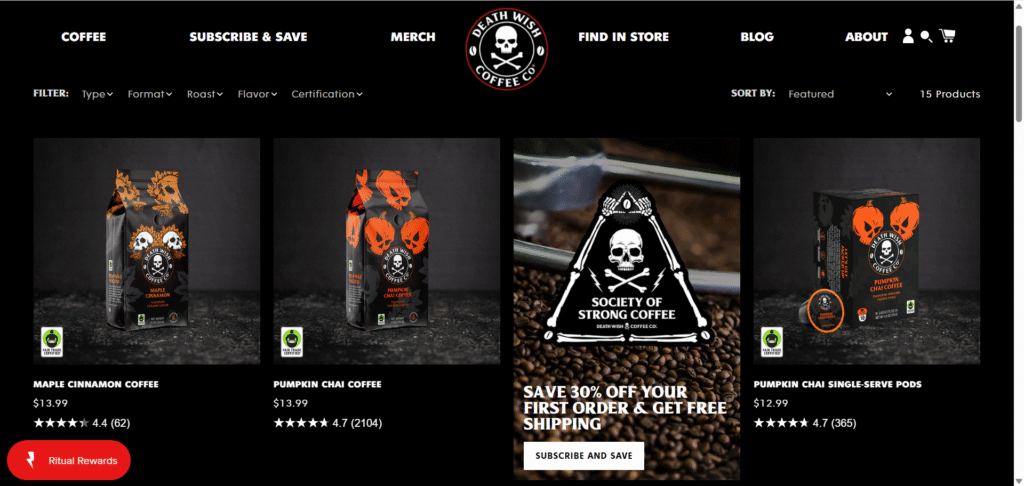
The visual merchandising is intense, with high-contrast photos that promise a potent brew.
They’ve turned this strong identity into a recurring revenue machine by perfecting the subscription model, creating a frictionless path to purchase for loyal fans who want their caffeine fix delivered on schedule.
BLK & Bold: Mission-Driven Brand with Strong Partnerships
BLK & Bold’s mission is to “make purpose popular.” Their brand story is centered on community impact, pledging 5% of their profits to initiatives that support at-risk youth.
This purpose-driven message is the first thing visitors see on their site, creating an immediate emotional connection.
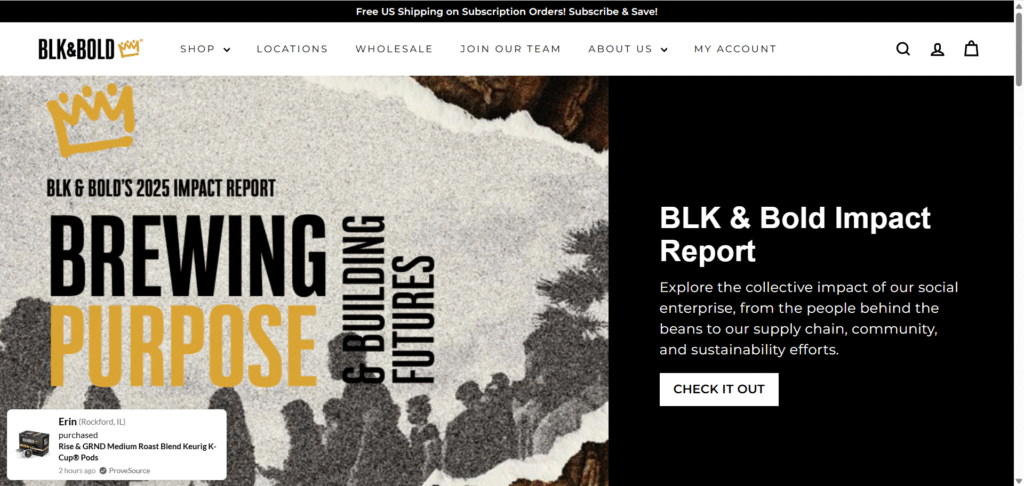
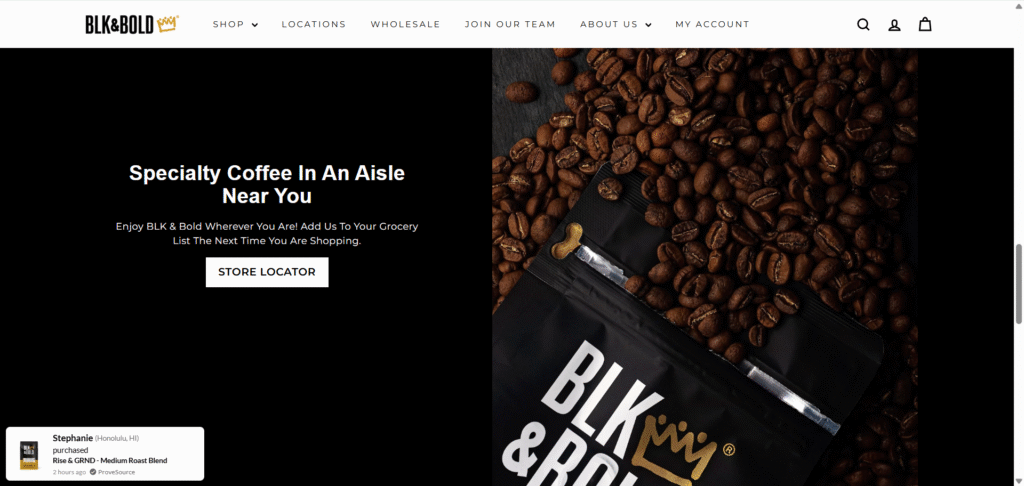
They build immense trust and credibility by highlighting major partnerships with brands like the NBA and Ben & Jerry’s.
This combination of a powerful mission and high-profile social proof makes a cup of their coffee feel like a contribution to a greater good.
Magic Spoon: Nostalgia-Infused Web Design
Magic Spoon brilliantly taps into the power of nostalgia with its “healthy cereal that tastes like your childhood favorites.”
This brand story is perfectly captured in their website’s playful, colorful, and retro-inspired UX design.
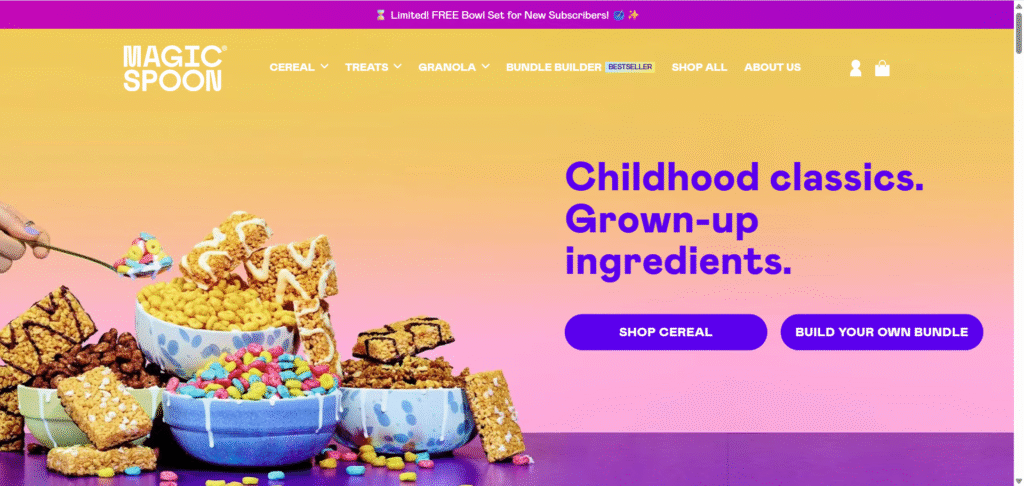
The visual merchandising is vibrant and fun, showcasing the colorful cereal in a way that feels both familiar and exciting.
By reinventing a beloved classic for a health-conscious millennial audience, their entire Shopify experience is designed to be joyful, easy to navigate, and irresistibly tempting.
Fly by Jing: Bold Visuals for a Breakthrough Product
Fly by Jing’s Sichuan chili crisp is known for its bold, complex flavor, and its Shopify store is a perfect visual match.
The website’s design is energetic, vibrant, and modern, using high-contrast colors and dynamic photography that makes the product sizzle.
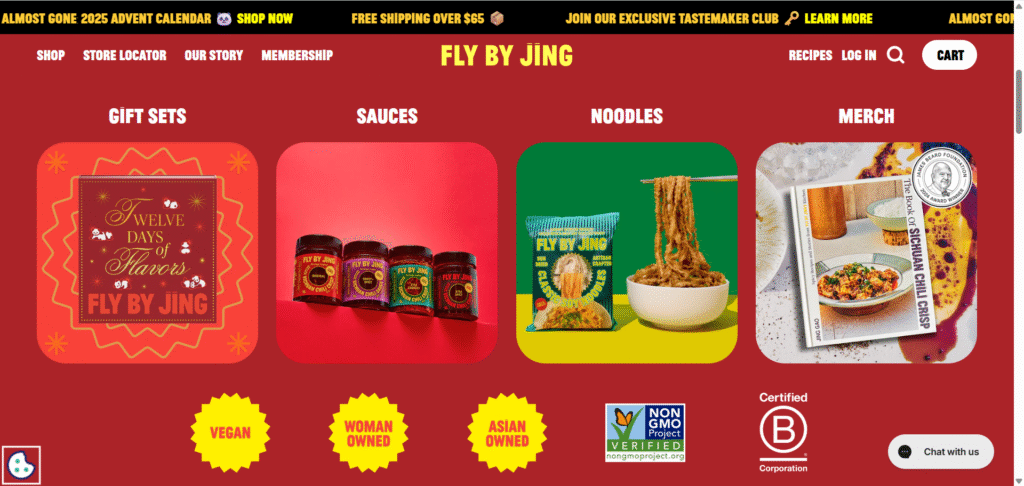
The founder’s journey is a key part of the brand story, adding a layer of authenticity and passion.
This energetic presentation ensures that even customers unfamiliar with the product understand its intensity and unique quality before they even add it to their cart.
Partake Foods: Serving the Allergy-Friendly Niche
Partake Foods was born from a parent’s need to create delicious, safe snacks for a child with food allergies. This authentic brand story is the foundation of their success in the allergy-friendly niche.
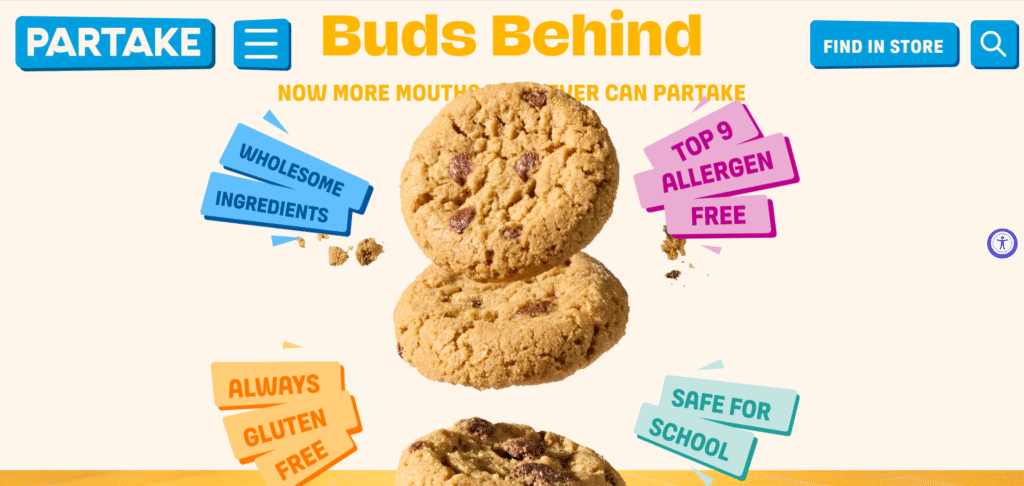
Their website builds trust immediately with bright, cheerful design and crystal-clear icons that highlight what their products are free from (e.g., gluten, nuts, dairy).
This focus on transparency and safety, combined with family-friendly visuals, creates a welcoming and reassuring experience for their target audience.
Taza Chocolate: Highlighting Ethical Sourcing and Process
Taza Chocolate differentiates itself with a unique stone-ground process and a commitment to ethical, direct-trade sourcing. This dedication to process and transparency is their brand story.
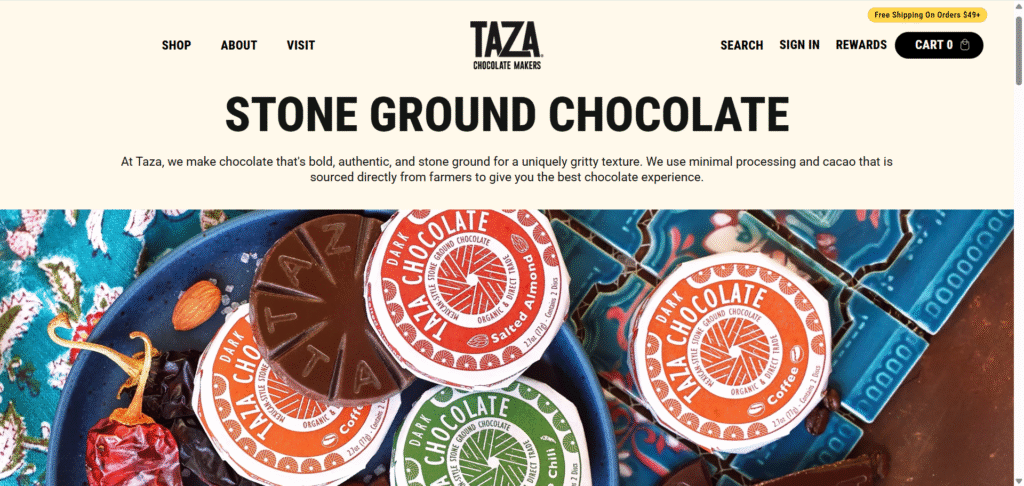
Their Shopify store serves as an educational hub, using rich visual merchandising—including photos and videos from their factory and cacao farms—to explain what makes their chocolate different.
By making their process the hero, they build deep trust and justify their premium positioning, attracting customers who care about quality and ethics.
Verve Coffee Roasters: Mastering the Subscription Model
Verve Coffee Roasters has built a strong lifestyle brand around its California roots, but its online success is a masterclass in creating recurring revenue.
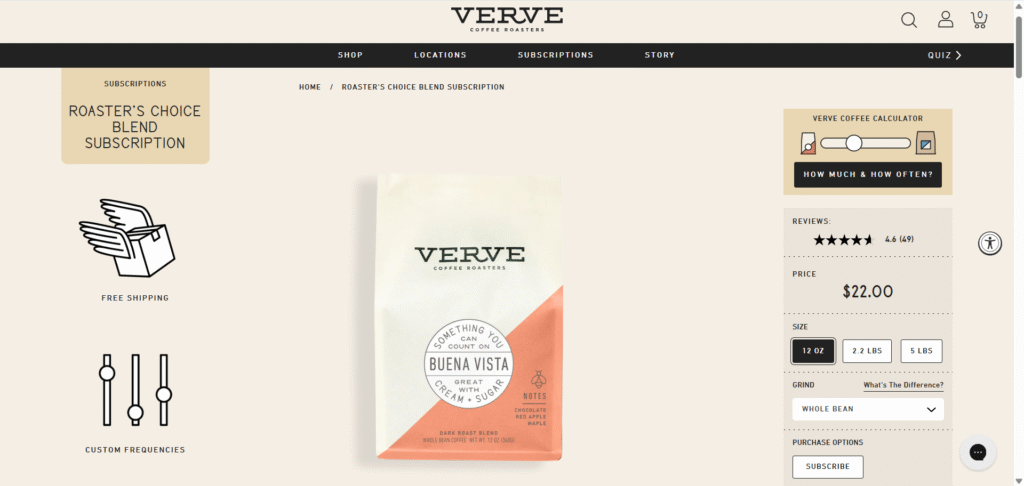
Their website perfects the frictionless path to purchase for coffee lovers through a highly intuitive and flexible subscription program.
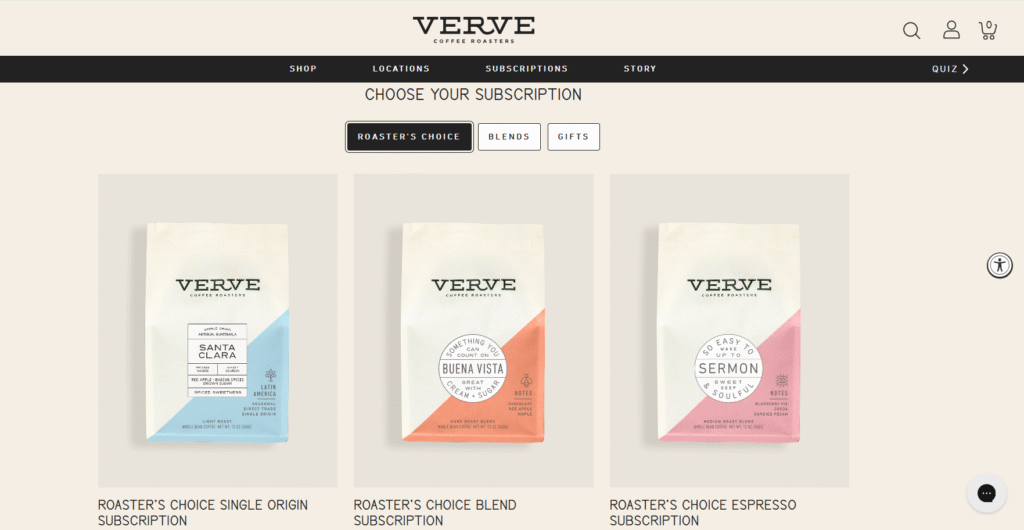
The UX design makes it incredibly simple for customers to choose their coffee, select a grind, and set a delivery frequency. By making the subscription process so seamless, Verve turns one-time buyers into loyal, long-term customers.
Top Shopify Store Examples: Beauty & Wellness (7 Stores)
In the beauty and wellness space, visuals are everything. These brands sell transformations, confidence, and self-care routines.
The best Shopify stores in this category excel at creating a visually immersive experience that builds trust and helps customers find the perfect product for their needs.
Fenty Beauty: Championing Inclusivity with Product Visualization
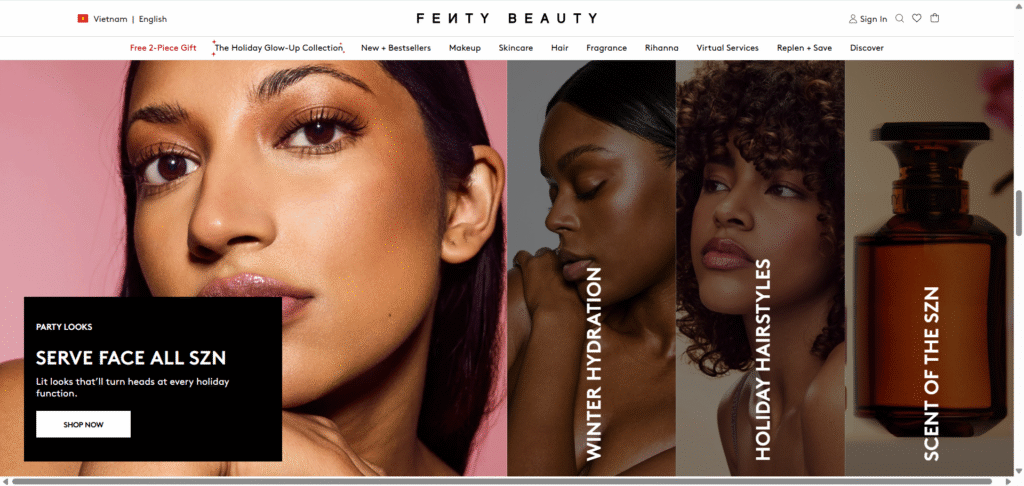
Fenty Beauty, with an estimated revenue of around $600 million, revolutionized the industry with its “Beauty for All” mission. This powerful brand story is brought to life through industry-leading visual merchandising.
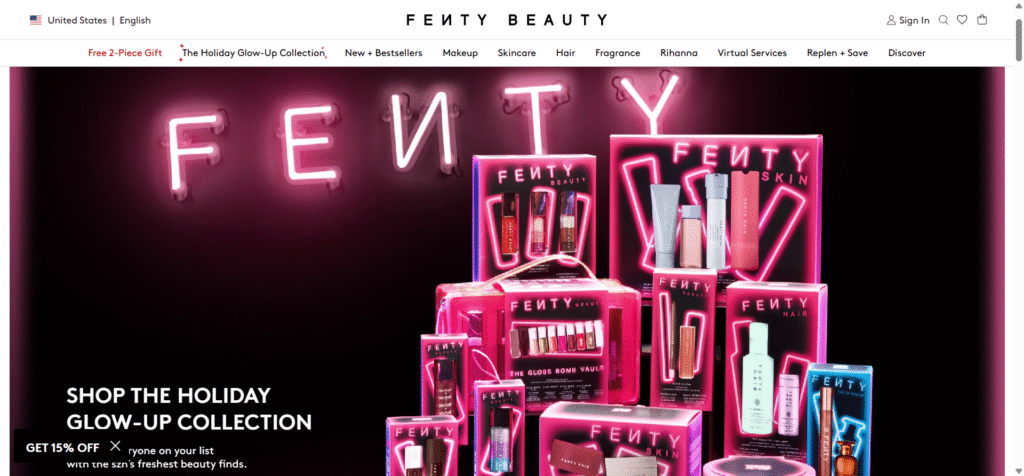
Their Shopify store was one of the first to showcase foundation shades on a truly diverse range of models, allowing customers to see how products look on skin tones similar to their own.
This commitment to inclusivity isn’t just a marketing angle; it’s a core function of their user experience that builds immense trust and loyalty.
Kylie Cosmetics: Driving Hype Through Product Drops
Kylie Cosmetics built a beauty empire by mastering the art of hype. The brand’s strategy revolves around creating urgency through limited-edition product “drops,” a tactic that has reportedly increased site traffic by 300% during launches.
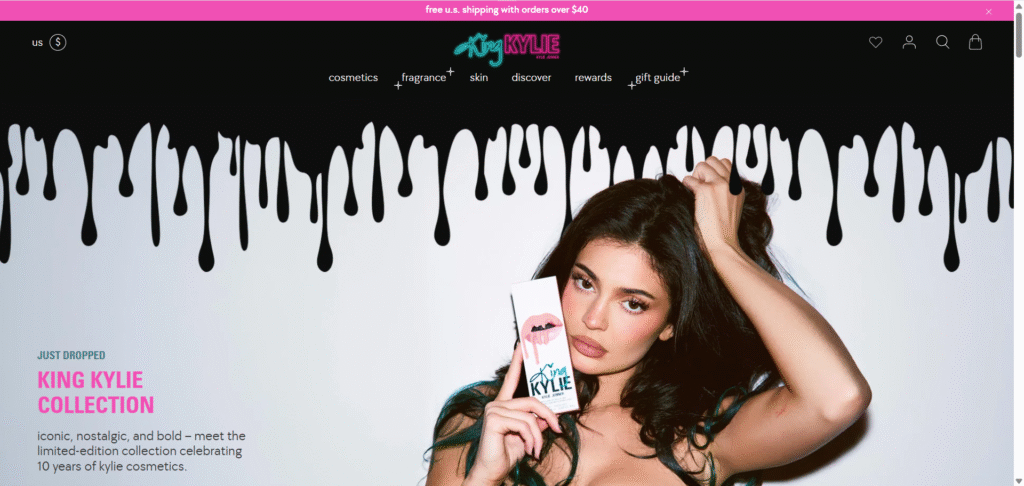
This creates a highly effective, if frantic, path to purchase. The Shopify Plus store is built for this velocity, using a clean, mobile-first design that allows millions of followers to find and buy products the second they become available.
The Honey Pot: Building a Brand on Transparency and Education
The Honey Pot is a leader in plant-derived feminine care, a category where trust is paramount. Their brand story is rooted in transparency and founder-led education. The website is clean, welcoming, and filled with information about their natural ingredients and their benefits.
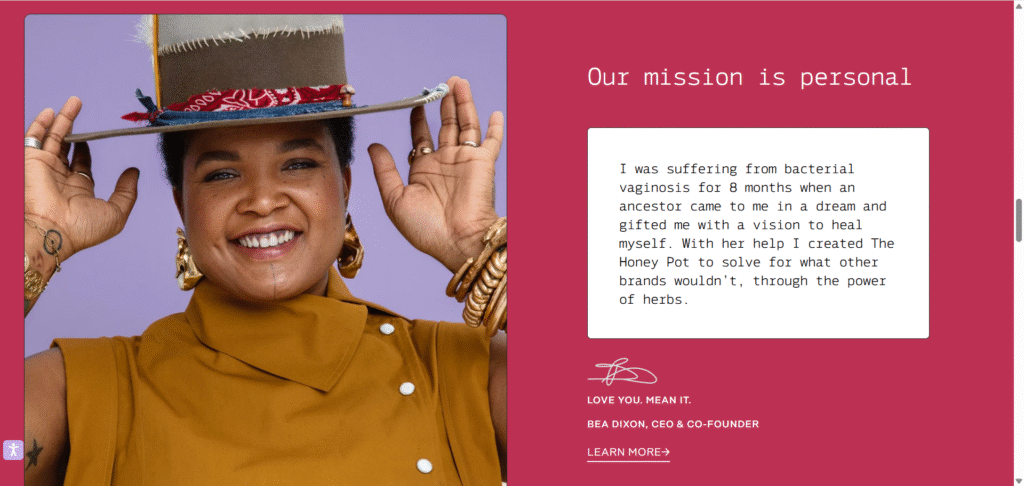
By openly discussing topics often considered taboo and putting their founder’s story at the forefront, they have built a strong, supportive community that trusts their products implicitly.
Hismile: Using Influencer Marketing and Social Proof
Hismile sells results, and their entire Shopify strategy is built on proving their teeth whitening products work.
They are masters of social proof, flooding their site with influencer testimonials, celebrity endorsements, and compelling before-and-after photos from real customers.
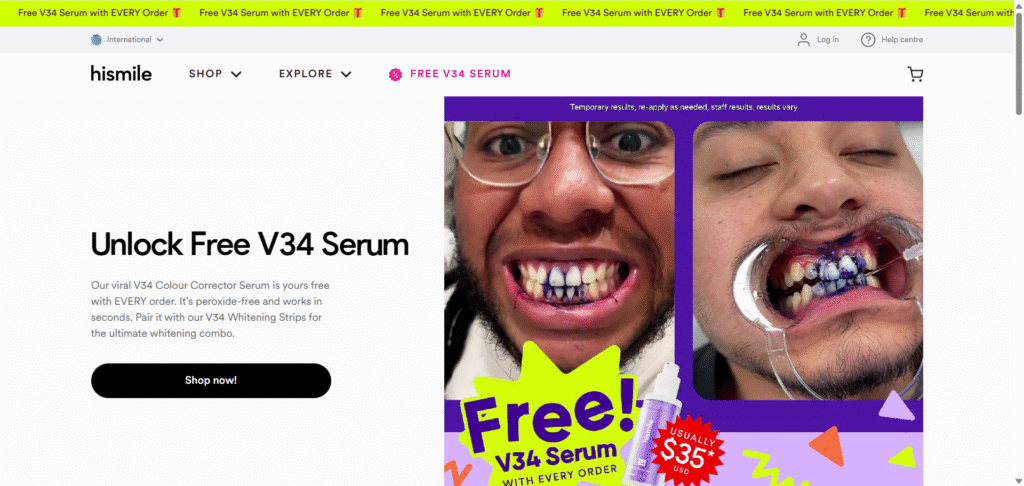
This constant stream of user-generated content is incredibly persuasive, building credibility and showing shoppers the transformation they can expect.
The bright, clean design of the site makes the results pop, encouraging a quick and confident purchase.
Beauty Bakerie: Creative Branding That Stands Out
In a sea of minimalist beauty brands, Beauty Bakerie stands out with a fun, creative, and unforgettable brand story.
The entire brand is built around a sweet, bakery-inspired theme, with product names like “Flour Setting Powder” and “Lip Whips.”
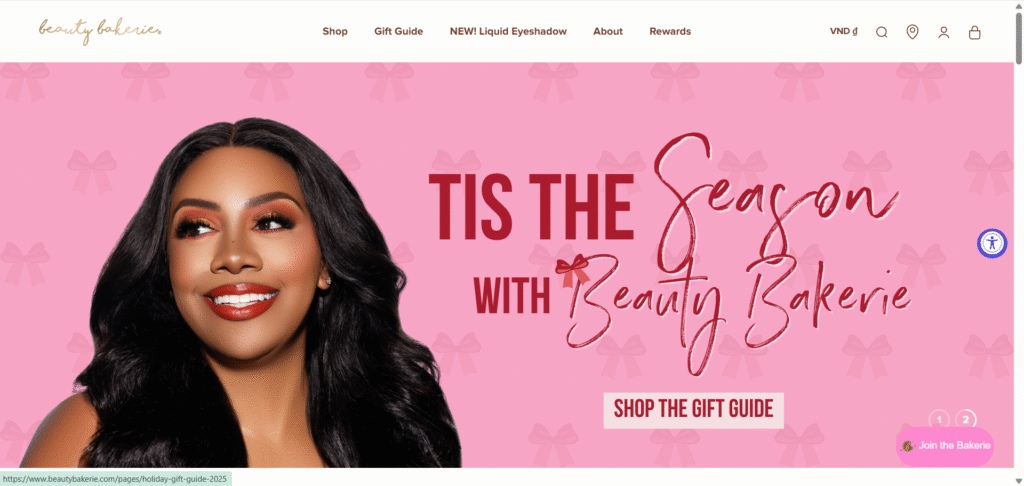
This creative concept is executed flawlessly across their Shopify store, from the playful product photography to the whimsical website copy.
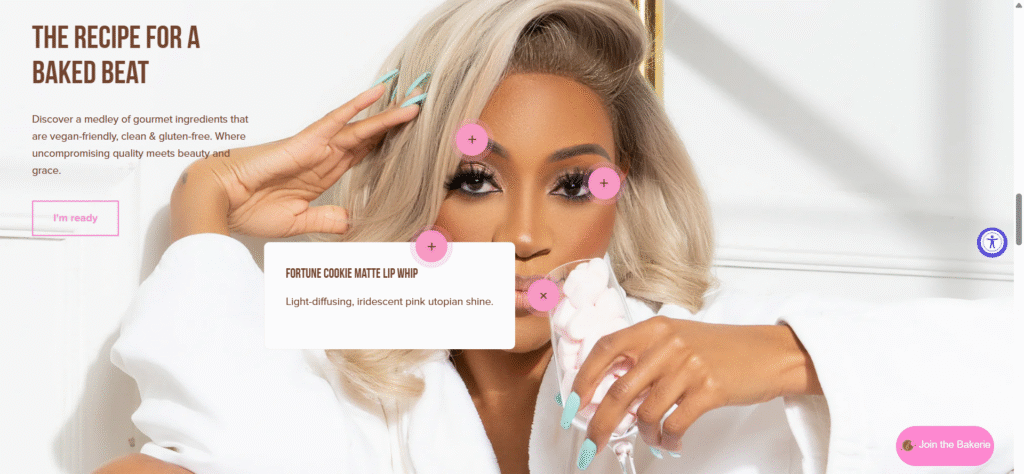
This unique identity makes the brand highly memorable and shareable.
Pela: Sustainability as a Core Product Feature
While known for its compostable phone cases, Pela is fundamentally a wellness brand for the planet. Their brand story is one of environmental responsibility, and their niche is creating a plastic-free future.
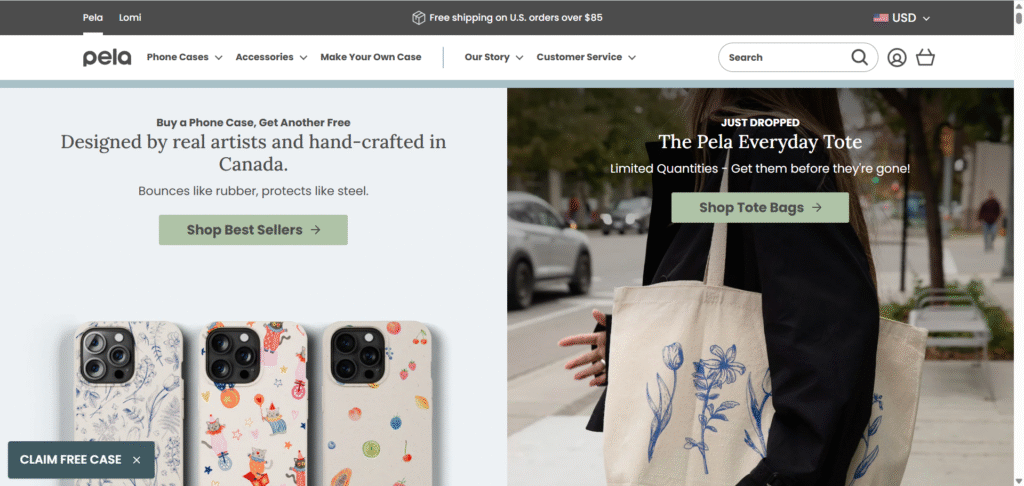
Their Shopify site is an extension of this mission, focusing heavily on education about plastic waste and the benefits of their plant-based materials.
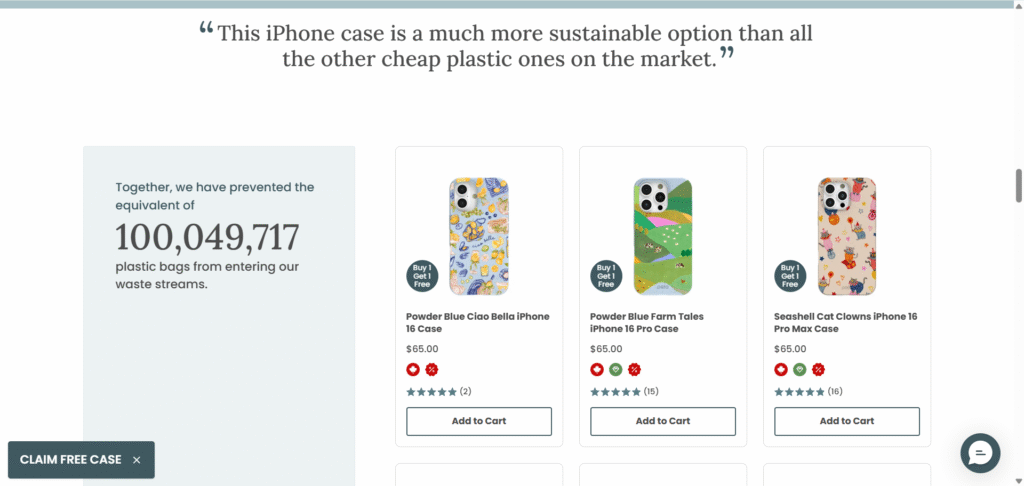
By making sustainability the core product feature, Pela attracts a loyal following of eco-conscious consumers who are buying into a movement, not just a product.
Beardbrand: Building a Strong Community for a Niche Market
Beardbrand has elevated beard care from a simple product to a lifestyle. Their brand story targets the “urban beardsman” who invests in high-quality grooming.
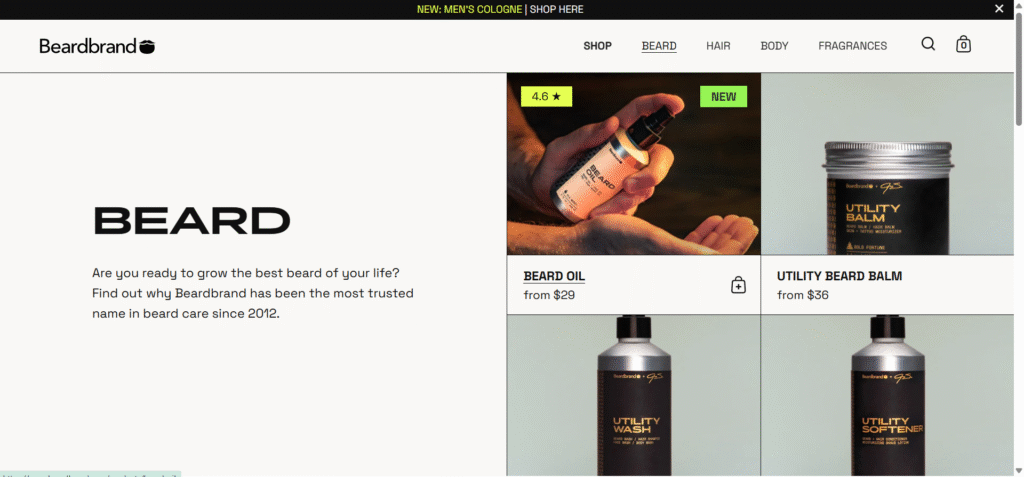
But their real genius is in community building. They have created a massive library of content, including blogs and YouTube videos, that provides genuine value and establishes them as the ultimate authority in their niche.
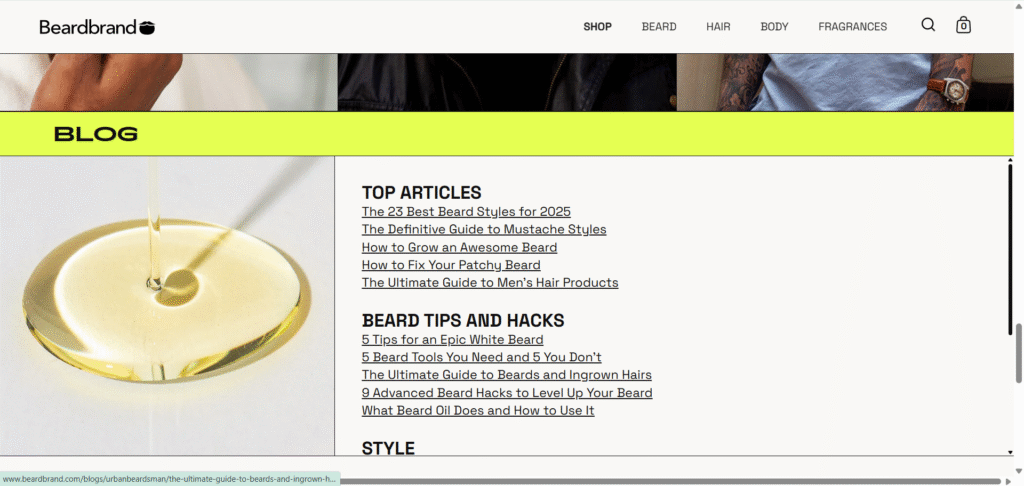
Their Shopify store is more than a shop; it’s a hub for their community, building the trust needed to sell premium products.
Top Shopify Store Examples: Accessories, Jewelry & Electronics (6 Stores)
From affordable luxury to high-tech problem-solvers, the accessories category on Shopify is incredibly diverse.
The winning Shopify store examples in this space are those that can create a strong identity for products that people wear and use every day. They excel at showcasing detail, quality, and style through their digital storefronts.
MVMT Watches: A Disruptor Brand Story
MVMT (pronounced “movement”) launched with a classic disruptor brand story: to deliver stylish, minimalist watches without the luxury markup.
This narrative immediately resonated with a millennial audience tired of legacy brands.
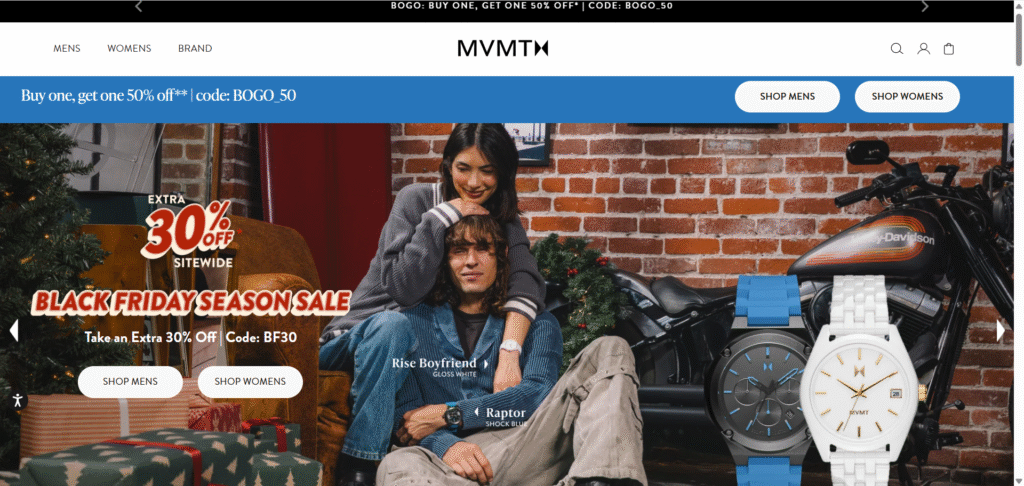
Their Shopify store reflects this ethos with a clean, modern UX design and high-quality visual merchandising that makes their affordable watches look like premium timepieces.
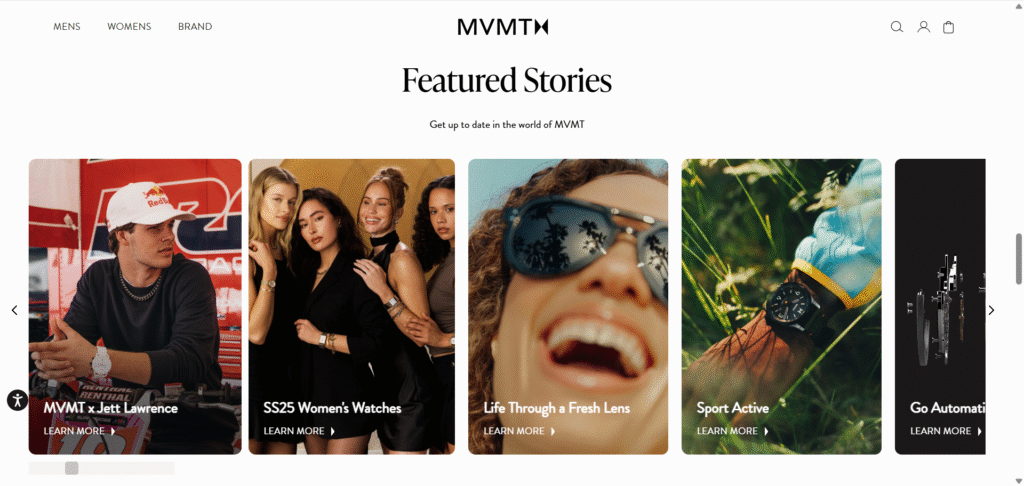
By focusing on this core message of “style you can afford,” they built a massive direct-to-consumer brand.
Pura Vida Bracelets: Selling a Lifestyle Through Community
Pura Vida doesn’t just sell bracelets; they sell the laid-back, “pure life” lifestyle of Costa Rica where the brand was born. Their Shopify store is a vibrant and colorful reflection of this brand story.
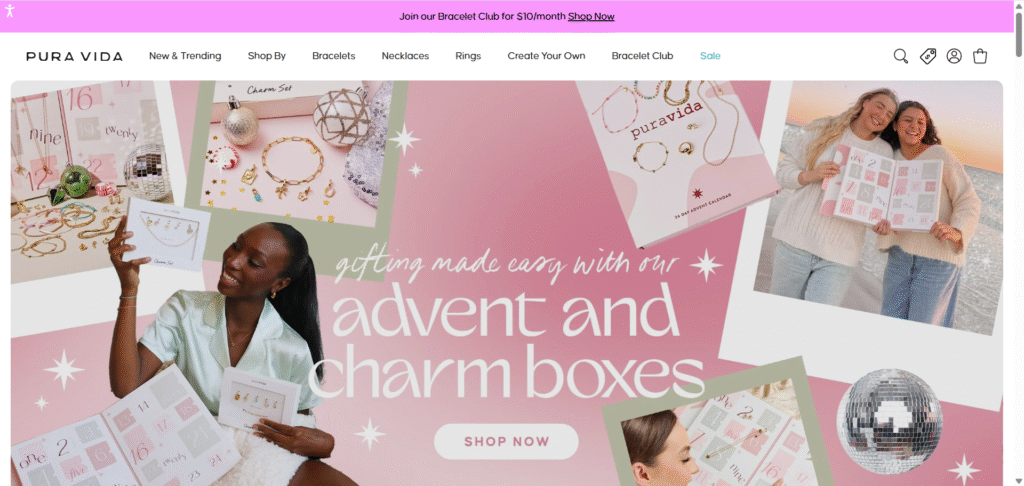
Their greatest strength is their mastery of social proof. With millions of Instagram followers, their site is covered in user-generated content from their community, showcasing real customers living the Pura Vida lifestyle.
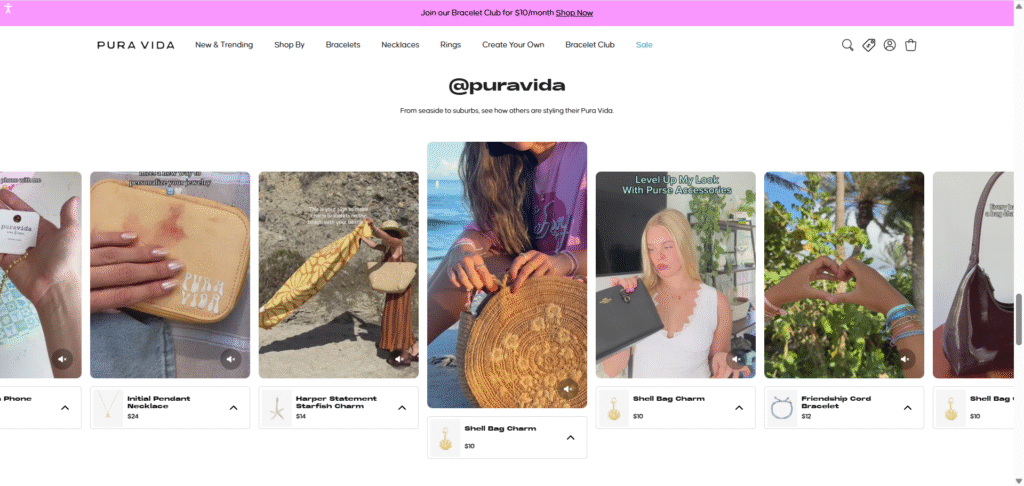
This authentic, community-driven approach has turned simple string bracelets into a powerful symbol of adventure and friendship.
Loop Earplugs: Solving a Specific Problem with Great Design
Loop took a purely functional product—earplugs—and made it a stylish accessory. Their brand niche is providing high-fidelity sound reduction for specific situations like concerts, focus, or sleep, and their website is expertly designed to guide users to the right solution.
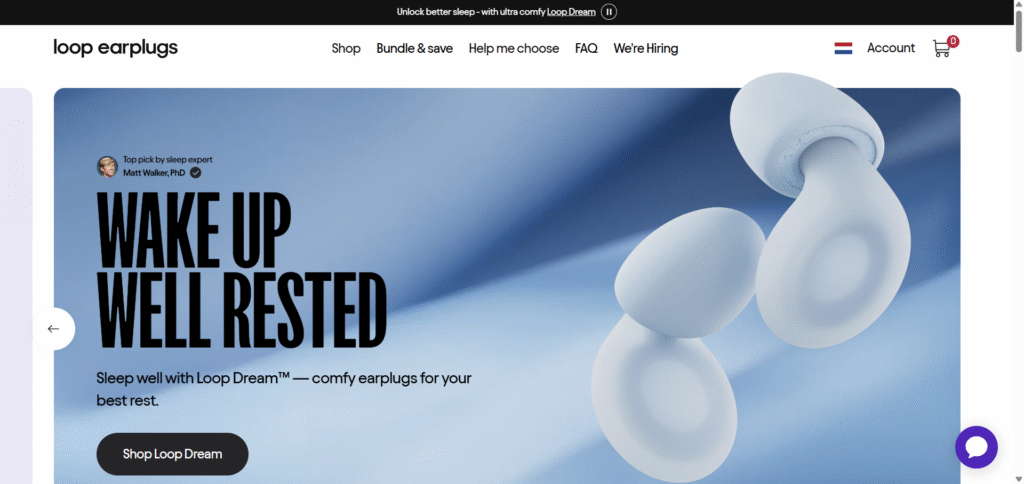
The site’s UX design is clear and educational, using simple icons and quizzes to explain the technology and help customers choose the perfect product. This problem-solving approach, combined with sleek visual merchandising, has turned a once-boring item into a must-have wellness tool.
Spigen: Dominating the Electronics Accessories Market
Spigen is a powerhouse in the world of phone cases and electronic accessories. For a brand with a vast catalog covering countless device models, a frictionless path to purchase is the key to success.
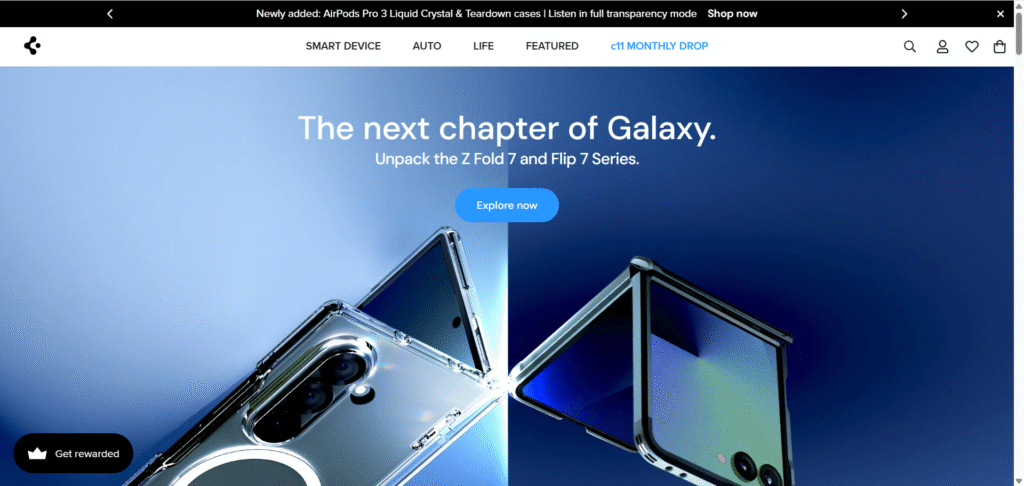
Their Shopify store is a model of efficiency. The navigation and search functionality make it incredibly easy for a customer to find their exact phone model and browse compatible cases.
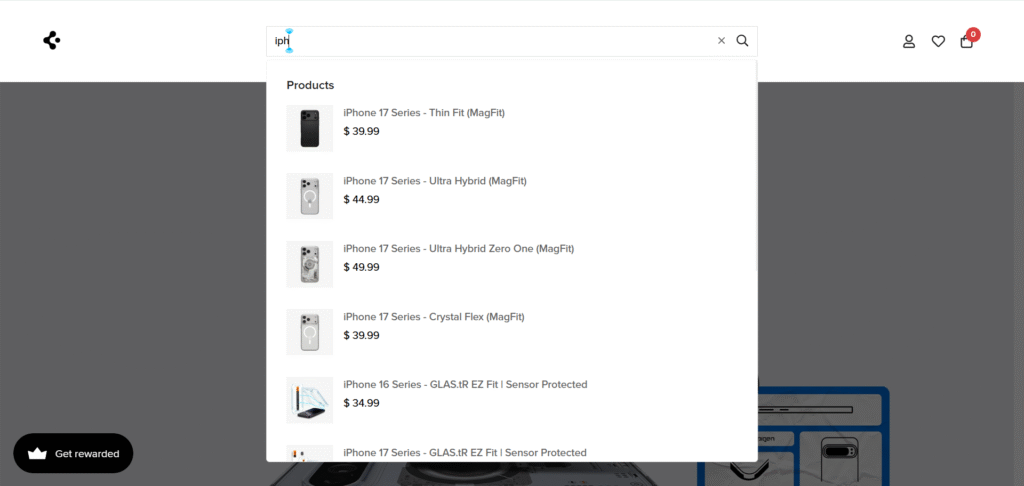
This seamless user experience, combined with a reputation for quality, builds the trust needed to dominate a highly competitive market.
Tattly: Turning Temporary Tattoos into a Design-Forward Product
Tattly elevated the temporary tattoo from a kid’s party favor to a form of wearable art. Their unique brand story is that all their designs are created by professional artists and illustrators, a fact they highlight throughout their site.
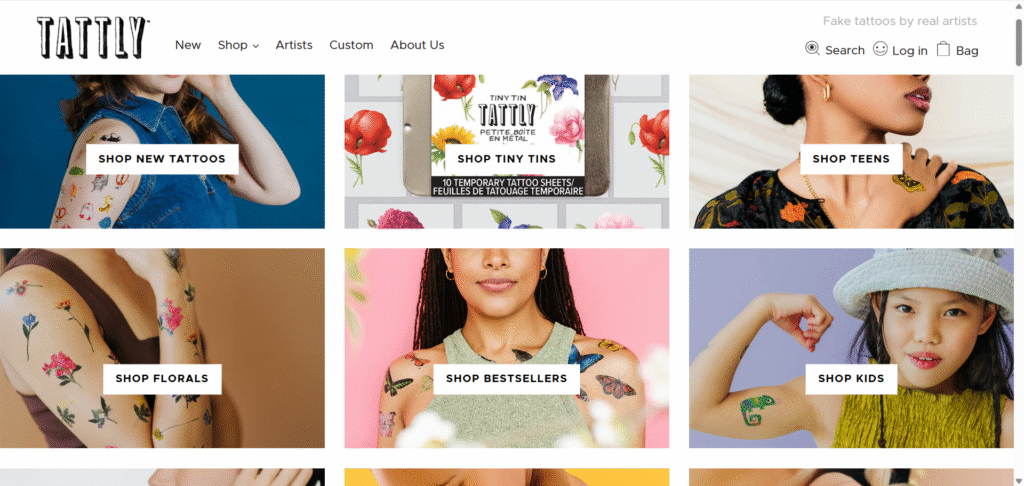
Their visual merchandising is exceptional, showcasing the tattoos on diverse models with crisp, editorial-quality photography. This transforms the product from a disposable novelty into a legitimate design object, allowing them to own the high-end, design-conscious niche.
WP Standard: Highlighting Craftsmanship with Quality Photography
For a brand selling premium leather goods, communicating quality through a screen is the ultimate challenge. WP Standard meets this challenge with impeccable visual merchandising.
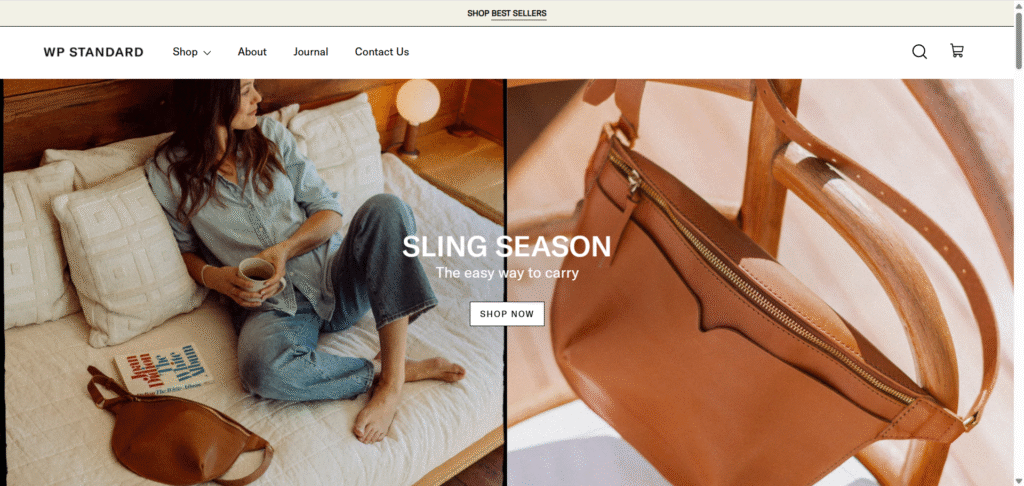
Their product pages feature stunning, high-resolution photography that captures the rich texture, color, and grain of the leather.
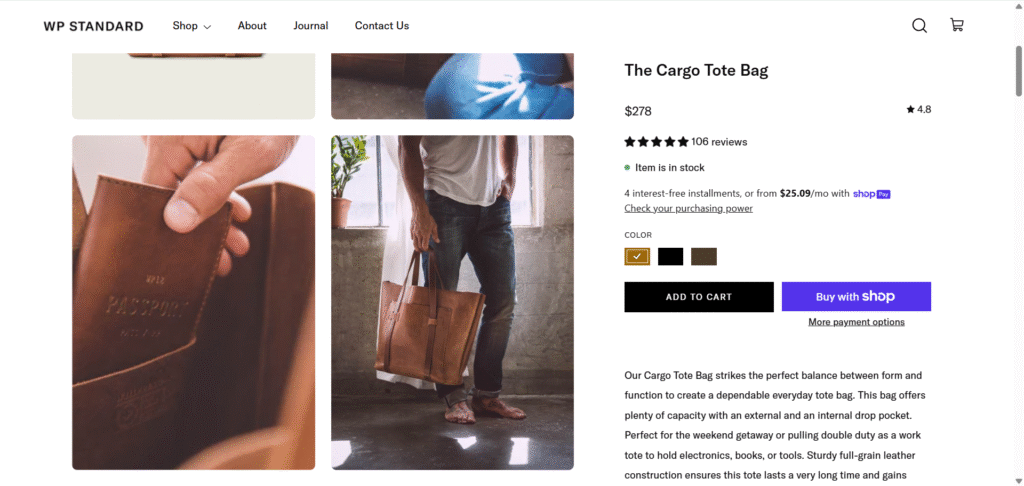
The brand’s minimalist design and focus on craftsmanship create a brand story of timeless, durable goods that are built to last a lifetime. This visual-first approach builds the trust required to sell high-ticket items online.
Niche Strategy Spotlight: 3 One-Product Stores That Excel
The one-product Shopify store is a powerful business model that focuses all marketing energy on a single, compelling item. This laser-focused approach requires a website that functions less like a catalog and more like a perfect sales pitch.
Here are three Shopify store examples that have mastered the art of the single-product website.
Snooz: A Laser-Focused Landing Page Experience
Snooz sells one thing: a white noise sound machine. Their entire homepage is a masterclass in conversion-focused design, acting as a single, long-form landing page. The user experience guides visitors on a linear journey from the problem (poor sleep) to the solution (their product).
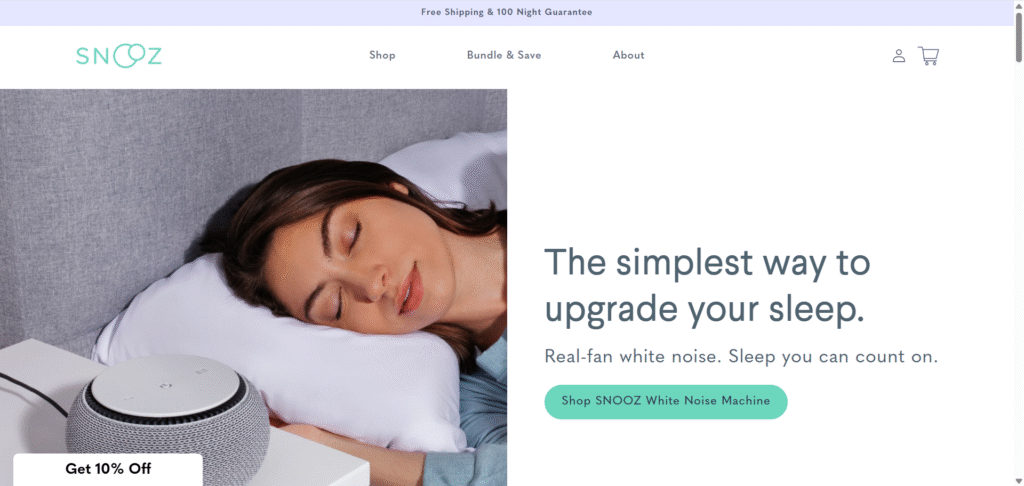
Every scroll reveals a new benefit, supported by high-quality visuals, press mentions, and customer reviews.
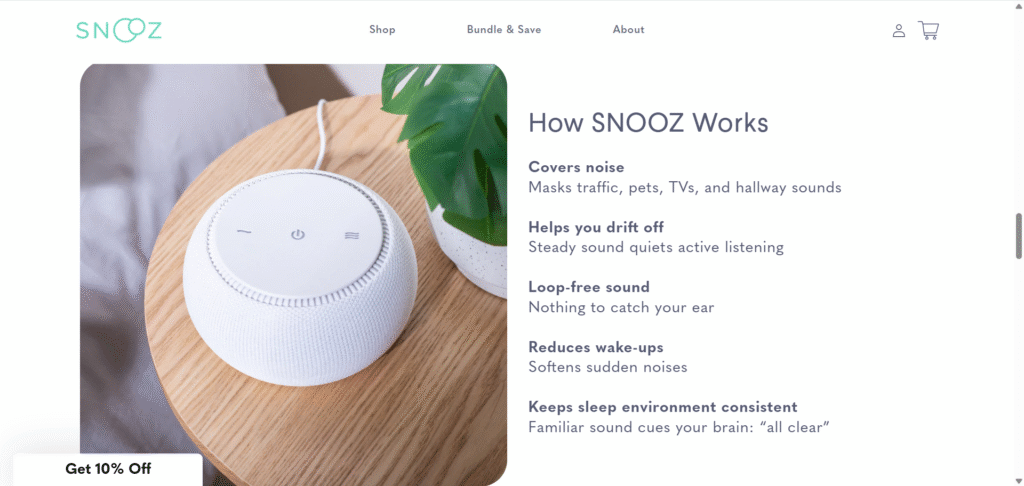
With no distracting navigation or other products to browse, the path to purchase is incredibly clear, culminating in a single, persistent “Buy Now” button.
BlendJet: The Power of Video Demonstrations
BlendJet knows that for a product like a portable blender, seeing is believing. Their Shopify store is built around dynamic visual merchandising in the form of video.
From the moment you land on the site, you see the BlendJet in action—crushing ice, blending smoothies at the beach, and cleaning itself in seconds.
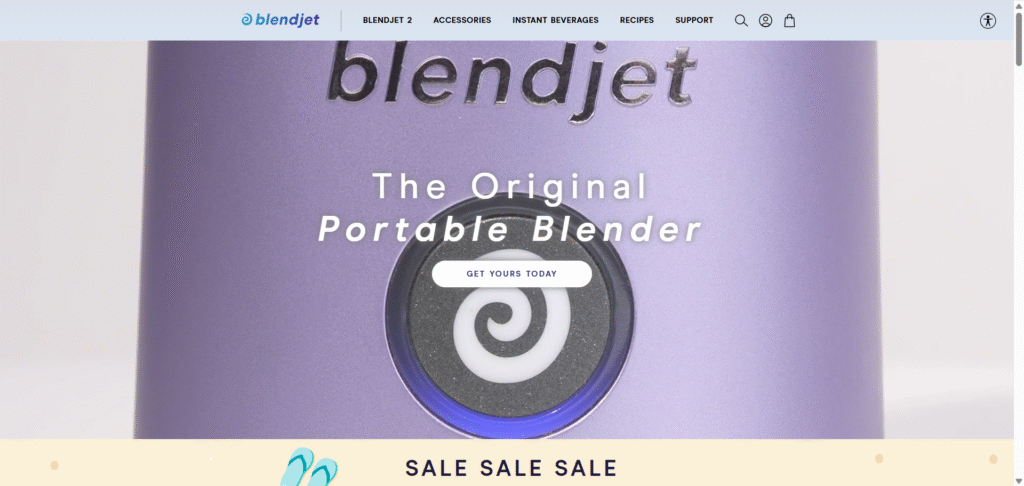
This video-first strategy immediately answers key customer questions and demonstrates the product’s value far more effectively than static photos ever could. It’s a powerful way to build trust and drive conversions for a single hero product.
PillowPug: Hyper-Personalization as a Business Model
PillowPug offers a single core product—a custom-shaped pillow—but their business is built on hyper-personalization. Their brand story is about celebrating the love people have for their pets.
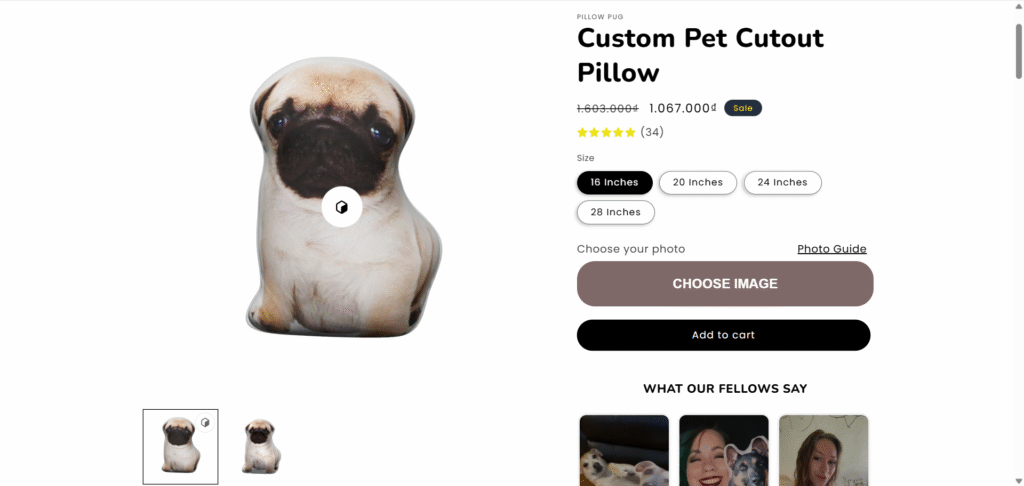
The entire site is designed around a simple, engaging path to purchase: upload a photo of your pet. This interactive process creates an immediate emotional investment from the customer.
By turning a simple item into a unique, personalized keepsake, they have created a highly desirable and defensible one-product business.
Another popular niche strategy is dropshipping. For entrepreneurs interested in that approach, we have a dedicated list of examples specific to the dropshipping model.
15 More Inspiring Shopify Stores to Explore (Rapid-Fire List)
Beyond our deep dives, our list of Shopify store examples continues with thousands of incredible brands.
To give you an even broader sense of what’s possible, here is a rapid-fire list of 15 more successful stores, each with a unique strength that sets them apart.
- Huel: A masterclass in clean, informative design that perfectly communicates the benefits of a data-driven nutrition brand.
- Manscaped: A prime example of using humorous and direct branding to dominate a sensitive and highly specific niche.
- Chubbies: This brand showcases a masterful use of a distinct brand voice and lifestyle marketing to sell shorts and swimwear.
- Red Bull: Demonstrates a content-first approach, using their high-energy media empire to sell branded merchandise.
- Heinz: Shows how a legacy household name can leverage its brand power for a modern, direct-to-consumer push on Shopify.
- Uppercase Magazine: A beautiful and simple subscription site that effectively sells a niche print publication online.
- GiveMeTap: A social enterprise model built around a simple product, proving that a powerful mission can be a great business plan.
- Lunchskins: A sustainable alternative to plastic bags, using bright, family-friendly design to make an eco-conscious choice appealing.
- Soko Glam: A content-heavy site that builds incredible authority and community in the K-beauty niche through education.
- Culture Kings: A Shopify Plus powerhouse for streetwear that creates a high-energy, immersive shopping experience.
- Petal & Pup: An excellent example of integrating user-generated content and social proof seamlessly into a fashion storefront.
- Cocolab: A delicious-looking site for a subscription chocolate brand that uses mouth-watering visuals to drive sales.
- Healthy Roots Dolls: A brand with a powerful mission for representation, using its story to connect deeply with customers.
- Nickey Kehoe: Achieves a high-end, editorial feel for home decor, making their store feel like a luxury design magazine.
- Heatonist: Built a cult following and strong niche authority by becoming the go-to source for hot sauce enthusiasts.
The Tech Stack: Common Themes & Apps Behind Top Stores
A beautiful & effective storefront, like the Shopify store examples we’ve featured, is a combination of great branding + the right technology.
While many of the largest brands on our list use custom-coded designs, countless successful stores are built using the powerful themes and apps available right in the Shopify ecosystem. This tech stack is the engine that drives their growth.
Before diving into specific digital tools, some entrepreneurs prefer a structured, foundational guide to understand the entire platform. A dedicated book can serve as an excellent offline resource to complement the online tools.
Popular Shopify Themes for Professional Design
A Shopify theme is the design framework for your entire store. It controls the layout, style, and feel of your website.
What I usually tell clients is that choosing a high-quality, flexible theme is the fastest way to achieve a professional look without hiring a developer.
While there are thousands of options, a few premium themes are consistently popular for their robust features and clean aesthetics:
- Impulse: A favorite among fashion and lifestyle brands, Impulse is designed to handle large product catalogs and is packed with features like mega-menus and powerful filtering to help customers discover products easily.
- Prestige: This theme has a high-end, editorial feel that’s perfect for premium and luxury goods. Prestige emphasizes brand storytelling with large, impactful images and a clean, minimalist layout.
Essential Shopify Apps for Growth
If themes are the foundation, apps are the tools you use to build your business. The Shopify App Store offers thousands of plugins that add specific functionality to your site.
Here are a few essential categories and the apps that top stores use to grow:
Email & SMS Marketing: Building a direct relationship with your customers is crucial. Apps like Omnisend allow you to create powerful automated email campaigns, recover abandoned carts, and send targeted promotions that drive repeat purchases.
Reviews & Social Proof: To build trust, you need to show that real people love your products. Apps like Yotpo, Loox, and Judge.me make it easy to automatically collect and display customer reviews, photo testimonials, and user-generated content directly on your product pages.
Page Builders: For creating custom landing pages or unique product layouts without code, page builders are essential. Section Store is a strong recommendation for Shopify merchants because it offers plug-and-play sections that work with most themes, can be edited directly in Shopify’s Theme Editor, and provides a more cost-effective alternative to traditional page builders.
How to Start Your Winning Shopify Store in 4 Steps
You’ve seen what’s possible with these Shopify store examples, from one-product wonders to global apparel giants. Every single brand on this list started with an idea and took the first step.
Now, it’s your turn to move from inspiration to action. The four steps below provide a quick-start framework, but for a more detailed walkthrough, you can follow our complete playbook for starting a Shopify business.
Step 1: Find Your Niche and Brand Story
As we’ve seen, the most successful stores have a clear purpose. What problem are you solving? Who are you serving? Your niche can be anything from fashion and home goods to more complex or regulated niches, so long as it has a clear audience.
My advice is to define your target audience and craft a compelling brand story that will connect with them on an emotional level. This is your foundation.
Step 2: Sign Up for Shopify and Choose a Theme
This is where your vision starts to become a reality. The sign-up process is quick and easy. Once you’re in, browse the Shopify Theme Store and select a theme that aligns with your brand’s aesthetic—like the popular Prestige or Impulse themes we mentioned. Remember, you can always customize it later.
Step 3: Build Your Core Pages
I remember struggling with this too, but you don’t need a massive website to launch. Focus on the essentials: a compelling homepage that tells your story, well-written product pages with high-quality images, and an “About Us” page that builds trust. These are the pages that will convert your first visitors into customers.
Step 4: Launch and Start Marketing
Once your core pages are ready, it’s time to go live. Getting your store online is just the beginning. Start sharing your brand on social media, explore email marketing, and begin the exciting journey of growing your business and finding your community.
You’ve seen the proof and you have the playbook. The only thing left to do is build. Sign up for Shopify today and turn your inspiration into a business.


Note: I’m a Shopify Media Partner, which means I might earn a small commission if you sign up through my link. It doesn’t cost you anything extra and helps keep this blog running.
FAQs About Shopify Website Examples
Here are a few quick answers to some of the most common questions people ask when looking for Shopify store examples.
What are the most successful Shopify shop examples?
Some of the world’s biggest brands use Shopify to power their online stores. This includes billion-dollar enterprises like Fenty Beauty, Gymshark, and Fashion Nova, which often use the Shopify Plus platform. However, success isn’t just measured in revenue; countless small businesses, niche boutiques, and one-person brands have built thriving businesses on the platform.
How can you tell what theme a Shopify store is using?
There are two easy ways to identify a store’s theme. The simplest method is to use our free Shopify Theme & App Detector. Alternatively, you can do it manually: right-click on the store’s webpage, select “Inspect,” and search the page’s source code (Ctrl+F or Cmd+F) for the term “Shopify.theme”. The theme’s name will often appear in the code next to it.
Is Shopify good for large businesses?
Absolutely. While Shopify is incredibly accessible for small businesses, its enterprise-level solution, Shopify Plus, is built specifically for high-volume merchants. It offers advanced features, greater customization, and dedicated support to handle the demands of major brands like Heinz, Red Bull, and Allbirds, all of whom trust the platform.
Can I build a Shopify store for free?
Shopify is a paid, subscription-based platform. However, it offers a free trial period that gives you full access to its features. This allows you to build your entire store, choose a theme, upload products, and set up your core pages without any cost. It’s the perfect way to explore the platform and turn your ideas into a real website before committing to a plan.